
Slow Cooker Rabbit Stew Recipe with Potatoes and Herbs
We may earn commission for items you purchase. As an Amazon Associate we earn from qualifying purchases.
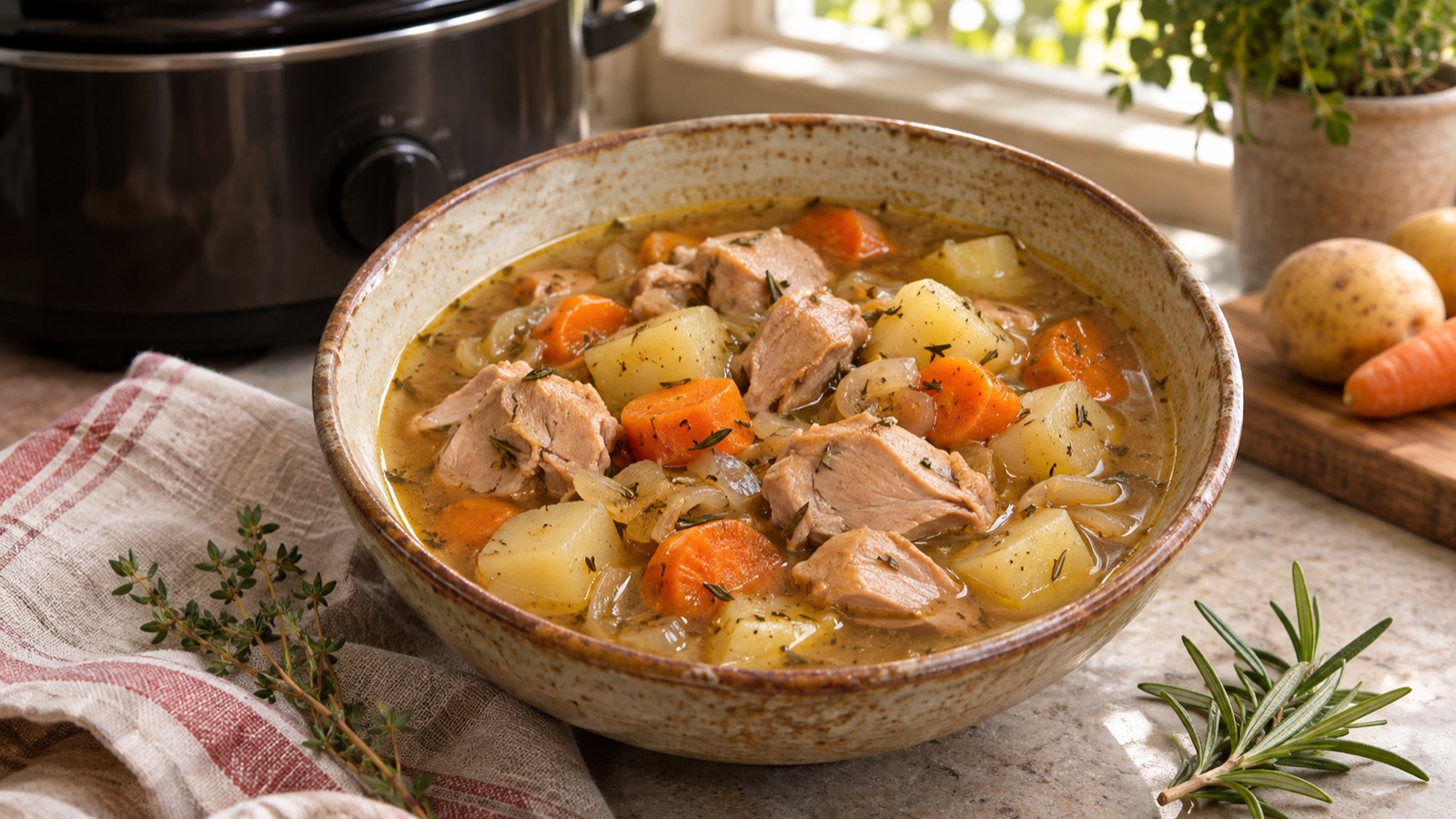
This slow cooker rabbit stew combines rabbit cubes, potatoes, carrots and onion in chicken broth seasoned with thyme, rosemary and bay leaves. Brown the meat first, then let the covered cooker finish the stew. The original recipe uses a six-to-seven-hour low setting as a guide; the rabbit must also pass temperature and tenderness checks.
The recipe below keeps the original thirteen ingredients. It is a broth-based stew: wine, tomato paste and celery are not part of the main ingredient list. A separate stovetop variation is explained later so those options do not get confused with the slow-cooker method.
Jump to the recipe or read the preparation notes first.
Before you start
Plan this as a long-cooking meal, not a dinner ready in under an hour. Thaw the rabbit in the refrigerator before preparation. Have the vegetables ready before browning so the partially cooked meat can go straight into the cooker and cooking can begin without a delay.
| Check | What this recipe needs |
|---|---|
| Rabbit | Two pounds of boneless meat, cut into roughly one-inch cubes |
| Vegetables | Carrots, potatoes and onion, cut into reasonably even pieces |
| Liquid | Two cups of chicken broth; match the batch and loading to your appliance instructions |
| Cooking | Low setting, approximately six to seven hours; check the meat and vegetables |
| Equipment | Skillet, slow cooker, clean utensils and a food thermometer |
Choosing and preparing the rabbit
The ingredient quantity means usable meat, not a two-pound whole bone-in rabbit. If starting with a whole rabbit, remove the bones before weighing and cubing the meat. Inspect the pieces carefully, especially around small bones. For harvested rabbit, check for shot fragments and damaged tissue as well.
Rabbit age and the cuts used affect texture. USDA describes mature rabbit as less tender and suited to braising or stewing. That makes a moist method useful, but it does not promise that every batch becomes tender at exactly the same hour.
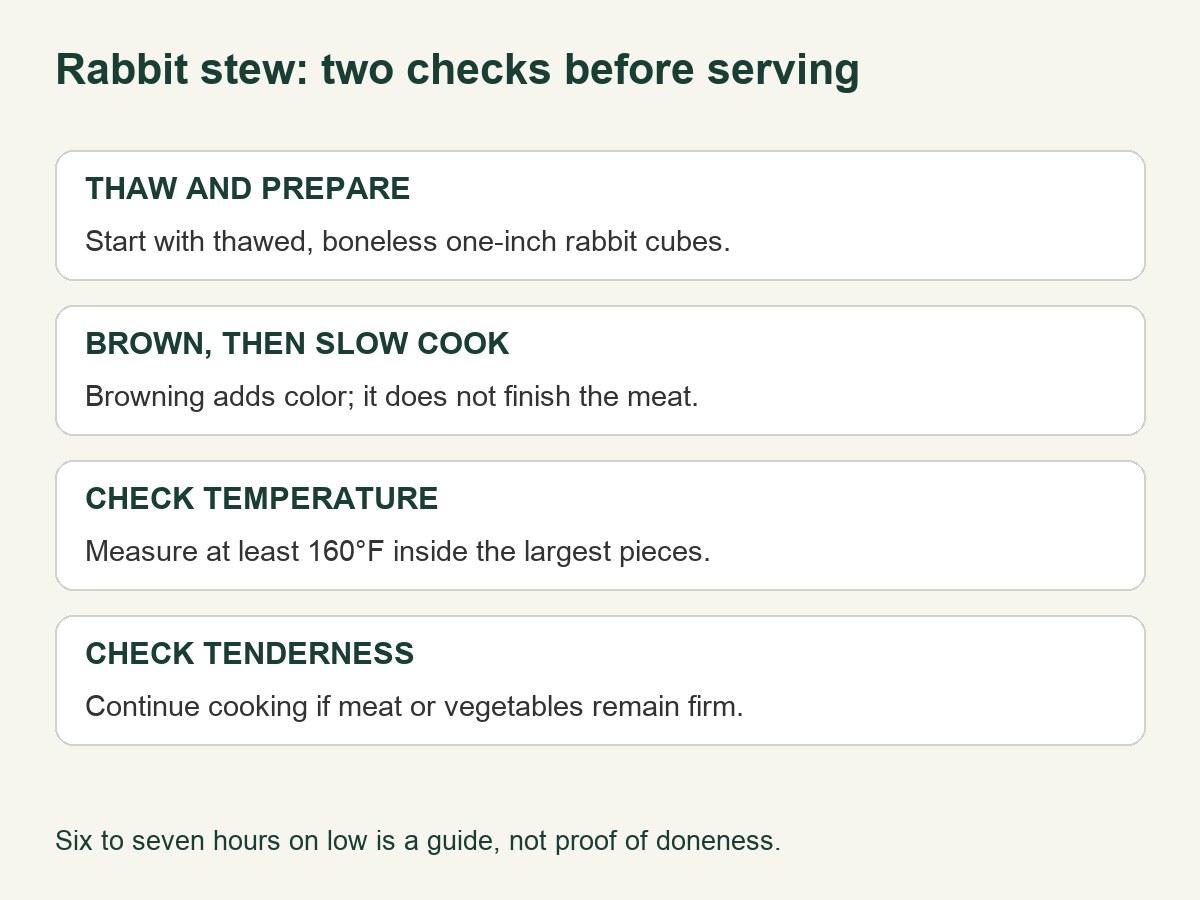
USDA rabbit guidance calls for at least 160°F inside the meat and says to thaw rabbit before slow cooking. A food thermometer checks the first requirement; a fork checks texture. Browning the surface does not replace either check.
Slow cooker rabbit stew recipe
Rabbit stew with potatoes and herbs
Author: John Ward. Batch: 2 pounds of boneless rabbit meat with vegetables. Cooking plan: approximately 6–7 hours on low, plus preparation; check doneness rather than relying on the clock.
Ingredients
- 2 lbs of rabbit meat, cut into 1inch cubes
- 2 tablespoons of olive oil
- 2 cloves garlic, minced
- 1 onion, chopped
- 2 carrots, peeled and diced
- 2 potatoes, peeled and diced
- 2 cups chicken broth
- 1 teaspoon dried thyme
- 1 teaspoon dried rosemary
- 2 bay leaves
- 1 tablespoon Worcestershire sauce
- 1 teaspoon sea salt
- ½ teaspoon freshly ground black pepper
Method
- Prepare and brown: Use fully thawed, boneless rabbit meat cut into approximately 1-inch cubes. Inspect the meat carefully for bone fragments and, if wild, remaining shot or damaged tissue. Keep raw meat and utensils separate from ready-to-eat foods. Heat the olive oil in a skillet over medium-high heat and brown the rabbit in uncrowded batches, turning as needed. The original 3–4 minutes is approximate, not a doneness test. Continue directly to slow cooking; do not store partially cooked meat for later.
- Load the cooker: Put the prepared carrots, potatoes and onion into the slow cooker first, then add the browned rabbit, garlic, chicken broth, thyme, rosemary, bay leaves, Worcestershire sauce, salt and pepper. Use a cooker sized for this batch and follow its instructions for loading and liquid. Cover and start cooking immediately; do not use a delayed start or the warm setting to cook raw ingredients.
- Cook, check and serve: Cook on low, using the original 6–7 hours only as a planning estimate. Keep the lid closed except for necessary checks. Before serving, check several of the largest rabbit pieces with a food thermometer: each must reach at least 160°F internally. Also check that the rabbit and vegetables are tender; continue cooking as needed. Remove both bay leaves, check for any remaining bone fragments and serve hot. Divide leftovers into shallow containers and refrigerate within 2 hours.
Recipe note: All 13 original ingredients and quantities are retained. Instructions now clarify boneless cubes, thawing, loading, measured doneness and leftover handling. No kitchen-testing claim or guaranteed cooking time is made.
How to keep the method consistent
Cut the vegetables evenly rather than mixing tiny fragments with large chunks. Put them into the cooker before the meat. USDA's slow-cooker guidance recommends this order because vegetables take longer to cook. Keep the lid on during cooking except when a check is needed.
Follow the appliance's instructions for food quantity and liquid. An oversized cooker holding a shallow batch behaves differently from one loaded appropriately. Do not assume that increasing the recipe, doubling the liquid or switching to high produces the same result on the original schedule.
The base recipe has no flour or cream. Expect a broth-based stew rather than a thick gravy. If you prefer a little more body, mash some of the fully cooked potato against the side of a bowl and stir it back in. This uses an existing ingredient instead of adding an unlisted thickener.
Check seasoning near the end with a clean spoon. Chicken broth and Worcestershire sauce already contribute salt; their labels help you decide whether a future batch should use a lower-sodium broth. The original salt quantity remains in the recipe for clarity.
Choosing a slow cooker
Use an appliance that accommodates this batch within its specified fill range. A timer is convenient, but elapsed time and an automatic change to warm do not prove that the meat is done. Check the stew before treating the warm setting as a holding stage.
The original Amazon link now identifies a Crock-Pot six-quart Cook & Carry programmable cooker as model CPSCVC60LL-S. The older article named SCCPVL610-S-A. Amazon Creators API returned a new in-stock offer on November 4, 2026, but that does not establish that the current model is identical to the older one. Confirm the model and included parts before ordering.
The current listing describes a digital timer and a locking lid for transport. Follow the supplied manual for lid use during cooking and transport. This article has not tested the appliance, and the original affiliate destination is retained below.
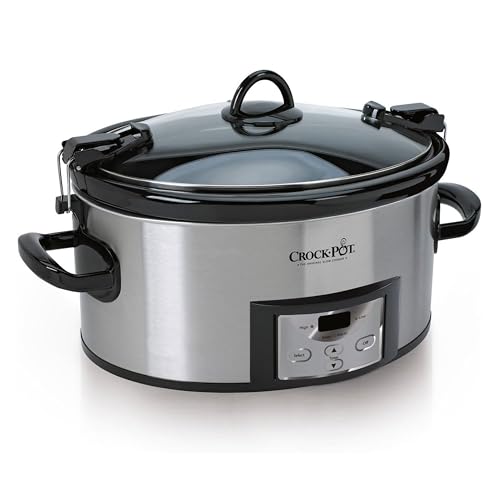
Original linked slow cooker
Crock-Pot 6-Quart Cook & Carry — confirm model CPSCVC60LL-S
New in-stock offer returned by Amazon Creators API on November 4, 2026. The current model identifier differs from the older article; confirm the selected version. Availability can change.
Can you cook rabbit stew on the stove?
Yes, but treat it as a separate method rather than transferring the slow-cooker timer to a pot. Brown the rabbit in a heavy pot, add the onion and garlic, then add the vegetables, herbs and broth. Bring the liquid to a simmer, reduce the heat and cook covered, checking the liquid and stirring as needed to prevent sticking.
The original stovetop variation suggested one cup of white wine and three to four cups of chicken stock, with celery as an optional vegetable. Those additions are outside the base recipe. If using wine, add it after browning and cooking the onion, simmer briefly, then add the stock and other ingredients. The original text did not specify a celery quantity, so it is not presented as a measured recipe ingredient here.
Use enough liquid for the pot and ingredients, adding more if it reduces excessively. Check the rabbit for at least 160°F internally and continue until the meat and vegetables are tender. A fixed one-hour promise is not reliable for every rabbit, cut size or pot.
Serving and flavor
Thyme, rosemary, bay leaves and Worcestershire sauce give the broth its savory character. Carrots provide a sweeter contrast to the meat and potatoes. The actual flavor varies with the rabbit, broth and seasonings; slow cooking is a practical method, not a guarantee that it tastes better than every stovetop version.
Because the stew already contains potatoes, a green salad or cooked greens makes a straightforward accompaniment. Crusty bread, rice or mashed potatoes are other options if you want them. Remove the bay leaves before serving and check portions for any remaining bone fragments.
For another game stew, see our pheasant stew recipe. It uses a different ingredient list and poultry cooking guidance; do not transfer its method unchanged to rabbit.
Cooling, freezing and reheating
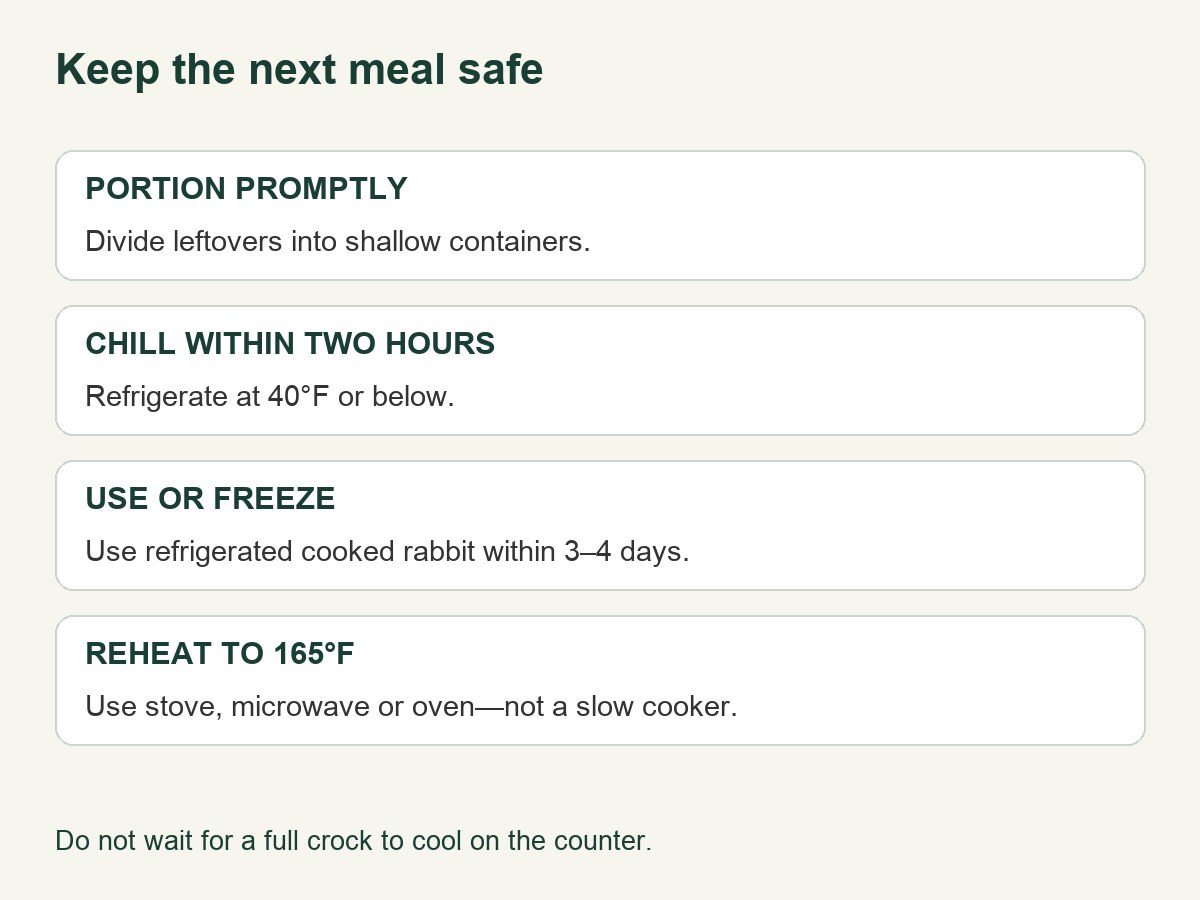
Do not leave the full crock on the counter until the stew is completely cold. Divide leftovers into shallow containers and refrigerate within two hours. Keep the refrigerator at 40°F or below and use cooked rabbit within three to four days, or freeze it.
Label freezer portions with the dish and date. Freeze in containers suitable for liquids, leaving the headspace recommended by their manufacturer. Thaw in the refrigerator when planning the next meal. Potatoes may soften further after freezing, so expect some texture change.
Reheat on the stovetop, in the microwave or in an oven until the stew reaches 165°F throughout. Stir carefully so the center heats evenly. Colorado State University Extension advises against reheating cold leftovers in a slow cooker. A preheated cooker can hold already-hot food at 140°F or above; it is not the reheating step.
Common questions
Is this rabbit stew gluten-free?
The base recipe contains no wheat flour, but that alone is not a guarantee. Check the chicken broth and Worcestershire sauce labels for your needs, along with any substitutions and serving sides. Bread or a flour thickener changes the answer. The base ingredient list also contains no dairy ingredient; verify packaged products rather than relying on a blanket allergy claim.
Can I put frozen rabbit straight into the slow cooker?
No. Thaw it first, then prepare the cubes and start cooking promptly. Do not use a delayed-start timer to leave raw ingredients at room temperature.
Does reaching 160°F mean the rabbit is tender?
Not necessarily. That is the minimum internal temperature in USDA's rabbit guidance. Tougher meat may need more cooking for a pleasant texture. Check both the thermometer reading and tenderness before serving.
Can I make the stew ahead?
Yes. Cook it fully, refrigerate promptly in shallow portions and reheat to 165°F using an appropriate appliance. If preparing raw ingredients ahead instead, keep the meat and cut vegetables separately refrigerated until you begin cooking.