
Pheasant Stew Recipe with Mushrooms, Carrots and Herbs
We may earn commission for items you purchase. As an Amazon Associate we earn from qualifying purchases.
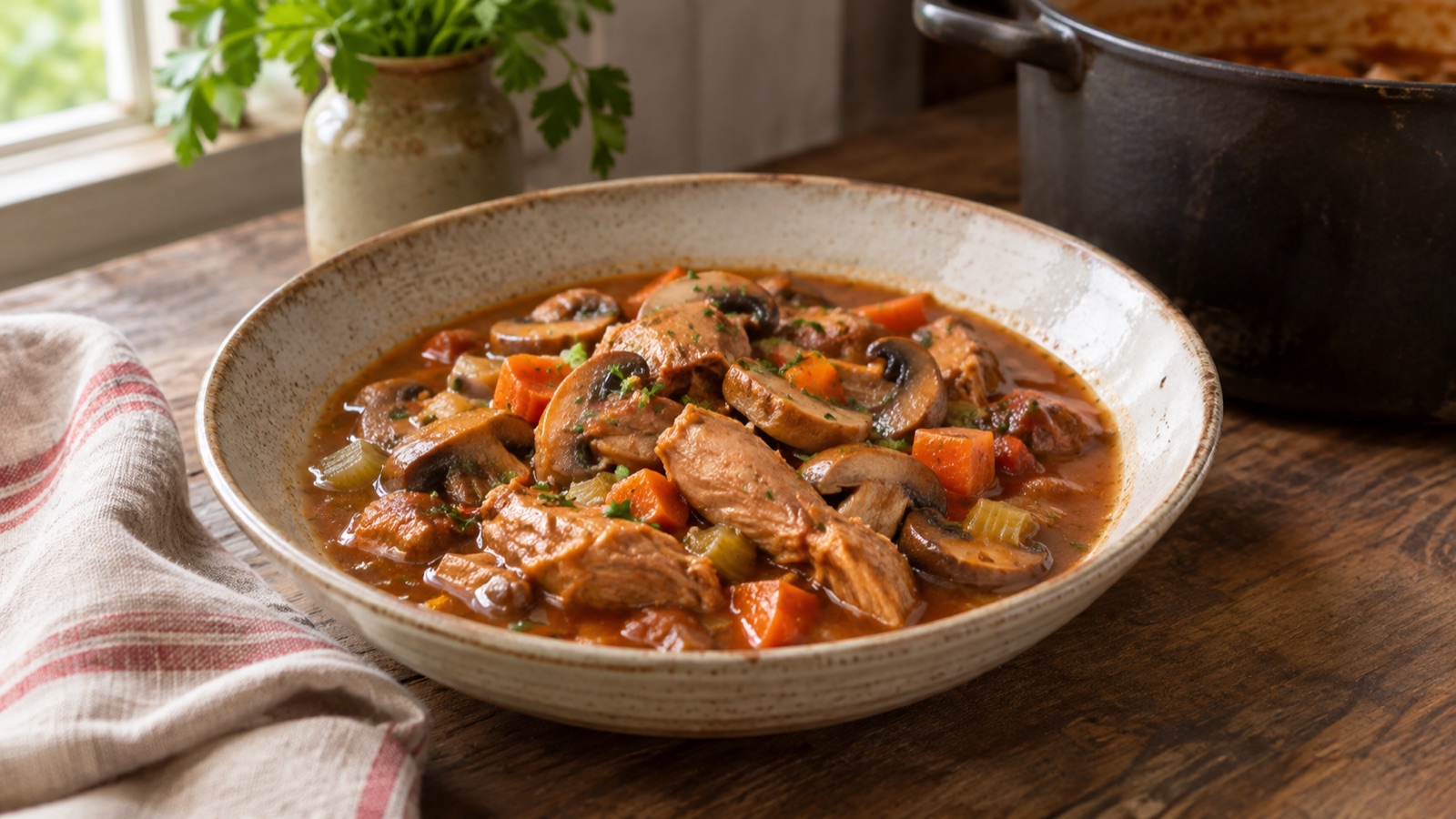
This pheasant stew combines two cut-up birds with mushrooms, carrots, celery and a lightly thickened chicken broth. Tomato paste gives the broth depth, while thyme, bay leaves and parsley keep the seasoning simple. It is a stovetop recipe with no wine or cream in the ingredient list.
The main cooking decision is when to stop simmering. A browned surface does not show that the meat is cooked through, and a safe internal temperature does not necessarily mean a tough leg is tender. Check both. This update keeps the original ingredient quantities and makes those checks part of the method.
Pheasant stew recipe
Pheasant stew with vegetables and herbs
Author: John Ward. Batch: Two pheasants, cut into pieces. Cooking time varies with the birds and cuts; use the temperature and tenderness checks below.
Ingredients
- 2 pheasants, cut into pieces
- 2 tablespoons of olive oil
- 1 onion, diced
- 2 cloves of garlic, minced
- 2 carrots, diced
- 2 stalks of celery, diced
- 1 cup of mushrooms, sliced
- 2 tablespoons of tomato paste
- 2 tablespoons of flour
- 3 cups of chicken broth
- 2 bay leaves
- 2 sprigs of fresh thyme
- 1 teaspoon of salt
- 1/4 teaspoon of pepper
- 2 tablespoons of fresh parsley, chopped
Method
- Prepare and heat: Start with thawed, cleaned pheasant pieces kept refrigerated until preparation. Inspect wild birds for shot and damaged tissue. Heat the olive oil in a heavy pot over medium heat. Keep raw poultry and its utensils separate from ready-to-eat food.
- Brown: Pat the pieces dry with disposable paper towels, then brown in batches without crowding the pot. Turn to color both sides; browning is not the final cooking step. Transfer the browned pieces to a plate and continue directly with the recipe.
- Cook the vegetables: Add the onion, carrots, celery and mushrooms to the pot and stir until beginning to soften. Add the garlic near the end so it does not scorch. Stir in the tomato paste and flour, coating the vegetables evenly.
- Add broth: Gradually stir in the chicken broth, loosening the browned bits from the bottom. Return the pheasant and any accumulated juices to the pot. Add the bay leaves, thyme, salt and pepper. Bring to a simmer, then reduce the heat and cover. Use a pot that holds the pieces snugly; add a little water if necessary to prevent the pot from drying out.
- Simmer and check: Maintain a gentle simmer, stirring carefully and checking the liquid periodically. Cook until the pheasant reaches at least 165°F internally and the legs are tender when pierced. Check the thickest meat with a food thermometer without touching bone. Allow substantial time for tougher wild birds; do not use the former 15-minute simmer as a completion target. If breast pieces reach 165°F before the legs become tender, remove them with clean utensils, keep them hot at 140°F or above, and return them at the end.
- Finish and serve: Remove the bay leaves and woody thyme stems. For a boneless stew, lift the cooked pieces onto a clean plate, carefully remove bones and tough tendons, and return the meat to the pot. Stir in the parsley and serve hot. Refrigerate leftovers promptly in shallow containers.
Recipe update: The original 15 ingredients and quantities are retained. The method now checks internal temperature and tenderness instead of stopping after a 15-minute simmer, and explains bone removal and leftover handling.
Choose and prepare the pheasant
Use two properly handled pheasants, either wild harvested or farm raised, cut into manageable pieces. Keep the breast and leg pieces recognizable so you can check them separately as they cook. The recipe starts with whole birds, not two boneless breasts; substituting only breasts changes the amount of meat and the cooking schedule.
Thaw frozen birds in the refrigerator before starting. Inspect wild meat for shot pellets and damaged areas, and keep it chilled during preparation. Use separate utensils or wash them thoroughly between raw poultry and cooked food. MassWildlife's pheasant preparation guidance specifies refrigeration at or below 40°F and cooking to at least 165°F.
Choose a heavy pot with a lid that holds the pieces without forcing them into a crowded pile. A very wide pot will lose liquid faster, while a cramped pot makes browning difficult. Brown in batches, then use the same pot for the vegetables and broth so the browned bits become part of the stew.
Check temperature and tenderness separately
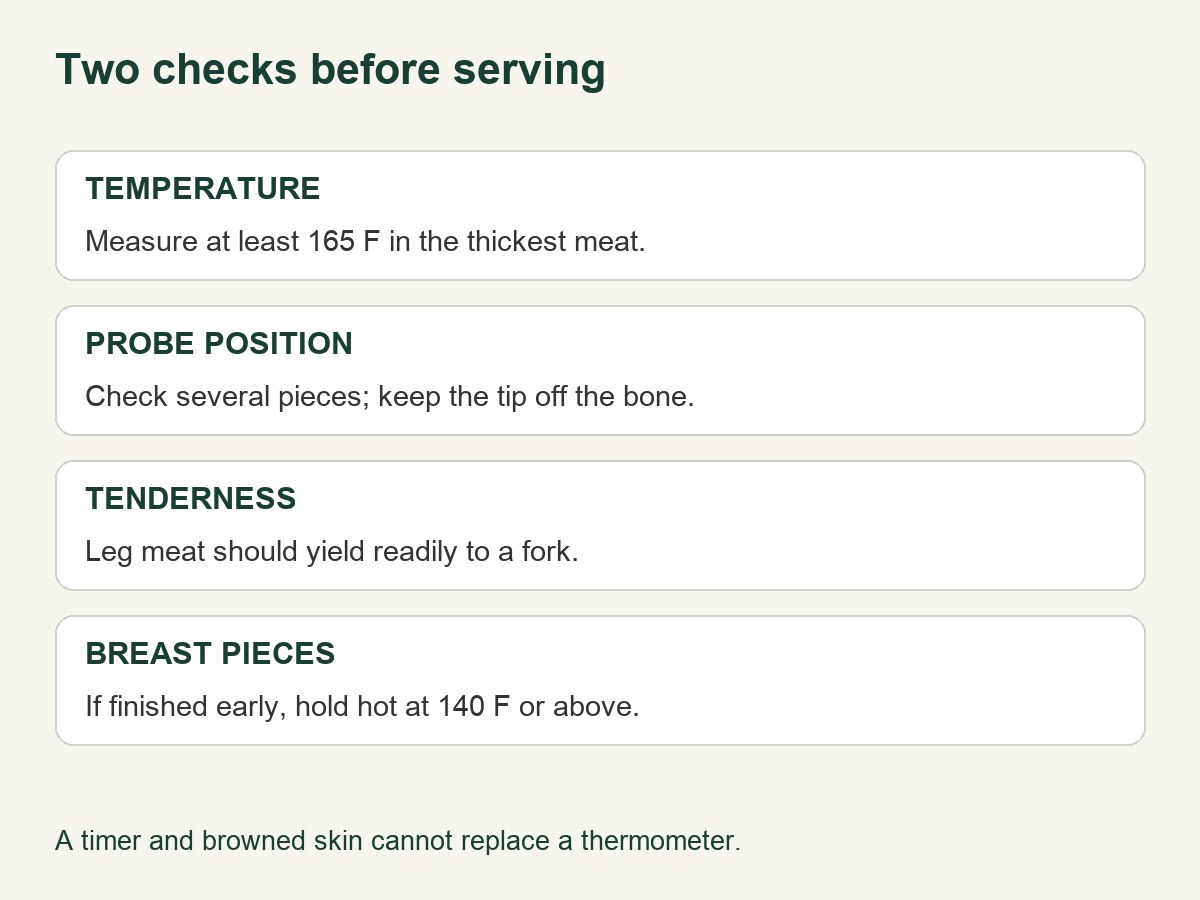
Place a food thermometer into the thickest meat without resting the tip against bone. Check more than one piece, including a thick breast and a leg. The cooking target is at least 165°F internally. Do not use broth temperature, a timer or browned skin as a substitute for measuring the meat.
For texture, test the legs with a fork. If they still resist, continue the gentle covered simmer and check again. Older or tougher wild birds may need much longer than a young farm-raised bird. Keep enough liquid in the pot to prevent scorching and avoid a rolling boil that batters the vegetables.
North Dakota State University's game cookery guide gives a pheasant braise an approximate one to one-and-a-half-hour cooking window while still requiring a temperature check. That is context for planning, not a tested finish time for this particular stew. Leave flexibility in the meal schedule rather than promising dinner after a short simmer.
Breast pieces may finish before the legs soften. Once a breast reaches 165°F, you can lift it out with clean utensils and hold it hot at 140°F or above while the legs finish. Return it to the stew near serving. If you cannot maintain safe hot holding, avoid leaving cooked pieces on the counter for a long wait.
Build a smooth broth without changing the ingredients
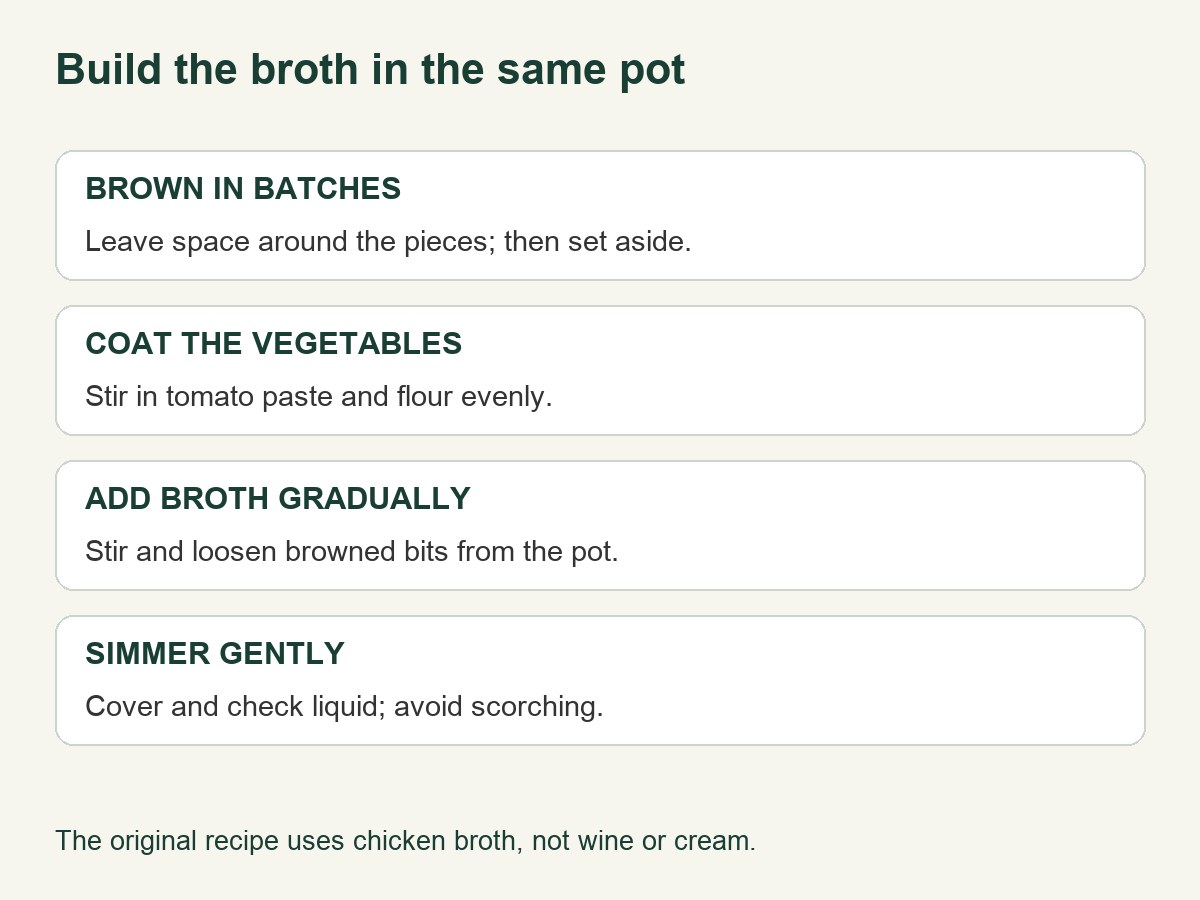
The two tablespoons of flour lightly thicken three cups of chicken broth. Stir the flour into the vegetables and tomato paste before adding the liquid gradually. This spreads it through the pot instead of leaving dry flour lumps floating on the surface.
Keep the lid on during most of the simmer. If the pot is drying out before the meat is tender, add a small splash of water and lower the heat. Once the meat is finished, lift it out briefly if you want to reduce a thin broth. Stir the liquid as it simmers, then return the meat. Avoid repeatedly boiling already-cooked breast meat just to thicken the sauce.
This is a savory broth-based stew, not a cream sauce. Mushrooms add an earthy note, carrots add sweetness, and tomato paste gives a fuller flavor without making it a tomato soup. The parsley goes in at the end. Remove the bay leaves and woody thyme stems before serving.
Can you make pheasant stew in a slow cooker?
Yes, but use a method designed for the appliance and its load. The stovetop recipe above is the primary method; its simmering instructions are not a validated slow-cooker schedule. A universal eight-to-ten-hour claim would hide differences in bird size, cuts, appliance temperature and fill level.
University of Minnesota Extension's slow-cooker guidance recommends thawed meat, vegetables toward the bottom or sides, sufficient liquid and following the manufacturer's instructions. It describes filling the cooker roughly one-half to three-quarters full. Check the specific model's directions when selecting a pot for this batch.
Keep the lid on during cooking and measure the pheasant at 165°F or higher before eating. The Warm setting is for holding food that is already cooked, not bringing raw birds to doneness. USDA makes that distinction in its slow-cooker setting guidance.
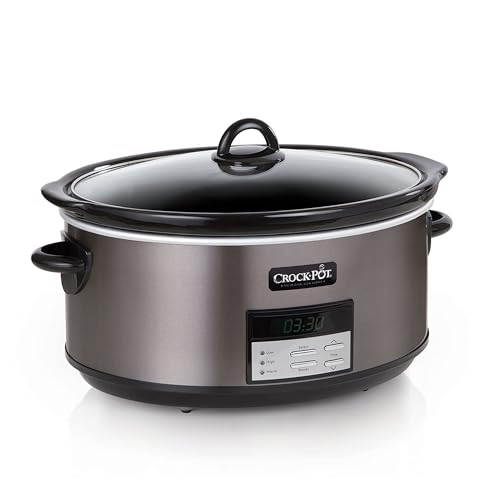
Original linked slow cooker
Crock-Pot 8-Quart Programmable Slow Cooker — Black Stainless Steel
Amazon Creators API confirmed a new offer on November 4, 2026. The listing specifies an up-to-20-hour digital timer, automatic Warm setting, and removable dishwasher-safe lid and stoneware. Choose capacity for the actual batch and follow the appliance instructions; this listing does not validate a cooking schedule for the recipe.
Availability can change. Check the exact model and included components before ordering.
Serve the stew and handle the bones
For easier eating, remove the cooked pheasant from the pot and pick the meat from the bones before serving. Take time around the legs, where small bones and tough tendons can be easy to miss. Return only the meat to the broth. If serving bone-in pieces, make that clear to everyone at the table.
Serve in shallow bowls with bread, mashed potatoes or cooked rice alongside. Those are serving choices rather than ingredients in the original stew. If you want more vegetables in a future batch, consider how their size and cooking time will change the pot instead of adding a large quantity near the end and expecting it to soften immediately.
Cool, store and reheat leftovers
Transfer leftovers into shallow containers and refrigerate at 40°F or colder within two hours, or within one hour in temperatures above 90°F. Do not leave a full pot on the counter waiting for its center to cool. Use refrigerated stew within three to four days or freeze portions for longer storage, following USDA leftover guidance.
Reheat portions on the stovetop or in the microwave until they reach at least 165°F throughout. Bring the broth to a boil, stir for even heating and check several spots. A splash of water can loosen a broth that has thickened in the refrigerator. USDA advises against reheating leftovers in a slow cooker; heat them promptly first rather than relying on the Warm setting.
Pheasant stew questions
Does this recipe need wine?
No. Its liquid is chicken broth. Wine-based pheasant stews are a different variation; there is no missing wine step in this recipe.
Can I use only breast meat?
You can make a breast-meat stew, but it is not the same two-whole-bird batch. Breasts do not need the extended tenderizing that tougher legs may require. Use a recipe sized for that cut and check 165°F internally rather than following a long leg-cooking schedule.
Is it gluten free or low sodium?
As written, it contains flour and added salt, and the broth contributes sodium. It should not be labeled gluten free or low sodium. No finished-batch nutrition analysis has been verified, so the old numerical protein and fat claims are not retained.
Are chukar and grouse types of pheasant?
No. They are different game birds, not young and old versions of pheasant. If using another bird, select a recipe for that species and cut rather than assuming an identical cooking time.
Where can I find the hunting footwear guides?
For planning an upland outing, see the existing guides to women's hunting boots and men's hunting boots. Footwear selection is separate from preparing the harvested birds.