
Air Fryer Beef Jerky Recipe: Honey-Balsamic Marinade
We may earn commission for items you purchase. As an Amazon Associate we earn from qualifying purchases.
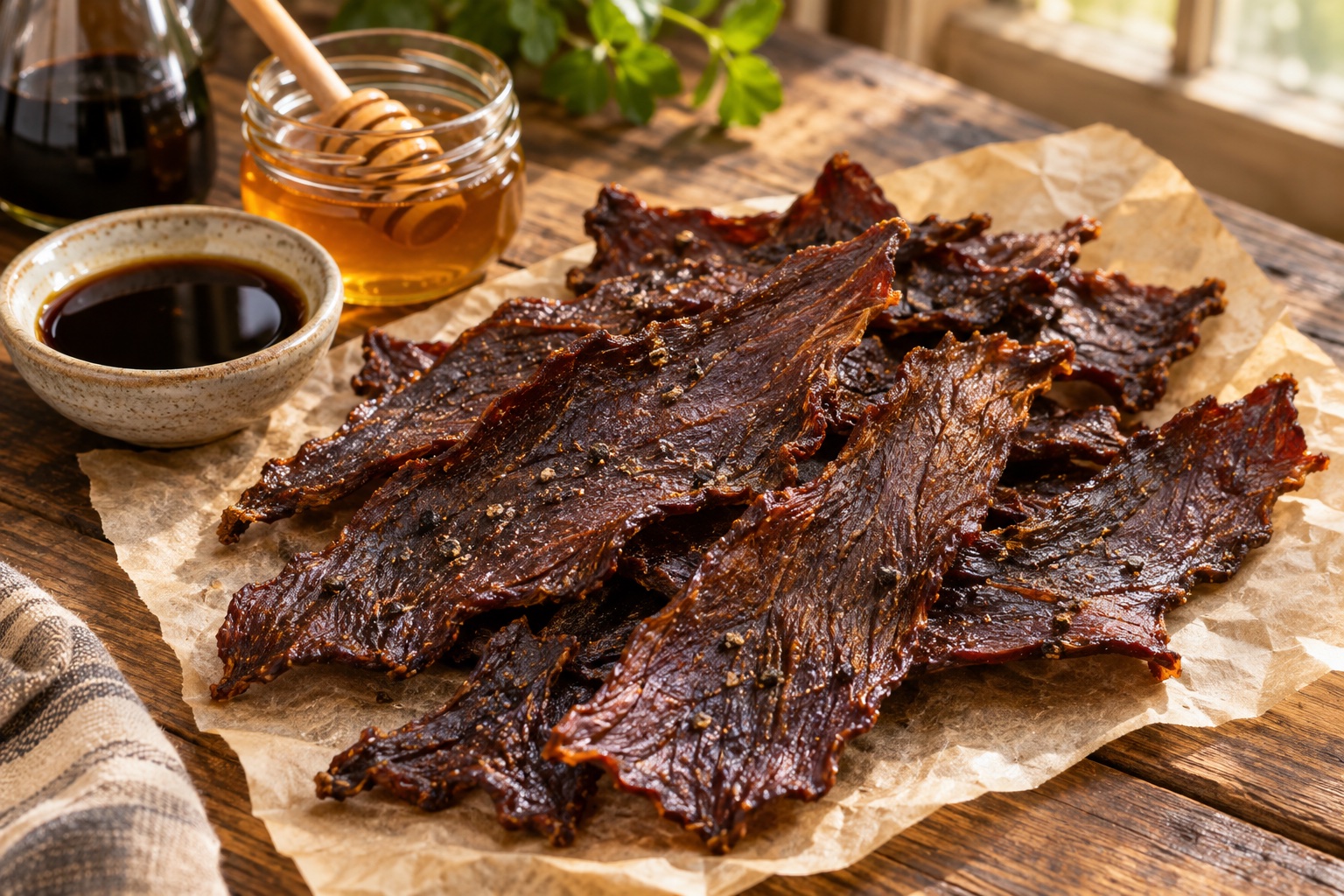
This air fryer beef jerky recipe uses lean beef and the original honey-balsamic marinade with soy sauce, garlic, and smoked paprika. It adds a separate heat treatment before drying. You'll need an air fryer with a verified low-temperature dehydration setting, a food thermometer, and enough room to arrange the strips without overlap.
Before you start: The USDA recommends heating beef to 160°F before dehydration. The appliance's air temperature is not the same as the meat's internal temperature. The cited home-preservation method describes a dehydrator or oven; this air-fryer adaptation has not been independently tested. If your air fryer cannot hold approximately 140°F for drying, use a dehydrator or oven that can; a hotter air-fry setting may cook the outside instead of drying evenly.
Choose and prepare the beef
Use a lean cut such as top round or sirloin tip and trim visible fat. Partially freezing the beef makes slicing easier. With a clean knife, slice no thicker than ¼ inch; cut against the grain for a more tender bite, or with it for more chew. Keep raw beef at 40°F or below and separate it from ready-to-eat food.
Honey-balsamic air fryer beef jerky
Ingredients
- 2 pounds lean beef, top round or sirloin tip
- ½ cup balsamic vinegar
- ¼ cup honey
- ¼ cup soy sauce
- 2 garlic cloves, minced
- 1 teaspoon black pepper
- 1 teaspoon onion powder
- ½ teaspoon smoked paprika
- ¼ teaspoon red chili flakes, optional
Marinate at least 4 hours or overnight; drying time varies by appliance, batch size, and thickness. Two pounds may require several batches.
1. Slice the beef
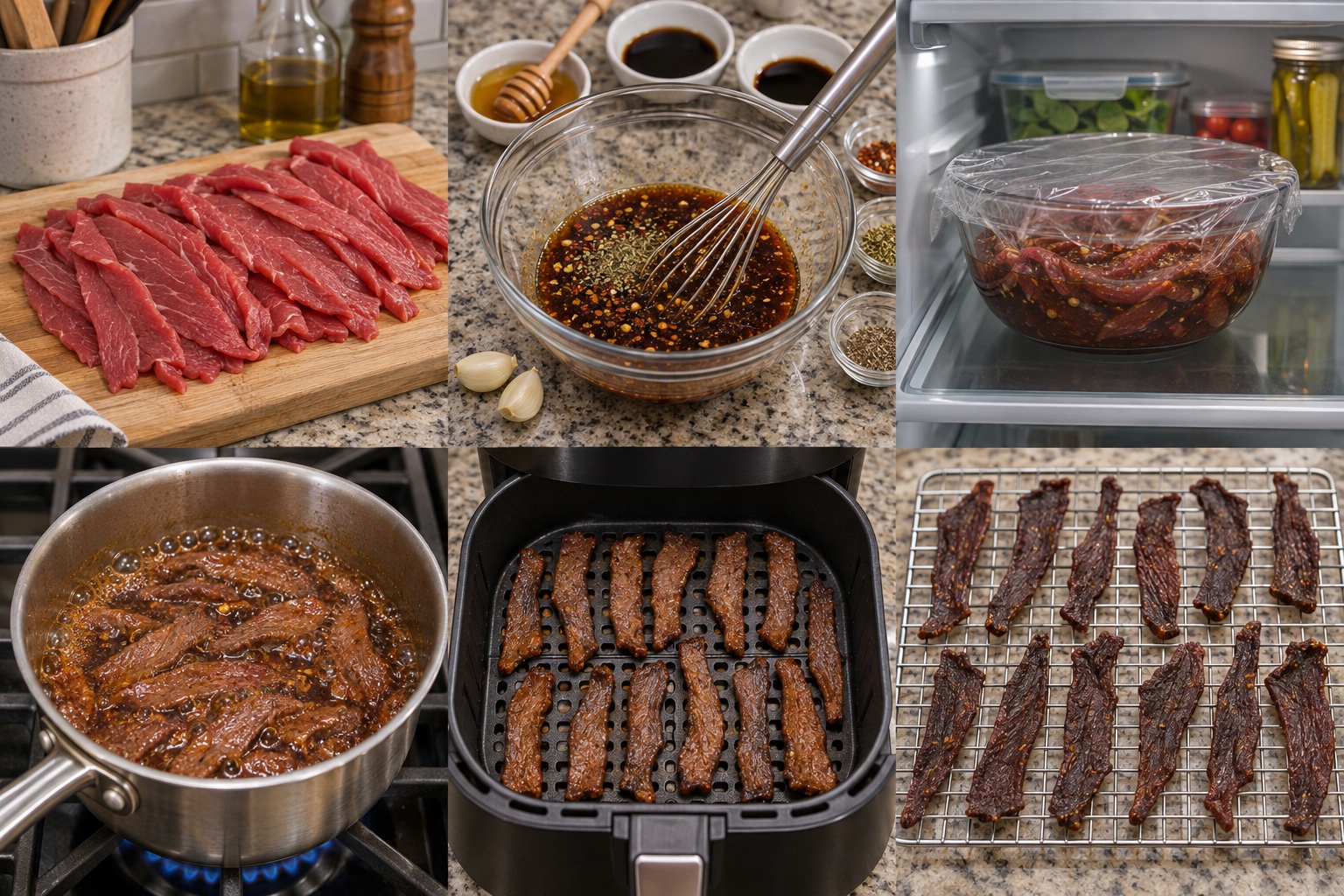
Trim visible fat and slice the chilled beef into even strips no thicker than ¼ inch. Wash hands and clean surfaces after touching raw meat.
2. Mix the marinade
Whisk the balsamic vinegar, honey, soy sauce, minced garlic, black pepper, onion powder, smoked paprika, and optional chili flakes together in a nonreactive container.
3. Marinate in the refrigerator
Add the beef to the marinade, cover, and refrigerate at 40°F or below for at least 4 hours or overnight. Turn the strips occasionally. Do not marinate on the counter.
4. Heat the meat before drying
Heat only the amount of beef that fits in one drying batch; keep the remaining raw beef and marinade covered in the refrigerator. Transfer that portion and enough of its marinade to a saucepan. Add enough water to cover the strips, bring to a full boil, and boil for 5 minutes, following the National Center for Home Food Preservation method. Check several thick strips with a food thermometer to confirm an internal temperature of at least 160°F. Continue heating if needed. Drain with clean utensils and discard the used marinade. Heat each later batch immediately before drying it; never return cooked strips to raw marinade.
5. Dry in a suitable air fryer
Promptly arrange the heated strips in a single layer on clean air-fryer racks, with space between pieces. Use a verified dehydration setting around 140°F; do not overlap or crowd them. For later batches, repeat the heat treatment immediately before drying; keep uncooked strips refrigerated in the meantime. Check periodically, turning or rotating as the appliance instructions recommend. Start checking after about 3 hours; drying can take longer and varies considerably. Use a food dehydrator or suitable oven if your air fryer cannot maintain low heat.
6. Check, cool, and store
Cool a test strip briefly: properly dried jerky should crack but not break when bent, with no moist spots. Continue drying if needed. Cool the batch on a clean rack, then seal in a clean container and refrigerate or freeze. Do not assume a home batch is shelf-stable if you cannot establish that it is thoroughly dried.
Marinade and flavor
The original marinade is sweet and tangy, with balsamic vinegar and honey balanced by soy sauce and spices. Boiling the strips in the marinade is a safety step and may change the texture from traditional raw-dried jerky. Adding water for coverage can also dilute flavor. Discard the cooking liquid rather than using it as a dipping sauce.
Air fryer settings and batch size
Look for a dehydration setting and check the actual temperature near the food with an appliance thermometer. Many air fryers run hotter than their lowest displayed setting or have small baskets; don't rely on a fixed 3–4 hour time or stack strips to fit the entire batch. If the appliance cannot maintain low heat, follow a dehydrator or oven method designed for jerky instead.
Storage
Refrigerate or freeze fully dried, cooled jerky in a sealed container. The National Center for Home Food Preservation recommends cold storage for best quality. Dryness can vary across a homemade batch, so don't promise a fixed room-temperature shelf life. Discard jerky with mold, an off odor, or signs of spoilage.
Questions about air fryer jerky
Can every air fryer make jerky?
No. You need sufficient airflow and a low, stable dehydration temperature. If your appliance only runs at higher cooking temperatures, use a suitable dehydrator or oven.
Can I skip heating the meat first?
The USDA recommends heating beef to 160°F before drying. A drying setting alone does not establish that every strip reached that internal temperature.
How do I know when it's dry?
A cooled test strip should crack without breaking when bent. Check several pieces, especially the thickest, and dry longer if any are moist.