
Smoked Wild Turkey Leg Recipe: Temperature and Tenderness
We may earn commission for items you purchase. As an Amazon Associate we earn from qualifying purchases.
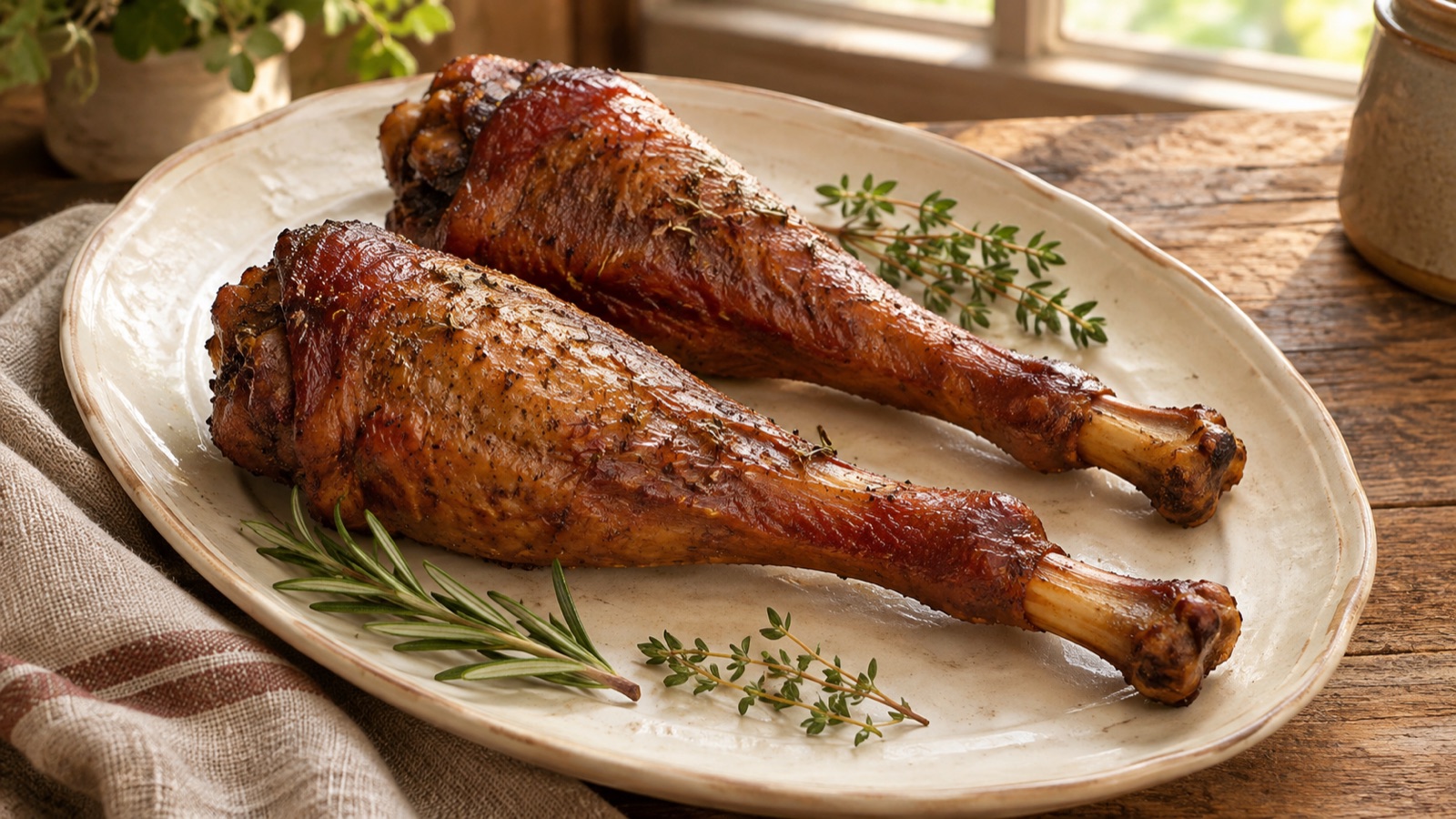
This wild turkey leg recipe uses the original olive-oil, pepper and herb rub, a two-hour refrigerated seasoning period, and hot smoking. Cook the legs to at least 165°F internally, then assess the texture separately. Wild drumsticks can remain tough at a safe temperature; a covered braise is an optional finishing step when you want shreddable meat.
The recipe below preserves the original nine ingredients. It replaces the promise that every leg will be tender after four to five hours with thermometer checks, realistic texture expectations and instructions for removing bones and hard tendons before serving.
Jump to the smoked wild turkey leg recipe
Understand the cut before cooking
Wild turkey drumsticks are hardworking muscles with substantial connective tissue and tendons. The National Wild Turkey Federation's cooking guide explains why slow cooking and braising are useful for these cuts and why smoking alone can make moisture management difficult.
“Leg” can mean the drumstick alone or the entire leg quarter with its thigh. This recipe is written around two drumsticks. If yours include thighs, their size and shape will change the cooking time. Do not use the number of pieces as a substitute for measuring the thickest meat.
Both wild and domestic turkey legs are dark meat. Domestic drumsticks are not mostly white meat: the Library of Congress explains the association between active leg muscles and dark meat. The useful cooking distinction here is how tough the particular cut is, rather than a white-versus-dark label for wild and domestic legs.
Prepare the turkey and smoker
Begin with properly handled, fully thawed legs. Thaw them in the refrigerator in a container that catches drips. Large pieces may need longer than one night. Do not use a low-temperature smoker to thaw frozen poultry.
Inspect the meat during preparation for feathers, damaged tissue and shot fragments, and remove any fragments you find. Keep raw poultry and its utensils separate from ready-to-eat food. Clean hands, work surfaces and tools after handling it, and use a clean platter for cooked legs.
Have two temperature measurements available: the smoker's air temperature near the cooking area and a food thermometer for the meat. USDA's smoking guidance specifies a smoker range of 225–300°F and a poultry minimum of 165°F internally. The recipe retains its original 225°F smoker setting within that range.
Use the smoker outdoors as intended and follow its instructions for fuel, airflow and wood. A controlled heat source matters more than producing clouds of smoke. If the cooker cannot hold the intended temperature, correct that problem rather than extending an uncertain low-temperature cook.
Smoked wild turkey leg recipe
Herb-rubbed smoked wild turkey legs
Author: John Ward. Batch: two wild turkey legs. Seasoning time: two hours refrigerated. The original four-to-five-hour smoking estimate is approximate; allow extra time if a covered finish is needed.
Ingredients
- 2 Wild Turkey Legs
- 2 Tbsp. Olive Oil
- 1 Tbsp. Salt
- 1 Tbsp. Black Pepper
- 1 Tsp. Paprika
- 1 Tsp. Garlic Powder
- 1 Tsp. Onion Powder
- 1 Tsp. Dried Thyme
- 1 Tsp. Dried Rosemary
Method
- Mix the rub: Combine the olive oil, salt, black pepper, paprika, garlic powder, onion powder, thyme and rosemary in a food-safe bowl.
- Season and chill: Coat the fully thawed turkey legs evenly with the rub. Cover and refrigerate for 2 hours. Keep raw poultry and its utensils separate from ready-to-eat food.
- Hot-smoke: Preheat the smoker to 225°F and verify the cooking-area temperature with a thermometer. Place the legs on the rack and maintain controlled heat. Cook until each leg reaches at least 165°F internally in the thickest fleshy areas, keeping the thermometer tip away from bone. The original 4–5 hour estimate is only a planning guide; check earlier and continue as needed. Surface color does not establish doneness.
- Check texture and serve: Once the minimum temperature is reached, assess tenderness. If the meat is still tough, use the optional covered braising finish described below rather than assuming it must be tender at 165°F. Rest for about 10 minutes before serving or until cool enough to handle for shredding. Remove bones, hard tendons and any remaining shot fragments from shredded meat. Refrigerate leftovers promptly.
Recipe note: The original nine ingredients and quantities are preserved. The revised instructions separate safe temperature from tenderness and add an optional moist finishing method. Water or unsalted stock for that optional stage is additional to the original rub. No kitchen-testing claim or fixed tenderness guarantee is made.
Check temperature and tenderness separately
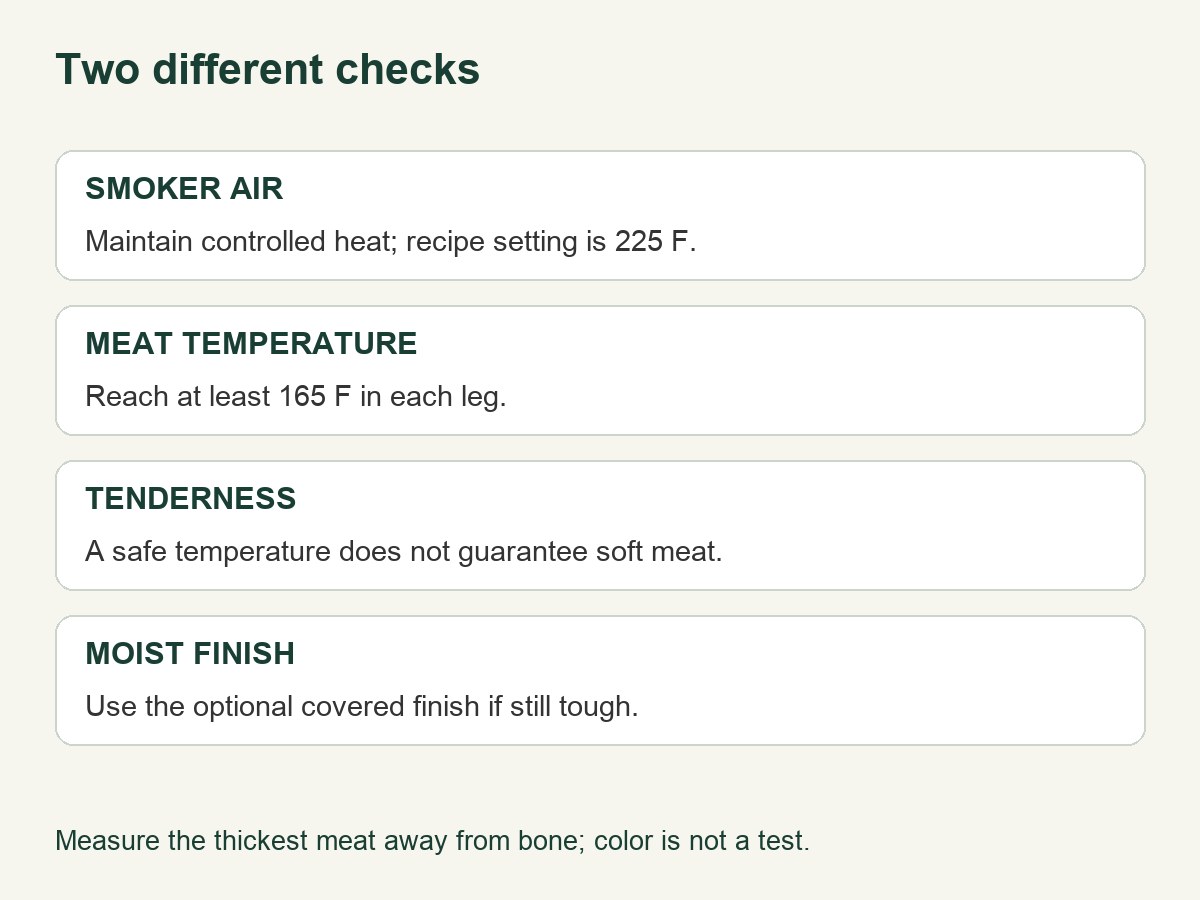
Measure each leg in its thickest fleshy area, keeping the thermometer tip away from bone. Check more than one location when the shape makes a single reading uncertain. The entire portion must reach the safe minimum; a hot spot next to the surface is not enough.
Use the original four-to-five-hour estimate only as a planning reference. Leg size, smoker performance, starting temperature and weather can change the schedule. Start checking before that estimate and continue as needed. Brown skin, a smoke-darkened surface or pink meat cannot replace the thermometer.
| Observation | What it tells you | Next action |
|---|---|---|
| Meat is below 165°F | The poultry minimum has not been reached | Continue cooking and recheck correctly |
| Meat is at least 165°F but resists pulling apart | It reached the minimum, but is still tough | Consider the covered finishing method below |
| Meat separates readily after sufficient cooking | It has a shreddable texture | Remove bones and tendons carefully before serving |
| Exterior is brown or smoky | Only the surface appearance is known | Use temperature and texture checks |
Keep the rest period in the recipe for handling and serving, but do not count on it to rescue an undercooked leg. Reach the minimum while the meat is still cooking. Tenderness is a separate eating-quality check, not an alternative food-safety test.
Optional covered finish for tough drumsticks
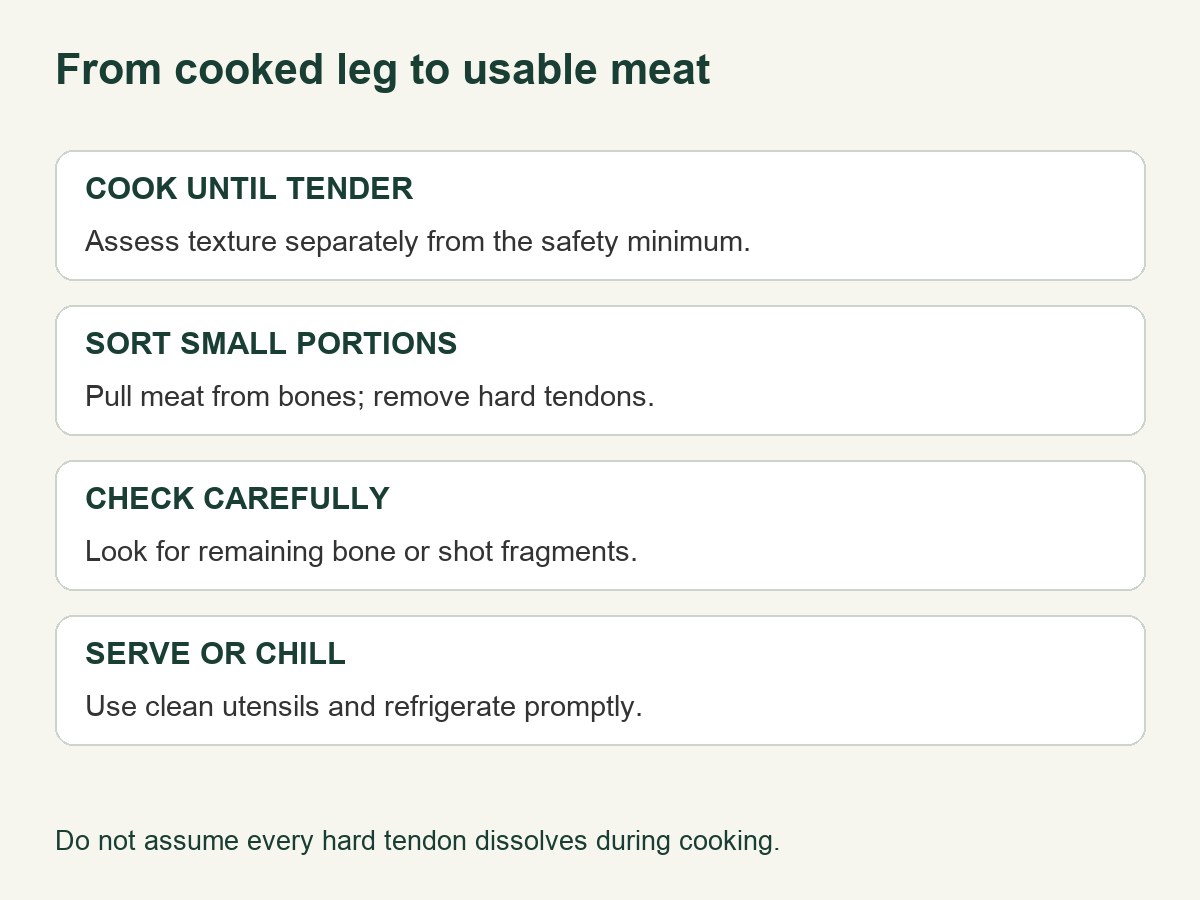
If the smoked legs are safely cooked but tough, a moist finish can be more useful than leaving them exposed to dry heat indefinitely. This adds a braising stage to the smoking recipe; it does not require changing the original rub.
Move the hot legs to an oven-safe covered pot. Add hot water or unsalted stock to come partway up the meat, bring the liquid to a simmer, cover and place in a 350°F oven. Check periodically, adding liquid if necessary, until the meat separates easily. Allow additional time rather than promising a fixed endpoint for every wild bird.
The approach follows the NWTF's moist-cooking guidance. The water or stock is an optional finishing liquid, not part of the original nine-ingredient rub. Using unsalted liquid helps avoid concentrating an already salty seasoning. Avoid further salt until you taste the finished dish.
After cooking, let the meat cool just enough to handle, then pull it from the bones. Work through small portions to remove the long, firm tendons and any remaining bone or shot fragments. Do not assume every hard structure has dissolved. Return cleaned meat to a little of the cooking liquid for serving, or chill it promptly.
Seasoning, serving and leftovers
The original rub contains a tablespoon each of salt and black pepper for two legs. The size of the legs and the type of salt affect how that tastes. Do not add this full rub on top of a salty brine without accounting for the extra salt. If you choose to reduce seasoning for your preference, note that adjustment for the next batch.
Rosemary, thyme, paprika, garlic and onion powder give an herbal, peppery flavor. Use the finished meat in sandwiches, tacos, soup or beans after removing the hard parts. The shredded option is often easier to serve than asking someone to eat around the tendons in a whole wild drumstick.
Smoking does not make the cooked turkey shelf-stable. Divide leftovers into shallow containers and refrigerate promptly, within two hours or within one hour above 90°F. Keep the refrigerator at 40°F or below and use leftovers within three to four days, or freeze them. USDA's leftover guidance provides those handling limits.
Freeze usable portions with a little cooking liquid if desired and label them. Thaw in the refrigerator. Reheat leftovers thoroughly to 165°F; adding liquid and covering the pan helps limit drying. Keep portions small enough to cool and reheat evenly.
Other ways to cook wild turkey legs
Braising, slow cooking and pressure cooking can all suit this tough cut. Use a complete method for the appliance and cut you have. A short roasting, grilling or frying time by itself is not a reliable guide to either safe temperature or tenderness.
For a braised version, the NWTF guide linked above includes a full method. If smoking equipment is unavailable, start with that approach instead of improvising an indoor smoker. The original article linked a stovetop smoking discussion; any indoor method needs equipment specifically intended for that use and its ventilation instructions.
For more wild-game cooking, see our pheasant stew recipe. Each species and cut needs its own method; the turkey timing is not a universal game-meat cooking schedule.
Wild turkey leg questions
Are the legs tender as soon as they reach 165°F?
Not necessarily. That is the poultry safety minimum. Wild drumsticks can need further cooking for a texture you enjoy, especially when you want to shred the meat.
Can I smoke frozen wild turkey legs?
Fully thaw them before smoking. Refrigerator thawing keeps the poultry cold while allowing it to thaw evenly.
Should I remove all the tendons before cooking?
For this bone-in recipe, sort through the meat after it is cooked and tender enough to separate. Remove hard tendons and bones before serving shredded portions.
Can I use domestic turkey legs?
The seasoning can be used on domestic legs, but do not assume the same size or cooking time. Check each piece with a thermometer and assess texture independently.
Is wild turkey automatically a low-sodium or weight-loss meal?
No. This recipe includes salt and oil, and the final nutrition depends on the meat, skin, portions and ingredients actually used. It does not include a verified nutrient analysis or a weight-loss claim.