
Mushroom Jerky Recipe: Smoky Maple-Soy Oven Method
We may earn commission for items you purchase. As an Amazon Associate we earn from qualifying purchases.
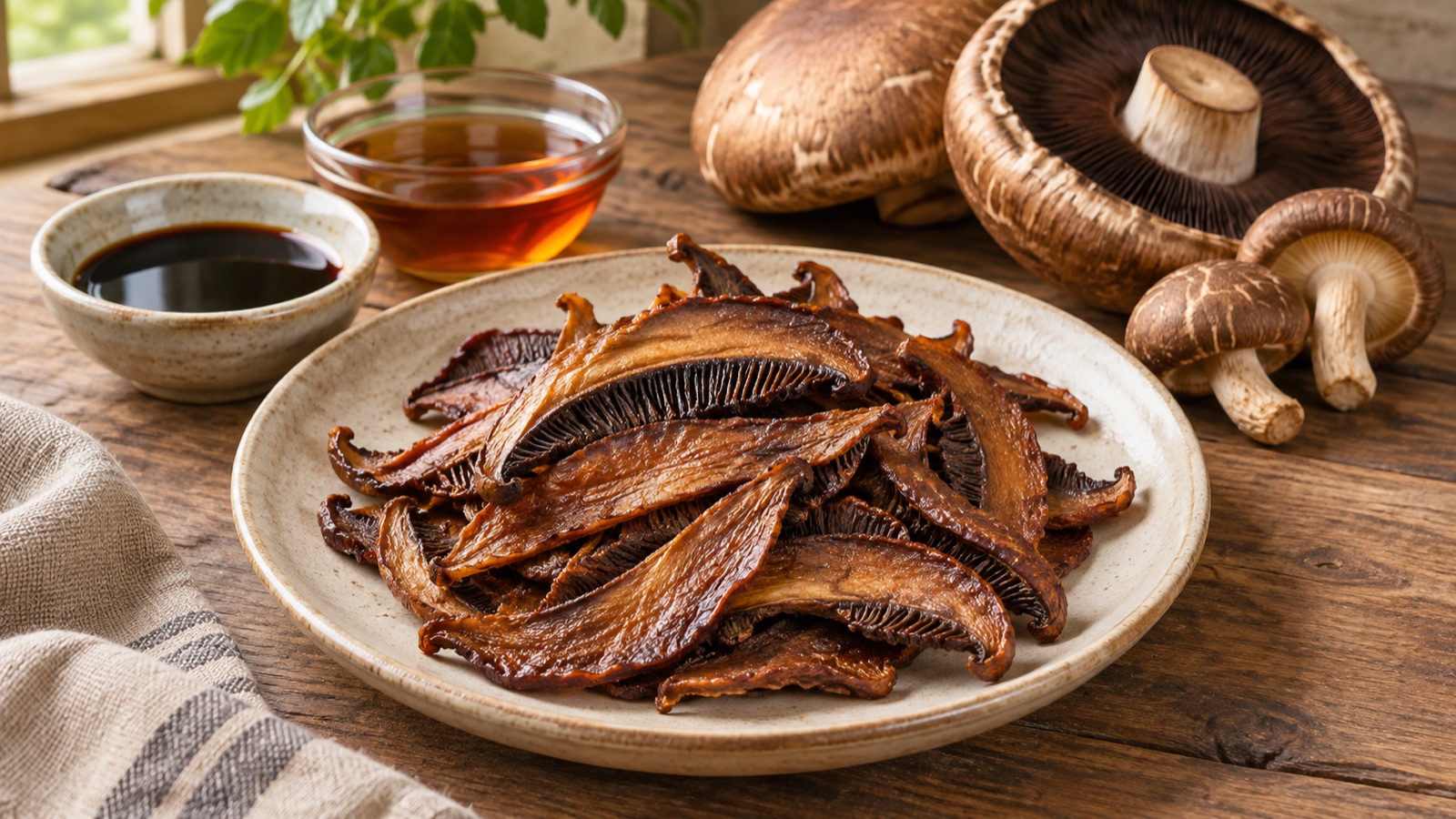
This mushroom jerky recipe coats portobello or shiitake mushrooms in soy sauce, maple syrup, apple cider vinegar and smoked paprika, then oven-dries them into a chewy snack. The seasoning formula below makes a small batch from one pound of mushrooms. Even slices, space on the baking sheet and regular checks matter more than an exact finishing time.
Plan for 15 minutes of preparation, at least 30 minutes of refrigerated marinating, and additional baking and cooling time. Keep the finished batch refrigerated or frozen: this chewy recipe has not been validated for room-temperature storage.
Jump to the mushroom jerky recipe
Choose and prepare the mushrooms
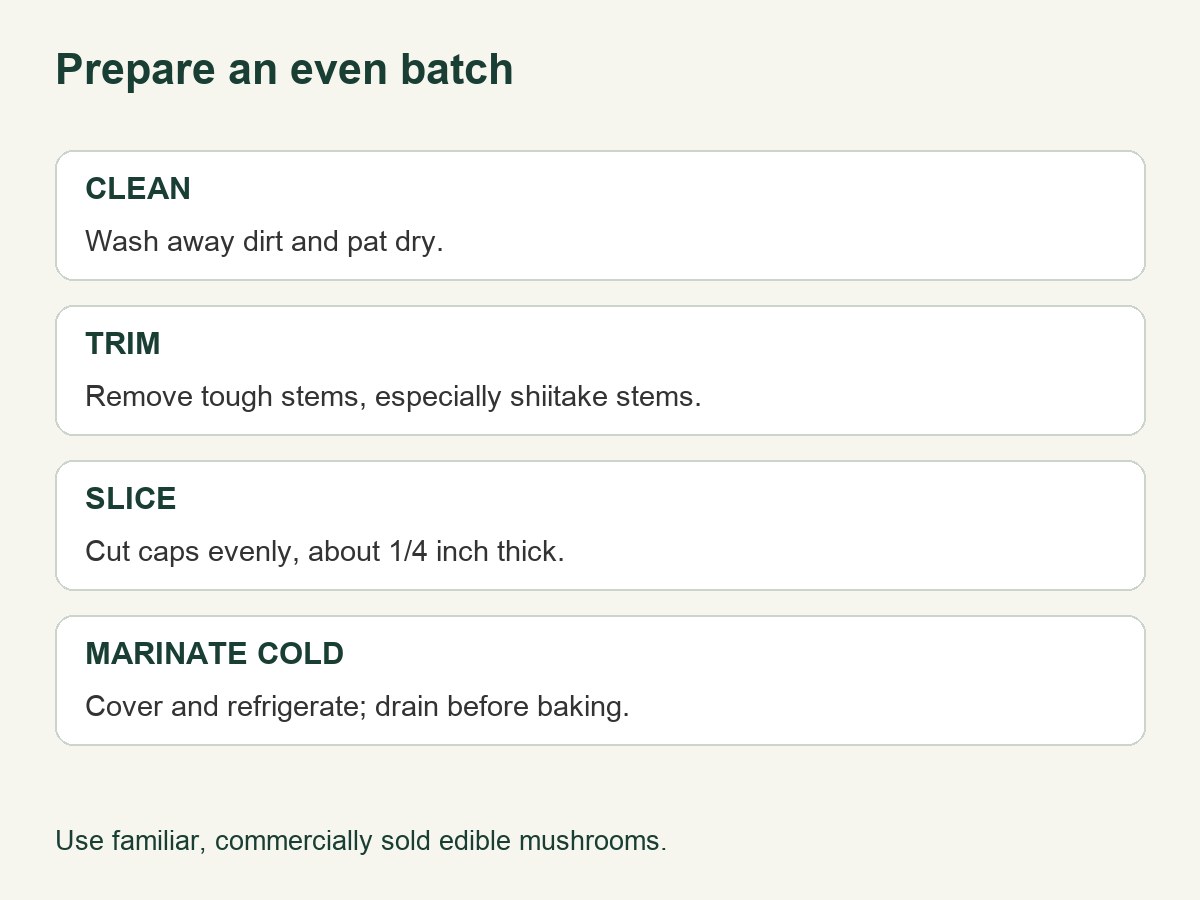
Start with fresh, commercially sold edible mushrooms. Portobello caps make broad strips; shiitake caps make smaller pieces. Buy enough to give you the recipe's one pound, allowing for trimming. Discard mushrooms with mold or obvious spoilage instead of trying to rescue them by drying.
Wash away dirt under running water and pat the mushrooms dry. Trim tough stems, especially the woody stems of shiitakes. Slice the caps about 1/4 inch thick, keeping the pieces as uniform as practical. Do not combine thick whole caps with paper-thin slices on the same schedule.
| Choice | Preparation | What to watch |
|---|---|---|
| Portobello | Trim stems and cut caps into even strips | Broad slices need space and gentle handling when turning |
| Shiitake | Remove tough stems and slice caps | Small edge pieces can finish before larger pieces |
| Other cultivated mushrooms | Use a recipe developed for that variety | A different shape or thickness changes drying behavior |
This is not a wild-mushroom identification guide. Drying or seasoning an unidentified mushroom does not establish that it is edible. Use familiar cultivated varieties for this recipe rather than substituting a foraged mushroom based on appearance.
Build the maple-soy marinade
The original formula uses 1/4 cup soy sauce or tamari, two tablespoons maple syrup and one tablespoon apple cider vinegar. Smoked paprika supplies the smoky flavor; garlic powder and black pepper round out the seasoning. Olive oil spray is for a light coating on the lined pan.
Mix the marinade before adding the slices so the seasonings are distributed. Toss gently until the mushrooms are coated, cover and refrigerate for at least 30 minutes or overnight. Turn the pieces occasionally if some sit above the liquid. Drain excess marinade before baking; a puddle on the sheet delays drying and can become sticky.
For a less salty variation, choose reduced-sodium soy sauce and compare labels. For gluten-free preparation, choose a product explicitly labeled gluten-free; neither the word “tamari” nor “reduced sodium” is sufficient by itself. Soy remains an allergen in soy-based sauces.
The listed maple-syrup version uses plant-based ingredients. Honey would change that vegan claim, and ordinary Worcestershire sauce may contain anchovies. Neither is required here. If you want heat, try a small pinch of chili flakes in a later batch rather than changing several ingredients at once.
Mushroom jerky recipe
Smoky maple-soy mushroom jerky
Author: John Ward. Prep: 15 minutes. Batch: 1 pound of mushrooms; four servings. Add at least 30 minutes for marinating, approximately 1 1/2–2 hours for baking, and cooling time. Baking time varies with thickness and equipment.
Portobello or shiitake slices in the original maple-soy marinade, oven-dried for a chewy snack and stored refrigerated or frozen.
Ingredients
- 1 lb portobello or shiitake mushrooms (thinly sliced)
- 1/4 cup soy sauce or tamari
- 2 tablespoons maple syrup
- 1 tablespoon apple cider vinegar
- 1 teaspoon smoked paprika
- 1/2 teaspoon garlic powder
- 1/4 teaspoon black pepper
- Olive oil spray (for coating)
Method
- Prepare mushrooms: Use fresh, commercially sold portobello or shiitake mushrooms. Wash away dirt and pat dry. Trim tough stems and slice caps evenly, about 1/4 inch thick.
- Mix marinade: Whisk together the soy sauce or tamari, maple syrup, apple cider vinegar, smoked paprika, garlic powder and black pepper.
- Marinate: Gently coat the mushroom slices, cover and refrigerate for at least 30 minutes or overnight. Turn occasionally to distribute the marinade. Drain excess liquid before baking.
- Prepare oven: Preheat the oven to 250°F. Line baking sheets with oven-rated parchment and apply a light coating of olive oil spray.
- Arrange slices: Spread the drained mushrooms in one layer, leaving gaps. Use an extra baking sheet rather than overlapping the pieces.
- Bake and check: Bake for about 1 hour, checking thin pieces earlier, then turn the slices. Continue baking and checking regularly until shrunken and dry-looking, with a firm, chewy texture when a test piece cools. Allow roughly another 30–60 minutes, but finish according to the pieces rather than a fixed clock. Rotate sheets as needed and remove finished pieces before they scorch.
- Cool and refrigerate: Cool briefly on a clean surface, then place in a covered food-safe container and refrigerate at 40°F or below within 2 hours, or 1 hour above 90°F. Use within 3–4 days or freeze portions. Thaw in the refrigerator. This chewy recipe is not validated for room-temperature storage.
Method note: The original eight ingredients and quantities are retained. This revision uses a consistent 250°F oven approach informed by Monterey Mushrooms’ oven recipe, with checks for these thinner slices. This exact seasoning-and-method combination has not been independently kitchen-tested. The former calorie estimate and fixed total time were not verified.
Manage oven drying and texture
Use the oven method in the recipe card consistently. The earlier article mixed several different oven and dehydrator settings; switching between them makes the timing difficult to follow. An oven thermometer helps confirm that the appliance is holding its set temperature.
Arrange drained slices in a single layer with gaps. Use a second sheet if necessary, and rotate the sheets if your oven browns unevenly. Keep the door closed during normal baking; do not improvise a propped-open-door method without appliance-specific instructions.
Turn the pieces carefully and begin checking thin edges before the thickest centers are ready. The goal is shrunken, dry-looking slices with a firm, chewy texture after a test piece cools. A warm piece can feel softer than it will when cool. Remove finished pieces while thicker ones continue baking.
These observations help judge texture; they do not measure water activity or prove shelf stability. University of Missouri Extension explains that pathogens can survive in dried mushrooms and that inadequate moisture reduction remains a concern. This recipe therefore uses cold storage instead of promising a pantry shelf life.
Troubleshoot a batch
| Problem | Likely factor | Adjustment |
|---|---|---|
| Some pieces are wet while others are crisp | Uneven thickness or crowded sheets | Separate finished pieces and give the remaining slices more space |
| Dark edges before the centers dry | Thin edges, oven hot spots or concentrated sugary marinade | Check earlier, rotate the sheet and drain more thoroughly next time |
| Too salty | Salty sauce becomes more concentrated as moisture leaves | Use reduced-sodium sauce for the next batch; start with a small portion when tasting |
| Brittle rather than chewy | Very thin slices or excessive baking | Use consistent thicker slices and check a cooled piece earlier next time |
| Pieces stick to the sheet | Sticky glaze or an unsuitable surface | Use parchment rated for the oven temperature and the light oil spray listed |
Record the mushroom variety, approximate slice thickness and when you began checking. Those notes are more useful for your next batch than treating another oven's finishing time as a guarantee. No particular texture can correct poor handling or spoiled ingredients.
Refrigerate or freeze the finished jerky
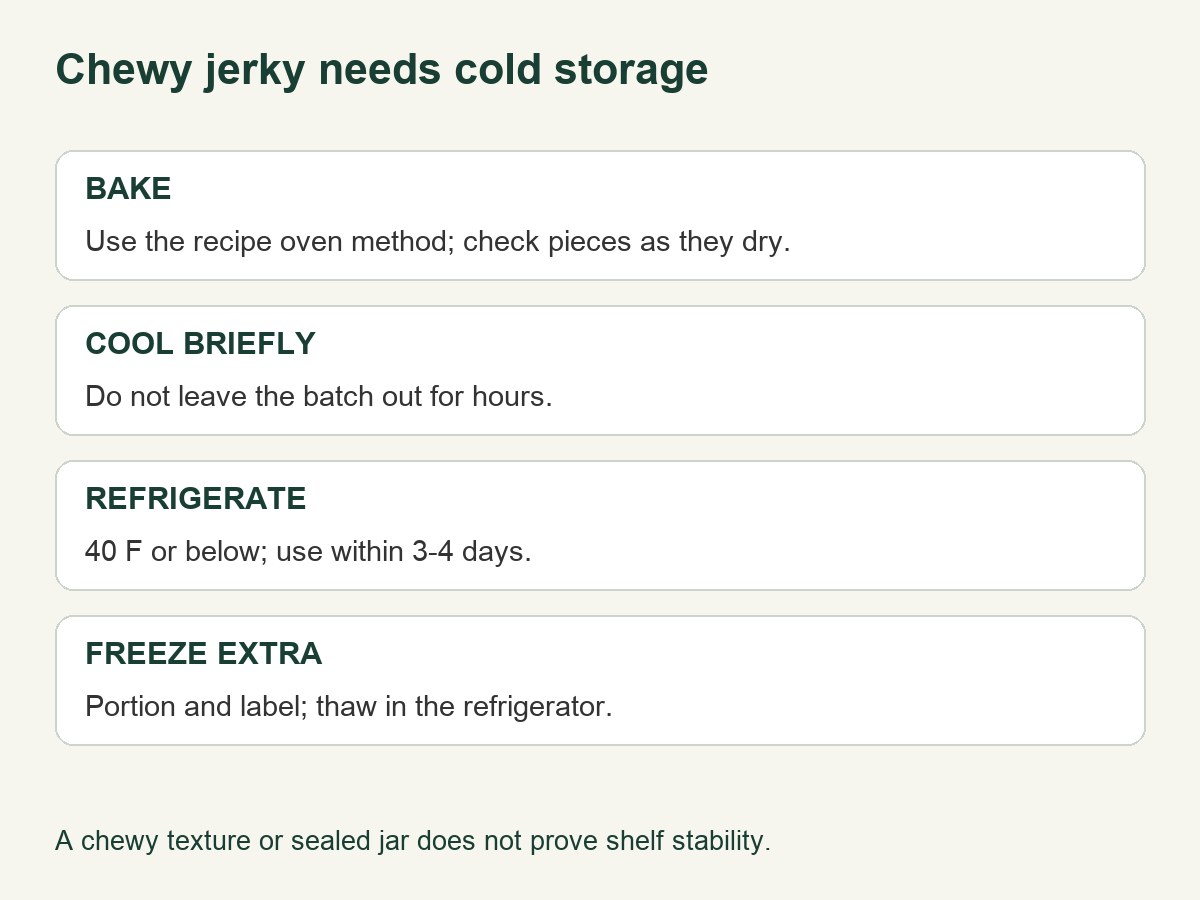
Cool the pieces briefly on a clean surface and refrigerate promptly in a covered food-safe container. Follow USDA's general leftover guidance: keep the refrigerator at 40°F or below, refrigerate within two hours, or within one hour when the surroundings exceed 90°F, and use refrigerated leftovers within three to four days.
Those are conservative cooked-leftover handling limits, not a measured shelf-life study for this exact formula. Freeze small portions if you will not use them promptly, label the date, and thaw in the refrigerator. Freezing and thawing may change the texture.
A sealed jar, zipper bag or vacuum sealer does not make a moist batch safe to store at room temperature. Take a chilled portion in an insulated container with a cold source for an outing, and apply the same time limits. Do not describe this homemade version as an unrefrigerated backpacking ration.
Serving ideas and nutrition expectations
Serve a small portion on its own, chop it over rice or a grain bowl, or add it to a snack plate just before eating. Keep the rest of the batch cold. Softer pieces can be used as a savory topping rather than baked indefinitely in pursuit of a commercial jerky texture.
Mushrooms provide a different food experience from meat jerky. A similar chew does not mean equivalent protein. The amount of sauce retained, the final yield and the ingredients selected all affect the finished nutrition, so this recipe does not publish an unverified calorie count or promise a high-protein snack.
For readers making meat jerky as well, our smoked beef jerky guide uses a separate meat-heating method. Do not transfer the mushroom instructions to raw meat or fish.
Mushroom jerky questions
Do I need a dehydrator?
No. This recipe uses an oven. If you prefer a dehydrator, use a suitable mushroom recipe and the manufacturer's directions; do not assume the oven time converts directly to a lower dehydrator setting.
Can I leave shiitake mushrooms whole?
The method here uses evenly sliced caps with tough stems removed. Whole caps take a different amount of time, so avoid mixing them into this batch.
Does the vinegar preserve the jerky?
The small amount in this marinade is included for flavor. This is not a tested pickling or shelf-stable preservation formula. Refrigerate the finished jerky.
Is this recipe vegan and gluten-free?
The listed ingredients are plant-based. Gluten-free suitability depends on the sauce and other product labels you choose; check them rather than assuming all soy sauces or tamari products qualify.
Why isn't there a precise finished weight?
Mushroom moisture, trimming, slice thickness and the amount of marinade retained change the yield. The original four servings are a batch-division guide, not a measured weight for each serving.