
Old-Fashioned Deer Jerky Recipe: Savory Venison Strips
We may earn commission for items you purchase. As an Amazon Associate we earn from qualifying purchases.
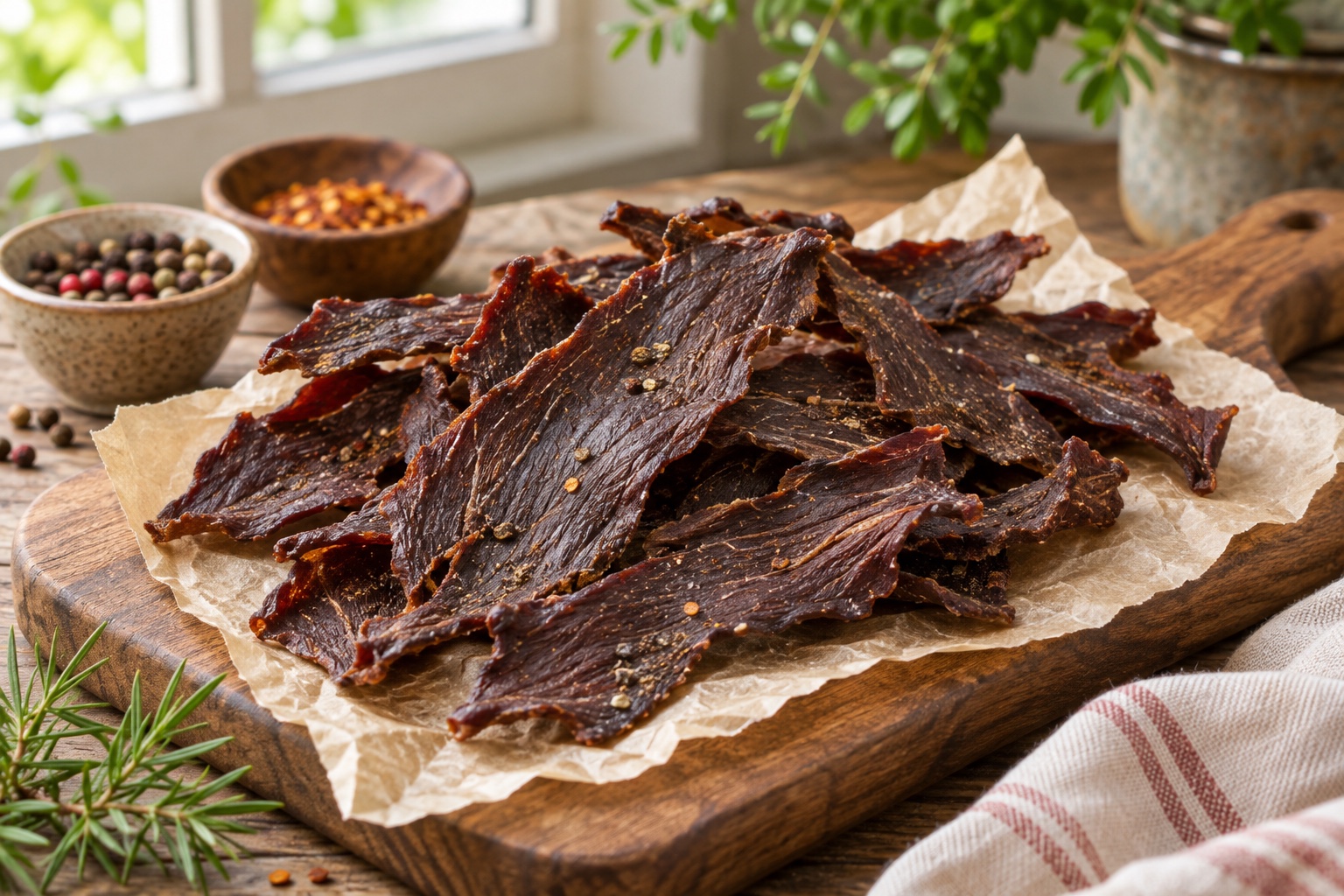
This old-fashioned deer jerky recipe marinates sliced venison overnight in soy sauce, Worcestershire, brown sugar and spices. Heat the strips before drying, then check their texture rather than relying on a fixed drying time.
Old-fashioned deer jerky recipe
Ingredients
- 2 pounds lean venison, sliced into strips no more than 1/4 inch thick
- 1/4 cup Worcestershire sauce
- 1/4 cup soy sauce
- 1/4 cup brown sugar
- 2 tsp garlic powder
- 2 tsp onion powder
- 2 tsp smoked paprika
- 2 tsp ground black pepper
- 1 tsp cayenne pepper (optional)
Instructions
- Slice the venison. Thaw frozen venison in the refrigerator. Trim visible fat and cut the lean meat into strips no more than 1/4 inch thick. Cut with the grain for a chewier strip or across it for a more tender bite. Wash hands and clean surfaces after handling raw meat.
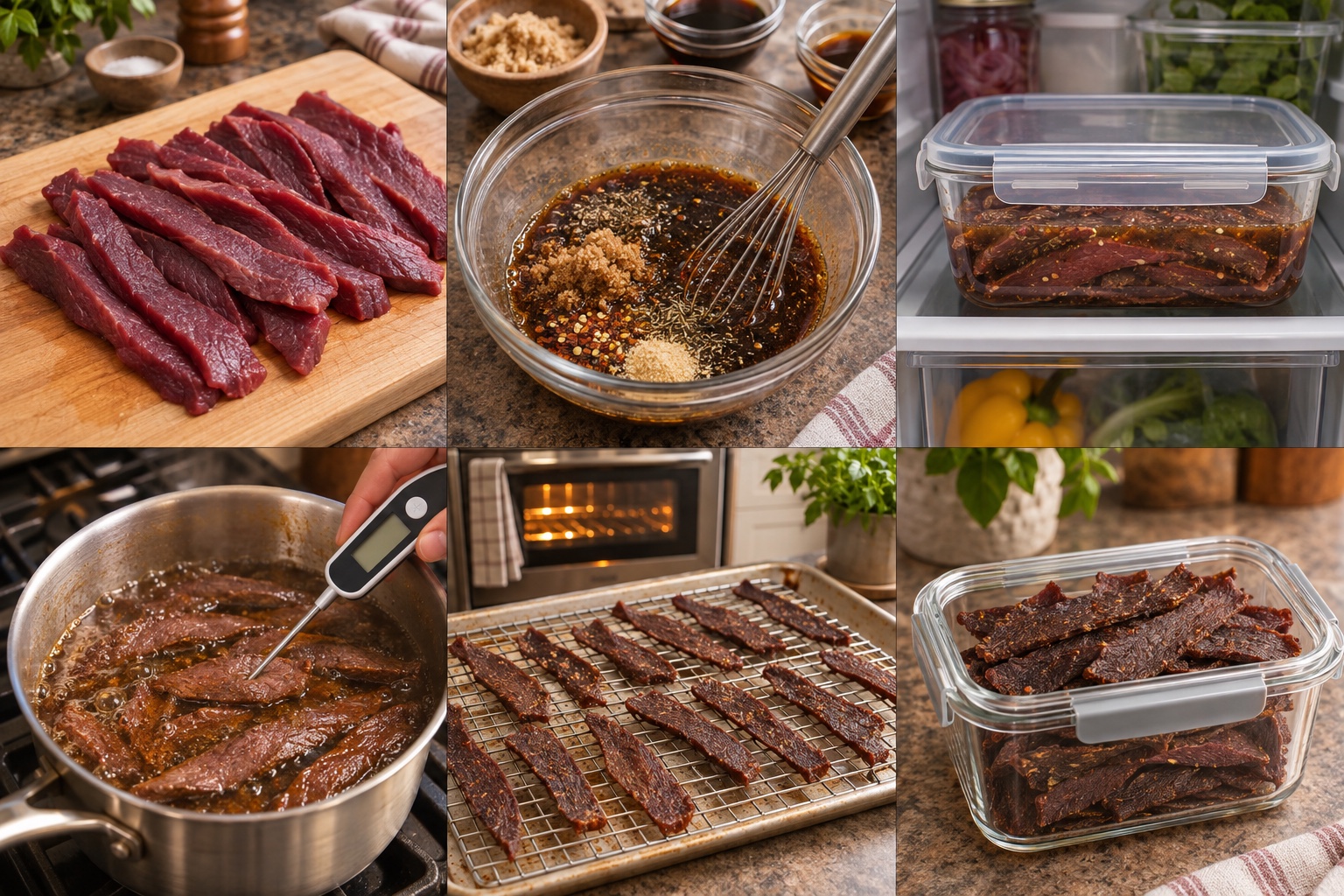
Trim and slice lean venison into even strips. - Mix the marinade. In a nonreactive bowl, stir together the Worcestershire sauce, soy sauce, brown sugar, garlic powder, onion powder, smoked paprika, black pepper and optional cayenne.
Stir the soy, Worcestershire, sugar and spices together. - Marinate in the refrigerator. Add the venison and turn to coat. Cover and refrigerate for at least 8 hours or overnight, as in the original recipe. Do not marinate at room temperature.
Refrigerate the venison in its marinade. - Heat before drying. Transfer the meat and marinade to a saucepan. Bring to a boil and boil for 5 minutes, following National Center for Home Food Preservation guidance for strips no more than 1/4 inch thick. Check several strips with a food thermometer to confirm they reach at least 160°F. Drain and discard the marinade; use clean utensils for the cooked meat.
Heat the strips in the marinade and check their temperature. - Dry the strips. Arrange the strips close together but not overlapping on clean dehydrator trays or a wire rack over a baking sheet. Dry at 140°F in a dehydrator or an oven that can reliably maintain that temperature. Start checking after 3 hours; timing varies with thickness and equipment. A cooled test strip should crack but not break when bent.
Dry the strips separately on a clean rack. - Cool and store. Cool the finished jerky, blot any oil and pack it in a clean, airtight container. Refrigerate or freeze for best quality. Discard jerky with mold, an off odor or other signs of spoilage.
Cool and package the finished jerky for cold storage.
The original marinade quantities are retained; the revised safety and drying method has not been independently kitchen-tested.
Choosing and slicing venison
Start with properly handled, lean whole-muscle venison. Trim fat, which can become rancid, and slice strips no more than 1/4 inch thick. Partially firming the meat in the freezer can make even slicing easier; thaw and marinate it in the refrigerator. Cut against the grain for easier chewing or with the grain for a firmer texture.
The original recipe mentioned ground venison, but ground meat needs a distinct preparation method. Use our ground venison jerky guide for shaped strips rather than applying this sliced-meat method to ground meat.
Safe heating and drying
The National Center for Home Food Preservation describes boiling marinated strips no thicker than 1/4 inch for 5 minutes before drying and checking several strips for 160°F. USDA likewise recommends heating meat to 160°F before dehydrating; a low oven setting alone does not prove the meat reached a safe temperature. See USDA jerky guidance.
A dehydrator or oven needs to hold the drying temperature reliably. Check your equipment with a suitable thermometer and follow its instructions. If your oven cannot maintain 140°F, use a suitable adjustable dehydrator instead. The original 4–5-hour estimate is not a reliable safety or dryness test.
Use clean trays and tools after heating, and discard the used marinade. Follow local chronic wasting disease testing advice; do not eat meat from an animal that tests positive. Cooking does not make CWD-positive venison safe. See CDC guidance.
Questions and storage
How can I tell when jerky is dry?
Let a test strip cool, then bend it. It should crack without breaking. Drying time depends on strip thickness, moisture and equipment; start checking after three hours when the meat was heated in marinade.
Can I use ground venison?
Yes, but use a recipe and process designed for ground meat. The original marinade here is written for sliced venison; see the ground venison recipe for its own ingredients and directions.
How should I store homemade jerky?
Once cooled, seal and refrigerate or freeze it. Homemade products vary in dryness, so do not assume this batch is shelf-stable. The preservation center recommends refrigeration or freezing for best quality.
More wild-game recipes
For another marinade, try teriyaki venison jerky, or browse our recipe collection.