
Deer Jerky with Dale’s Seasoning
We may earn commission for items you purchase. As an Amazon Associate we earn from qualifying purchases.
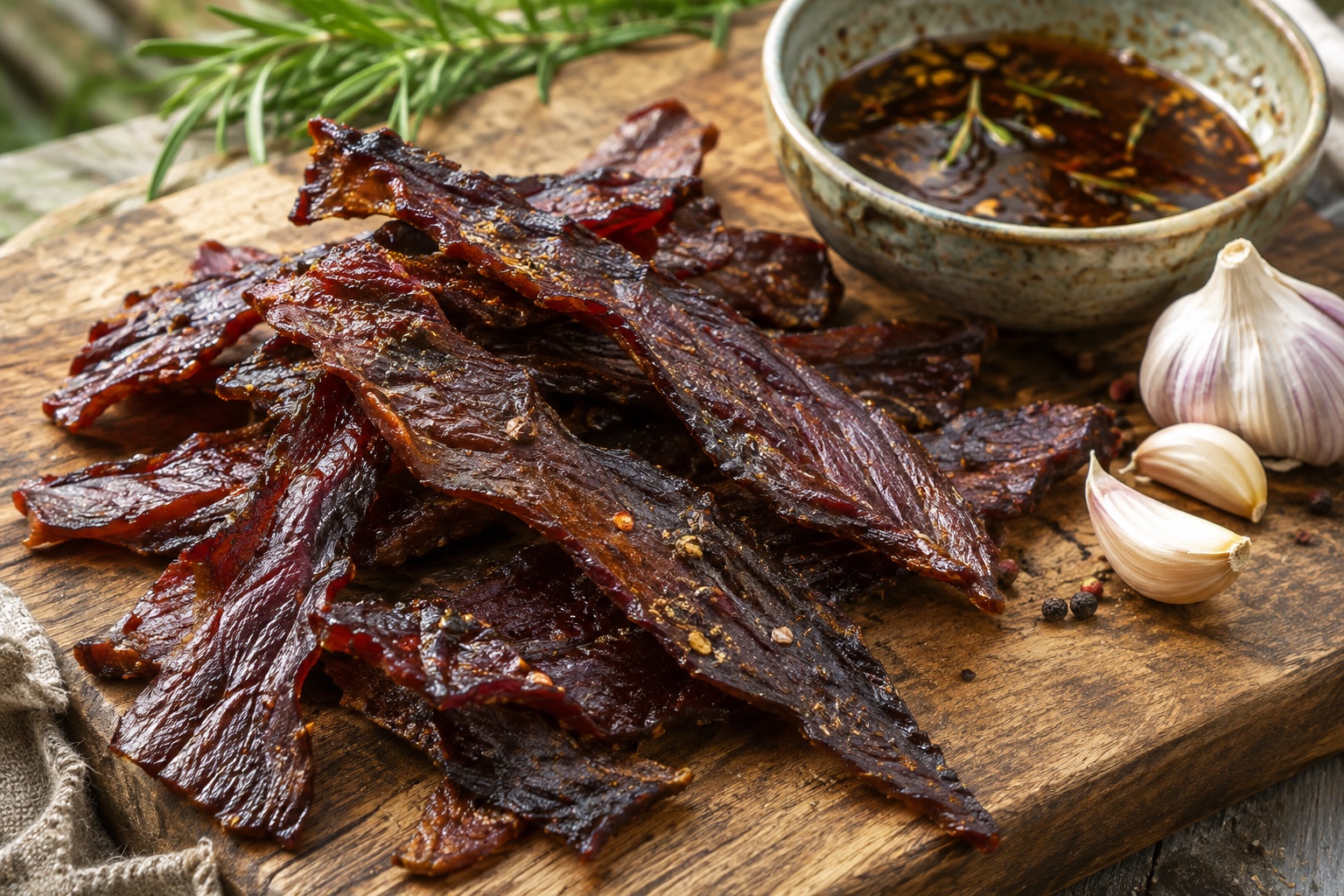
This venison jerky uses Dale’s Seasoning, Worcestershire sauce, apple cider vinegar and smoked paprika for a savory marinade. Refrigerate the strips as they marinate, heat them to 160°F, then dry them with good airflow.
About the marinade
Dale’s is a bottled liquid seasoning; its sodium content and ingredients vary by version. Check the label for allergens and sodium. This recipe preserves the measured amounts from the original recipe card, which used ¼ cup of Dale’s rather than the conflicting 1 cup suggested elsewhere in the old article.
Dale’s deer jerky recipe
Ingredients
- 2-3 lbs. of lean deer meat (cut into thin strips)
- 1/4 cup Dale's Seasoning
- 1/4 cup Worcestershire sauce
- 1/4 cup Apple Cider Vinegar
- 1 teaspoon garlic powder
- 1 teaspoon onion powder
- 1 teaspoon ground black pepper
- 1 teaspoon smoked paprika
Method
- Slice the venison: Trim visible fat and silverskin from the venison. Cut evenly into strips no thicker than ¼ inch; partially freezing the meat first makes slicing easier. Slice across the grain for a more tender bite.
- Mix the marinade: Whisk Dale’s Seasoning, Worcestershire sauce, apple cider vinegar, garlic powder, onion powder, black pepper and smoked paprika together. The original recipe card uses ¼ cup of Dale’s Seasoning; an earlier section gave a conflicting amount.
- Marinate cold: Coat the strips in a covered food-safe container or sealed bag and refrigerate overnight at 40°F or below, as in the original recipe. Wash hands, utensils and surfaces after handling raw venison. Discard the used marinade.
- Heat before drying: Preheat the oven to 325°F. Arrange strips without overlapping on oven-safe racks over rimmed baking sheets. Heat until their centers reach 160°F, checking several thick strips with a thin-probe food thermometer. Keep uncooked batches refrigerated until ready to heat.
- Dry the strips: Using clean utensils, transfer heated strips to clean dehydrator trays. Dry at 140°F, or use clean oven racks in an oven that can maintain about 140–150°F with suitable airflow. Keep pieces separated. Drying time varies; a cooled test piece should crack without breaking when bent and have no moist or underdone spots.
- Cool and store cold: Cool the jerky on a clean rack. Package in a clean airtight container and refrigerate or freeze. Homemade jerky can dry unevenly, so do not assume it is shelf-stable.
The revised heating and drying method has not been independently kitchen-tested.
See the illustrated instructions below for each step.
1. Slice the venison
Trim visible fat and silverskin from the venison. Cut evenly into strips no thicker than ¼ inch; partially freezing the meat first makes slicing easier. Slice across the grain for a more tender bite.
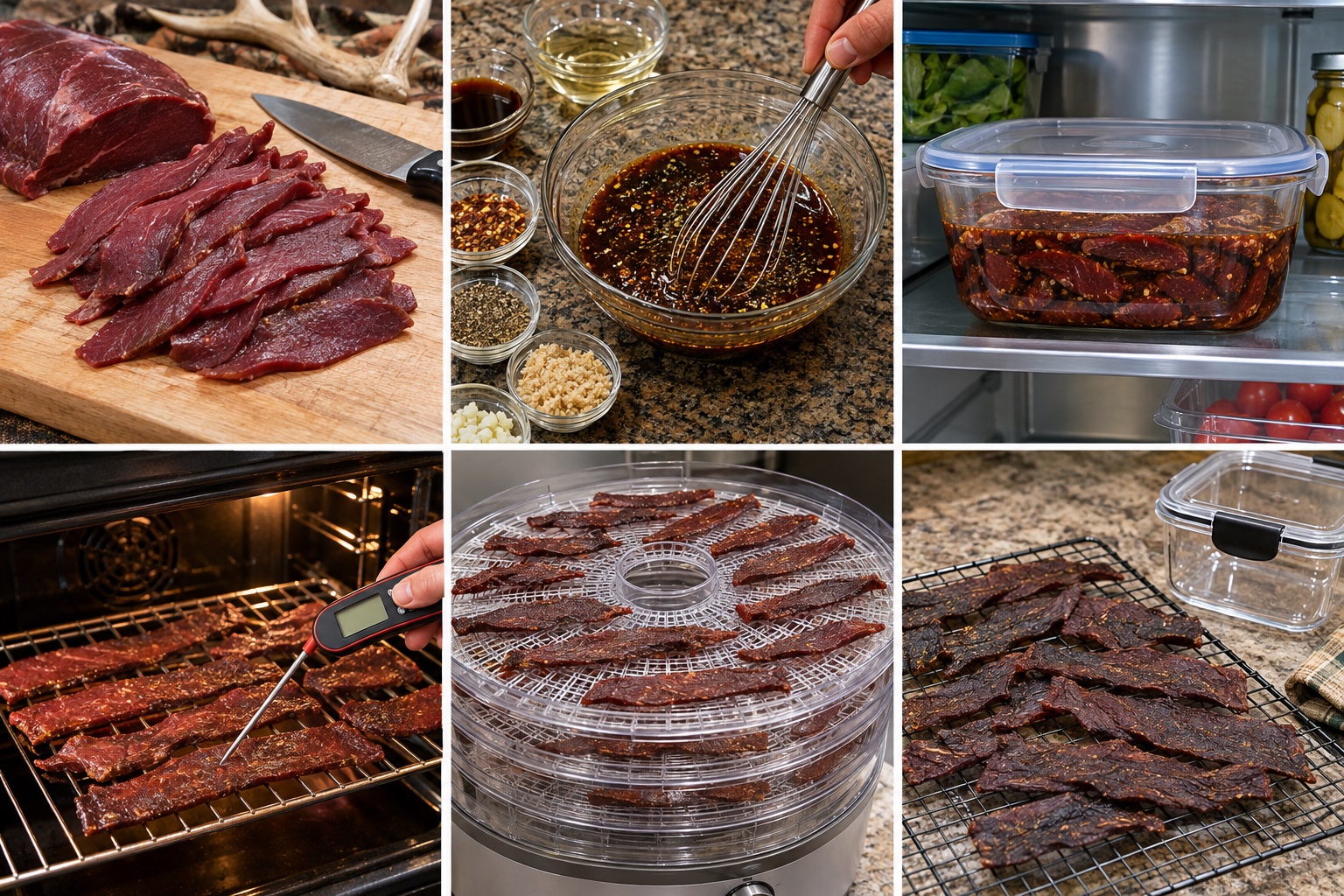
2. Mix the marinade
Whisk Dale’s Seasoning, Worcestershire sauce, apple cider vinegar, garlic powder, onion powder, black pepper and smoked paprika together. The original recipe card uses ¼ cup of Dale’s Seasoning; an earlier section gave a conflicting amount.
3. Marinate cold
Coat the strips in a covered food-safe container or sealed bag and refrigerate overnight at 40°F or below, as in the original recipe. Wash hands, utensils and surfaces after handling raw venison. Discard the used marinade.
4. Heat before drying
Preheat the oven to 325°F. Arrange strips without overlapping on oven-safe racks over rimmed baking sheets. Heat until their centers reach 160°F, checking several thick strips with a thin-probe food thermometer. Keep uncooked batches refrigerated until ready to heat.
5. Dry the strips
Using clean utensils, transfer heated strips to clean dehydrator trays. Dry at 140°F, or use clean oven racks in an oven that can maintain about 140–150°F with suitable airflow. Keep pieces separated. Drying time varies; a cooled test piece should crack without breaking when bent and have no moist or underdone spots.
6. Cool and store cold
Cool the jerky on a clean rack. Package in a clean airtight container and refrigerate or freeze. Homemade jerky can dry unevenly, so do not assume it is shelf-stable.
Choosing and slicing venison
Lean hindquarter muscles are useful for jerky. Trim visible fat and slice consistently so pieces dry at a similar rate. Follow local wildlife handling and testing guidance before using game meat.
Drying and food safety
After heating the meat to 160°F, use an adjustable dehydrator or an oven capable of maintaining low drying temperatures and adequate airflow. A dehydrator air setting by itself does not prove the meat reached 160°F. Penn State Extension’s jerky guide explains heating and drying. It also recommends freezing venison at 0°F or below for at least 30 days in portions no thicker than 6 inches as a parasite precaution; freezing does not replace cooking.
CWD and storage
Follow local chronic wasting disease (CWD) testing recommendations and do not eat an animal that tests positive. Cooking and freezing do not make CWD-positive meat safe; see CDC guidance. Cool finished jerky and refrigerate or freeze it in a clean airtight container. Do not rely on smell or appearance alone to establish safety.
Serving suggestions
Serve chilled jerky with crackers, cheese or sliced apples. Dale’s and Worcestershire can both add sodium, so check the labels if sodium matters to you.
Nutrition and allergens
Nutrition varies with the cut, sauce, marinade absorbed and portion size. There is no verified nutrition calculation for this recipe. Check the labels for soy, wheat, fish or other allergens in the seasonings you choose.
Common questions
Can I use a dehydrator?
Yes. First heat the venison strips to 160°F, then dry them in an adjustable dehydrator at 140°F. Check a cooled piece for dryness; time varies with thickness and the machine.
Can I use an oven?
Use an oven after the heating step only if it can maintain a suitably low drying temperature and has adequate airflow. Follow the manufacturer’s instructions; a separate dehydrator is an option when it cannot.