
Deer Stew in the Crock Pot: Slow Cooker Venison Recipe
We may earn commission for items you purchase. As an Amazon Associate we earn from qualifying purchases.
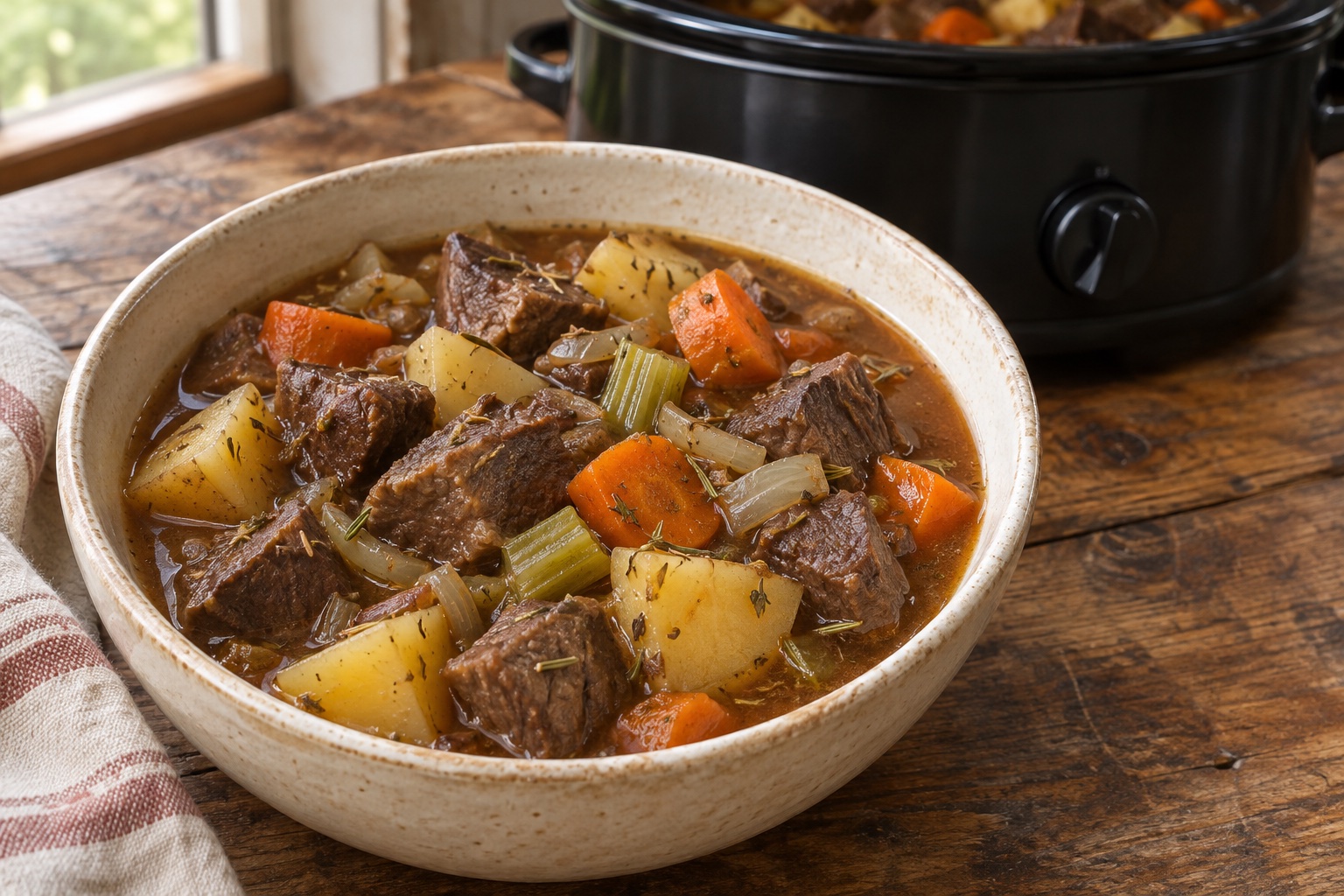
This deer stew crock pot recipe combines cubed venison, potatoes, carrots, celery, onion, and garlic in a broth seasoned with Worcestershire sauce, thyme, and rosemary. Plan on 6–8 hours on low, then check both the meat and vegetables before serving. The result should be tender venison and soft potatoes in a savory broth, rather than a thick flour-based gravy.
The ingredient amounts below retain the original Sportsman Crew recipe. The method now explains how to prepare the meat, load the slow cooker, check doneness, and store leftovers. The six step images are illustrations of the process.
Choosing and preparing deer meat for stew
Use boneless venison stew meat or a shoulder or neck roast that can be trimmed and cut into cubes. These cuts suit a long, moist cooking method. Save the tenderloin for a shorter cooking method; it does not need a full day in the slow cooker. If using packaged stew meat, check that the pieces are reasonably similar in size so smaller pieces do not finish far ahead of larger ones.
Start with properly handled, refrigerated meat. Thaw frozen venison completely in the refrigerator before preparation. Trim away visible silverskin, tough connective tissue, and excess fat with a sharp knife. Cut the meat into roughly 1-inch pieces. Trimming improves texture, but no marinade or cooking method can rescue spoiled meat.
Keep raw meat and its juices away from prepared vegetables and serving utensils. Use separate boards, and wash your hands and equipment after handling raw venison. Do not rinse raw meat or attempt to remove hair with a flame. This recipe starts with clean, processed meat ready for the kitchen.
Slow cooker and equipment
A slow cooker provides steady, moist heat while the venison and vegetables cook together. You will also need a cutting board, sharp knife, measuring jug, mixing bowl, spoon, and food thermometer. Use a cooker that fits this batch within the fill range in its manual; do not assume the largest available model is the best fit.
FoodSafety.gov recommends filling a slow cooker between half and two-thirds full. If your cooker is much larger than the prepared ingredients require, choose a smaller cooker or a suitably scaled recipe. Avoid packing the ingredients tightly above the recommended level.
As an Amazon Associate, we earn from qualifying purchases.
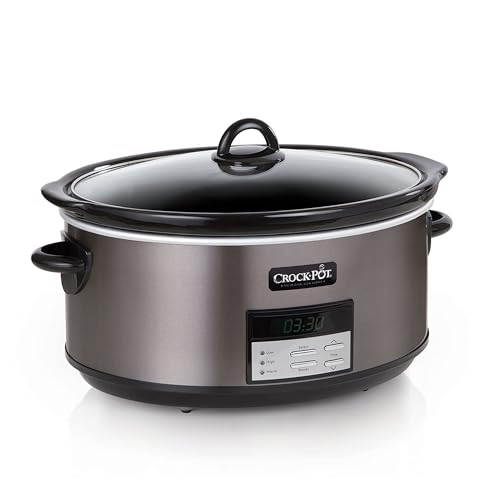
An eight-quart option for larger batches. Check the fill level for your recipe before choosing this size.
- Programmable timer runs up to 20 hours.
- Auto-warm function holds food after cooking.
- Removable dishwasher-safe lid and stoneware.
Ingredients for slow cooker venison stew
Cooking time: approximately 6–8 hours on low, with additional time if needed for tenderness. Appliance performance, the cut of meat, and cube size affect the finish time.
2 lbs deer meat, cubed
1 onion, chopped
4 cloves garlic, minced
4 potatoes, cubed
2 carrots, cubed
2 stalks celery, chopped
2 cups beef broth
2 tablespoons Worcestershire sauce
1 tablespoon dried thyme
1 teaspoon dried rosemary
Salt and pepper, to taste
The tablespoon of dried thyme is the original recipe amount and gives the broth a pronounced herbal flavor. If you prefer a milder stew, use less as a deliberate variation. Choose a lower-sodium broth if you want more control over seasoning, and wait until the end to make the final salt adjustment.
Potatoes provide much of the body. Cut them into substantial, similar-sized chunks so they hold together during the long cooking time. The two cups of broth are the starting quantity from the original recipe; check the liquid guidance in your cooker’s manual and add more broth if your appliance requires it.
How to make deer stew in the crock pot
1. Prepare the meat and vegetables
Thaw the venison completely, trim it, and cut it into approximately 1-inch cubes on a dedicated meat board. On a clean separate board, chop the onion, mince the garlic, and cut the potatoes, carrots, and celery into bite-size pieces. Keep the meat refrigerated until you are ready to load the cooker.
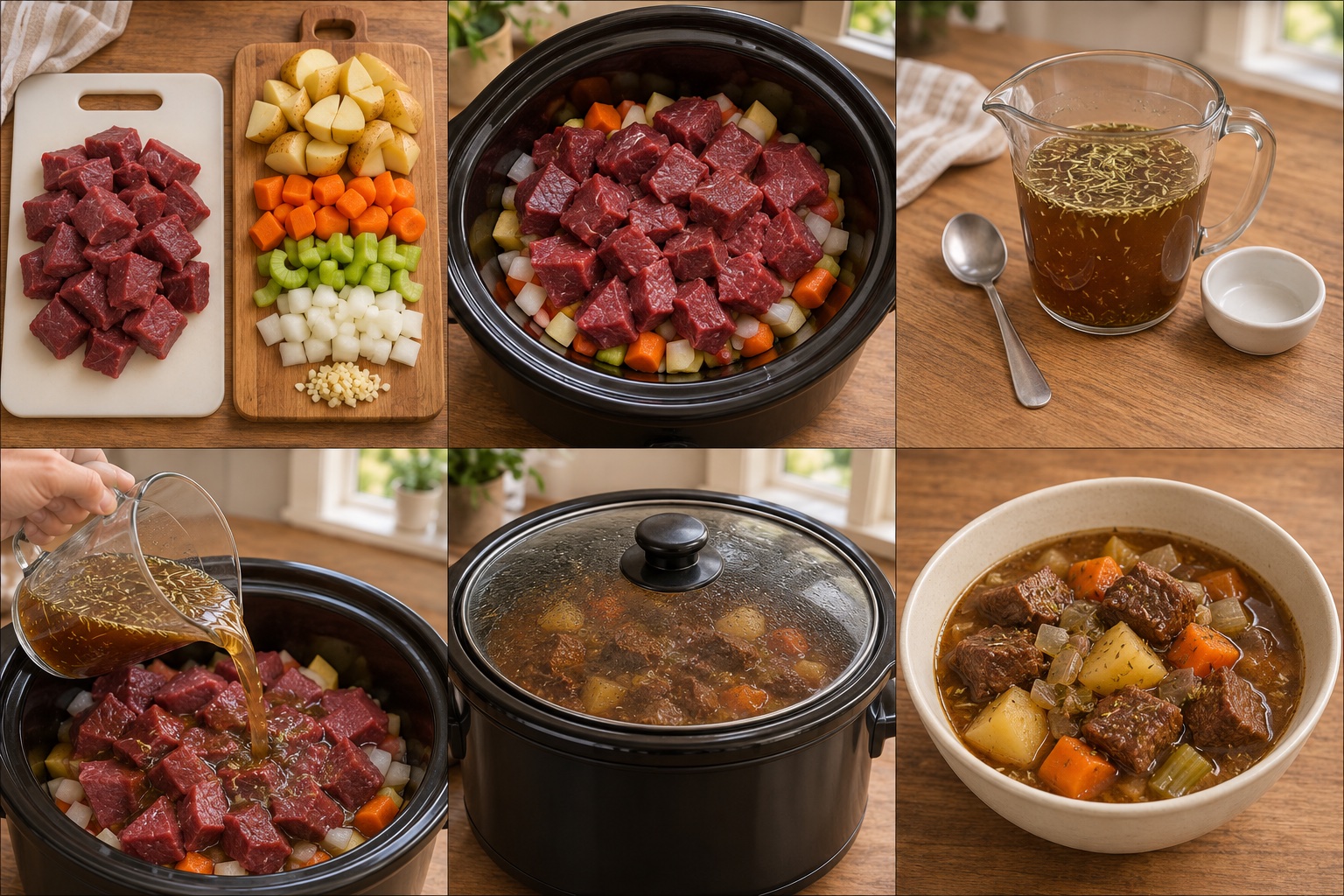
Keeping the meat pieces even matters more than making every vegetable exactly the same shape. Thick carrot chunks may take longer than thin slices, so aim for a consistent size within each vegetable.
2. Layer vegetables and venison
Put the potatoes, carrots, celery, onion, and garlic in the slow cooker, then add the cubed venison over them. Check the appliance’s recommended fill range before continuing. The root vegetables go toward the bottom because they can take longer to soften in a slow cooker.
This is a no-sear version of venison stew: you do not need to brown the meat in a skillet first. That keeps the preparation simple and preserves the character of the original recipe.
3. Mix the broth and seasonings
In a bowl or measuring jug, stir together 2 cups beef broth, 2 tablespoons Worcestershire sauce, 1 tablespoon dried thyme, and 1 teaspoon dried rosemary. Stir well to distribute the herbs. Do not taste any mixture after it has touched raw meat.
Crush particularly long rosemary needles between clean fingers before adding them if you prefer smaller herb pieces in the finished broth. There is no flour or canned cream soup in this ingredient list.
4. Add the liquid and begin cooking
Pour the seasoned broth evenly over the venison and vegetables. Add a little salt and pepper, allowing for the salt already in the broth and Worcestershire sauce. Follow your cooker’s liquid requirements, adding broth if needed. Fit the lid and start cooking immediately; do not use a delayed start with raw meat.
The finished consistency depends on how much moisture the vegetables release and how tightly the lid seals. You can adjust the broth after cooking, but the cooker must have adequate liquid from the start.
5. Slow cook and check doneness
Cook covered on low for approximately 6–8 hours. Keep the lid in place until you are ready to check near the end. Verify the stew reaches at least 165°F with a food thermometer, checking several meat pieces and the center of the stew. The potatoes and carrots should be easily pierced, and the venison should yield to a fork. Continue cooking if it is still tough.
The 165°F check is a conservative target for this mixed slow-cooked dish, consistent with Colorado State University Extension’s slow-cooker guidance. Tenderness is a separate check: reaching a safe temperature does not mean a tough cut has softened enough to serve.
6. Season and serve
Stir the fully cooked stew gently, taste the broth, and adjust salt and pepper. Ladle venison, vegetables, and broth into bowls. If you want a little more body without adding another ingredient, mash a few cooked potato chunks into the broth and stir them through before serving.
Serve the stew hot, with bread or a simple vegetable side if desired. It already contains meat and potatoes, so it can also be a complete one-bowl meal.
Tender venison and better broth: common questions
Why is my deer stew meat still tough?
Check the cut and size of the pieces. A tough shoulder cut may need longer than a package of small stew cubes. If the stew is hot and the meat remains resistant to a fork, continue covered cooking and check again. Silverskin left on the meat can also remain unpleasantly chewy.
Do not solve toughness by repeatedly lifting the lid and stirring. Each opening releases heat. If the vegetables are already tender, handle them gently so they do not break apart while the meat finishes.
Why is the broth thin?
This recipe has no flour or starch thickener, so expect a broth-based venison stew. Mashing some of its potatoes is the simplest adjustment. If the stew is too concentrated or salty, stir in a small amount of hot water or unsalted broth and heat through before serving.
Can I add other vegetables?
Keep the main recipe as written for the first batch. Additional vegetables change the amount of food and liquid in the cooker. If you make substitutions later, maintain the appropriate fill level and record the change so you can repeat a result you like.
Serving, storing, and reheating leftovers
Move leftovers into shallow containers and refrigerate promptly, within two hours of cooking, or within one hour when the surrounding temperature exceeds 90°F. Do not leave a full crock of stew on the counter to cool overnight.
Reheat portions on the stovetop or in the microwave to 165°F, stirring and checking the center. A slow cooker is not the right appliance for reheating cold leftovers. If you use it to hold already reheated stew for serving, maintain at least 140°F.
For another way to use a tender cut, see our deer tenderloin recipe. Choose the cooking method to suit the cut instead of treating every part of the deer like stew meat.
Deer stew crock pot FAQ
Can frozen venison go straight into the slow cooker?
No. Thaw it first. Frozen meat can heat too slowly in a slow cooker. Refrigerator thawing lets you keep the meat cold until preparation.
Do I have to sear the venison?
No. The recipe uses raw, thawed cubes directly in the cooker. Browning would add a separate preparation step and a different flavor, but it is not required by this method.
Can I cook this on the warm setting?
No. Use the cooking setting specified in the recipe. Warm is a holding function for already cooked food, not a setting for cooking raw venison.
Is this recipe gluten-free?
Check the labels on your broth and Worcestershire sauce before making that claim. Formulations differ, and the ingredient name alone does not guarantee that a packaged product is gluten-free.
Food safety references
Preparation and cooling guidance: FoodSafety.gov: safely slow-cooked meals. Temperature checks, appliance use, and reheating: Colorado State University Extension: slow cooker food safety. Follow your appliance manual as well as these general guidelines.