
Pheasant Wild Rice Soup: Creamy Stovetop Recipe
We may earn commission for items you purchase. As an Amazon Associate we earn from qualifying purchases.
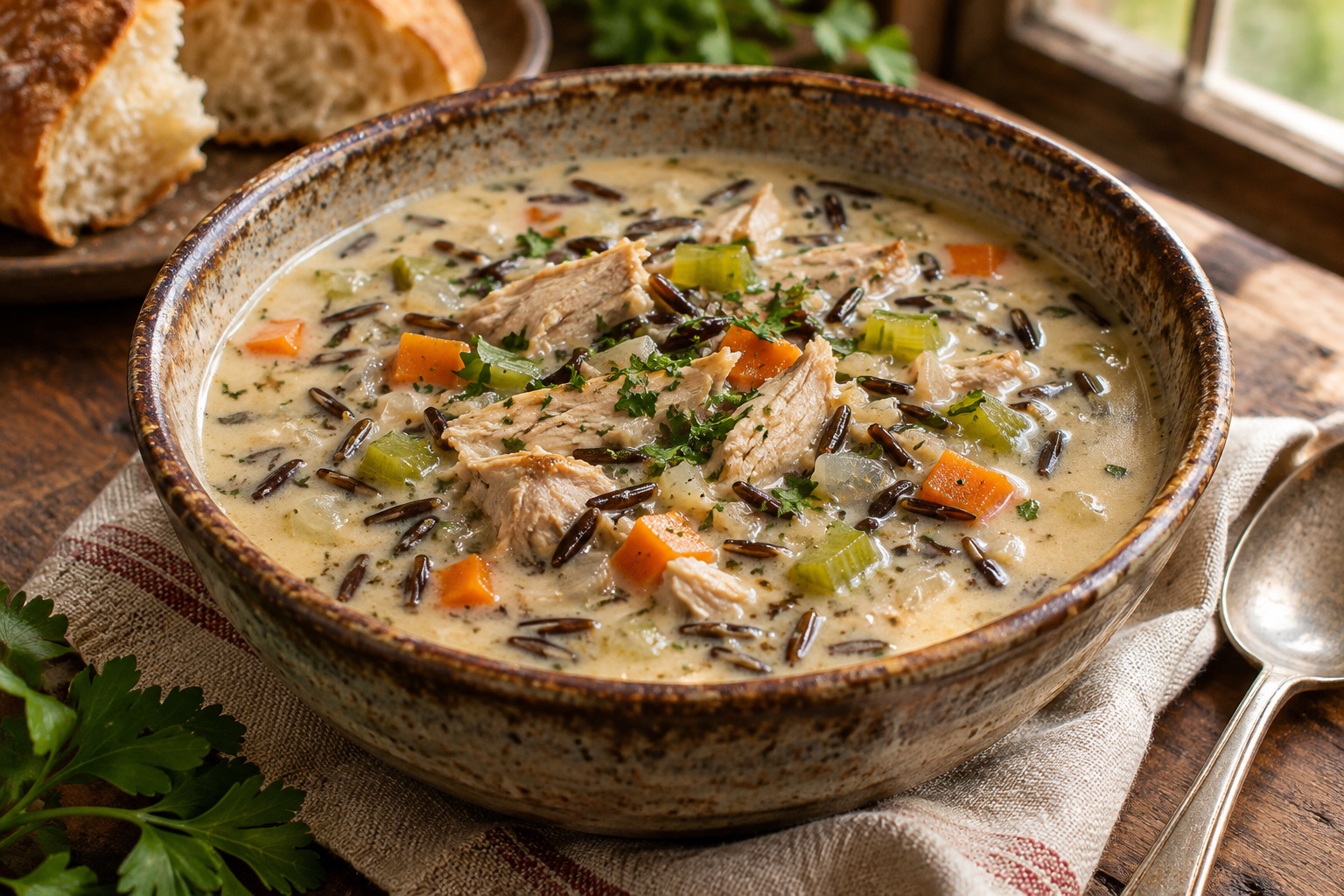
This pheasant wild rice soup combines cooked pheasant, wild rice, carrots, celery, and onion in a lightly creamy broth. Thyme, bay leaves, and smoked paprika season the pot. The recipe begins with already cooked, diced pheasant; it is a way to use safely chilled leftovers.
Pheasant wild rice soup recipe
Ingredients
2 tablespoons olive oil
1 onion, diced
2 cloves garlic, minced
2 carrots, diced
2 celery stalks, diced
2 tablespoons all-purpose flour
2 cups chicken broth
1 cup wild rice, rinsed
2 cups cooked, diced pheasant
2 bay leaves
1 teaspoon fresh thyme
1 teaspoon smoked paprika
Salt and freshly ground pepper, to taste
½ cup half and half
Chopped fresh parsley, for garnish
The original recipe calls for two cups of broth for one cup of uncooked wild rice. Rice absorbs liquid differently, so keep additional hot water or broth nearby and add it as needed for a soup consistency.
1. Prepare the ingredients
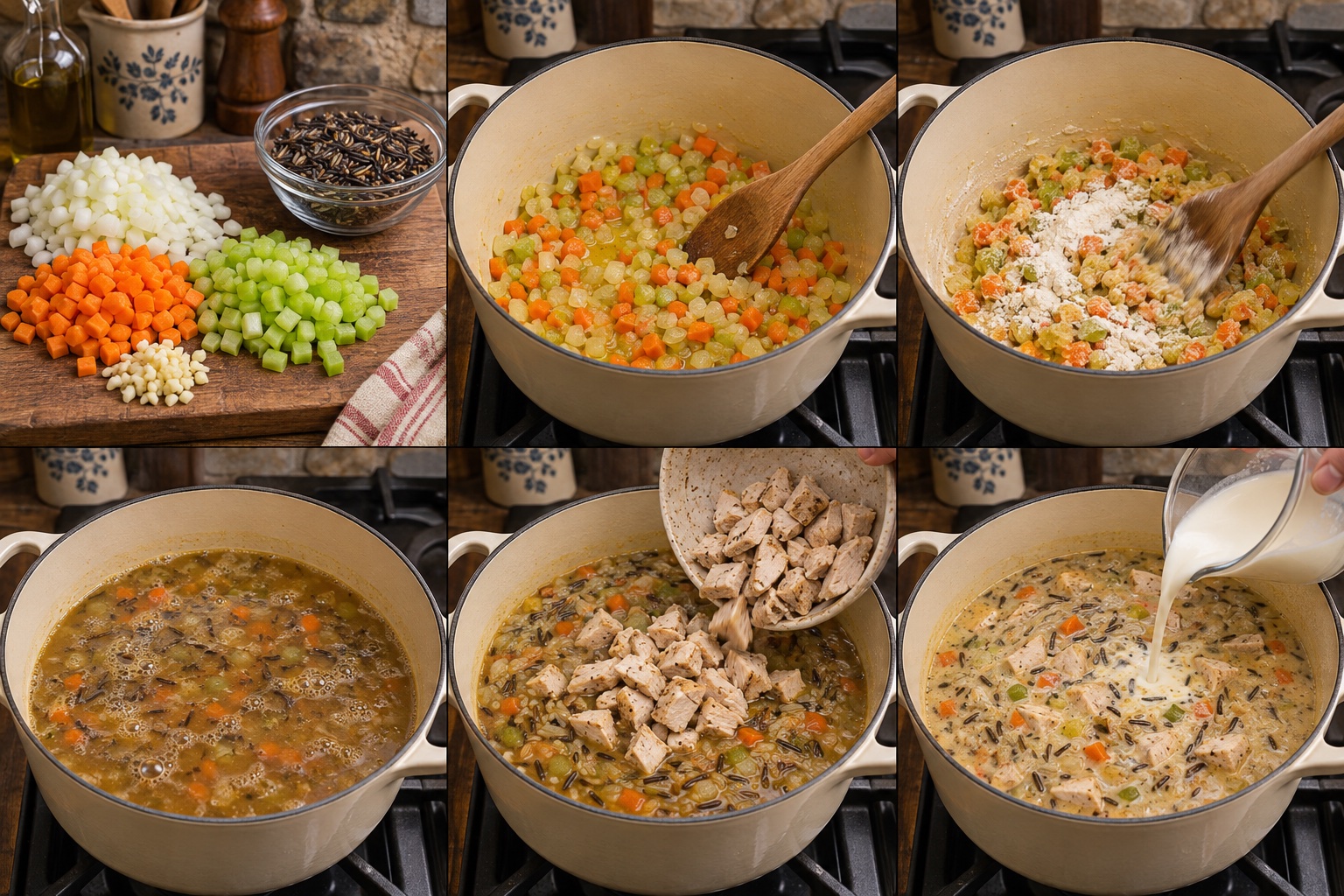
Rinse the wild rice. Dice the onion, carrots, and celery, and mince the garlic. Use pheasant that was previously cooked to 165°F and kept safely refrigerated; dice it with clean utensils. Keep cooked meat separate from raw poultry and its juices.
2. Soften the vegetables
Heat the olive oil in a large pot over medium heat. Add onion, garlic, carrots, and celery. Stir and cook until beginning to soften, about 5 minutes; reduce heat if the garlic browns too quickly.
3. Stir in flour
Sprinkle the flour over the vegetables and stir until coated. Let it cook briefly while stirring, then gradually add the chicken broth, scraping up the flour so it does not form lumps.
4. Simmer the wild rice
Stir in the rinsed wild rice and bring to a boil. Reduce to a gentle simmer, cover, and cook until the rice is tender, starting to check at about 40 minutes. Stir occasionally and add hot water or broth as needed so the rice does not run dry. Cooking time depends on the rice.
5. Add pheasant and seasonings
Add the cooked diced pheasant, bay leaves, thyme, smoked paprika, salt, and pepper. Simmer until the soup and pheasant reach 165°F throughout, checking with a food thermometer; the original recipe suggests about 5 minutes, but actual time varies. Add more liquid if needed.
6. Finish and serve
Lower the heat and stir in the half-and-half just before serving; warm gently. Remove the bay leaves, ladle into bowls, and garnish with parsley.
Choosing pheasant and wild rice
Wild rice adds a firm, nutty bite, while pheasant gives the soup a savory flavor. Check cooked wild pheasant carefully for any remaining bones or shot before dicing it. A wild-rice blend may cook at a different rate from straight wild rice; follow its package directions and adjust the liquid.
If starting with raw pheasant, cook it separately to at least 165°F before dicing and adding it to this soup. Use clean utensils and refrigerate the cooked meat promptly if it won't be used immediately.
Can you make it in a slow cooker?
This version gives stovetop directions. Slow cookers and types of wild rice vary, so use a slow-cooker recipe designed for your appliance instead of assuming the stovetop time transfers directly. Reheat cooked leftovers on the stove or in the microwave, not in a slow cooker.
Storage and reheating
Divide leftover soup into shallow containers and refrigerate within two hours, or one hour when the temperature is above 90°F. Keep at 40°F or below and use within 3–4 days. Reheat to 165°F, stirring for even heating. Rice can absorb broth as it sits, so add a little liquid when reheating if needed.
Frequently asked questions
Can I add mushrooms or potatoes?
Yes, as a variation. The original stovetop ingredient list does not include either; add enough liquid and cook added vegetables until tender.
Can I substitute chicken?
Cooked chicken is a practical substitute when pheasant isn't available. As with pheasant, cook it to 165°F and reheat the soup to 165°F.
Sources: USDA poultry temperature guidance and USDA reheating guidance.