
Deer Ham Recipe: Brown Sugar Venison Roast
We may earn commission for items you purchase. As an Amazon Associate we earn from qualifying purchases.
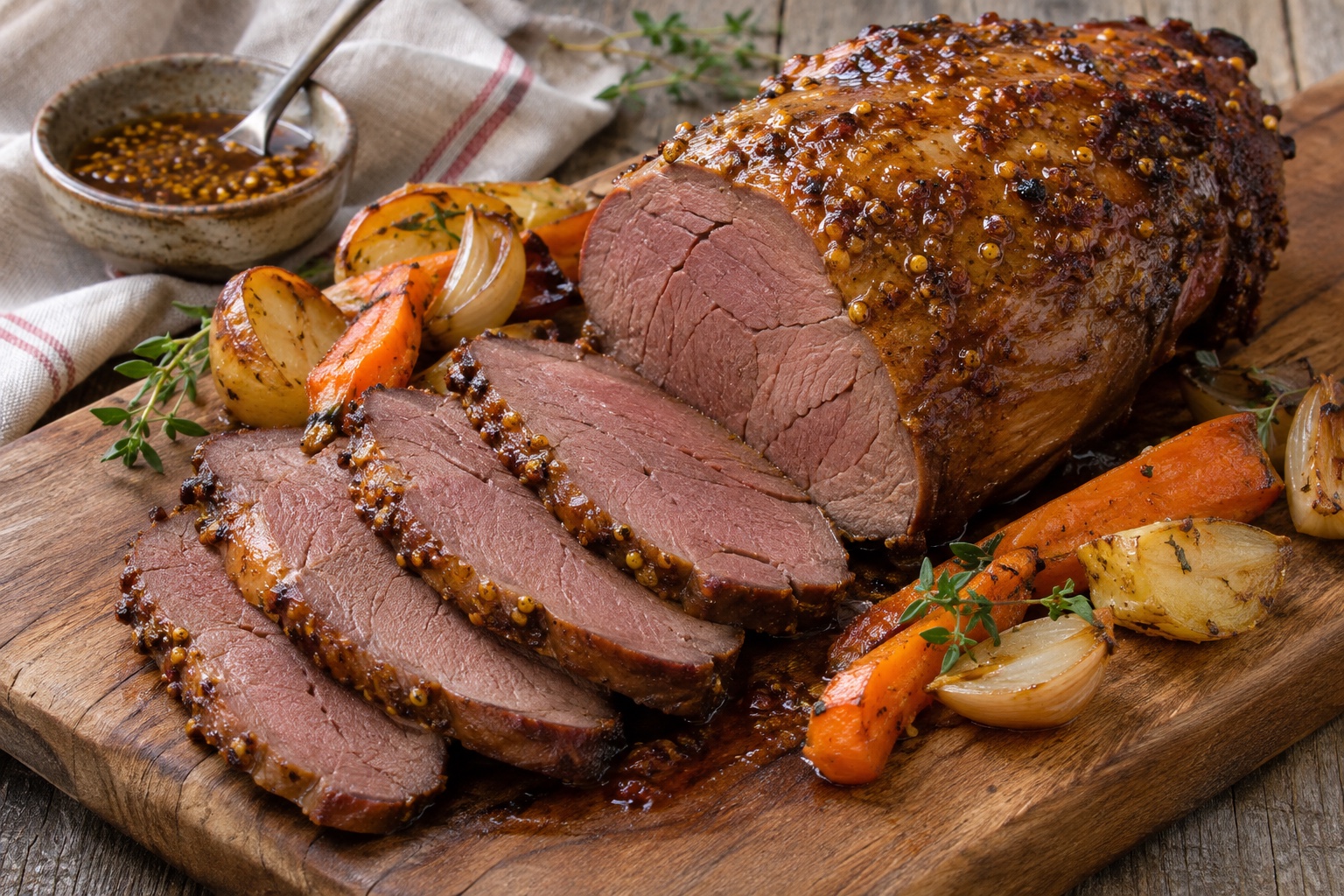
Roast an uncured venison hindquarter with a sweet brown sugar, mustard, paprika, and cider-vinegar seasoning. The original ingredient quantities are retained; the roasting temperature and doneness guidance have been clarified.
What is deer ham?
Hunters often call the hindquarter or a roast from the rear leg a deer ham. This recipe starts with raw, uncured venison, not a ready-to-eat cured pork-style ham. If your venison is already cured or fully cooked, follow its processor’s instructions instead.
Wild-game handling
Use properly handled, chilled venison. Follow local wildlife guidance for chronic wasting disease (CWD), consider testing where recommended, and do not eat an animal that tests positive. Cooking or freezing does not make CWD-positive meat safe. See CDC CWD guidance.
Brown sugar deer ham recipe
Ingredients
- 1 (3–4 lb) uncured deer ham or venison hindquarter roast
- 2 tsp garlic powder
- 1 cup brown sugar
- 2 tsp ground mustard
- 2 tsp smoked paprika
- 1 tsp ground black pepper
- 1/2 cup apple cider vinegar
The original recipe uses a substantial amount of brown sugar. Its ingredient quantities are retained, but this revised oven method has not been independently kitchen-tested.
1. Prepare the roast
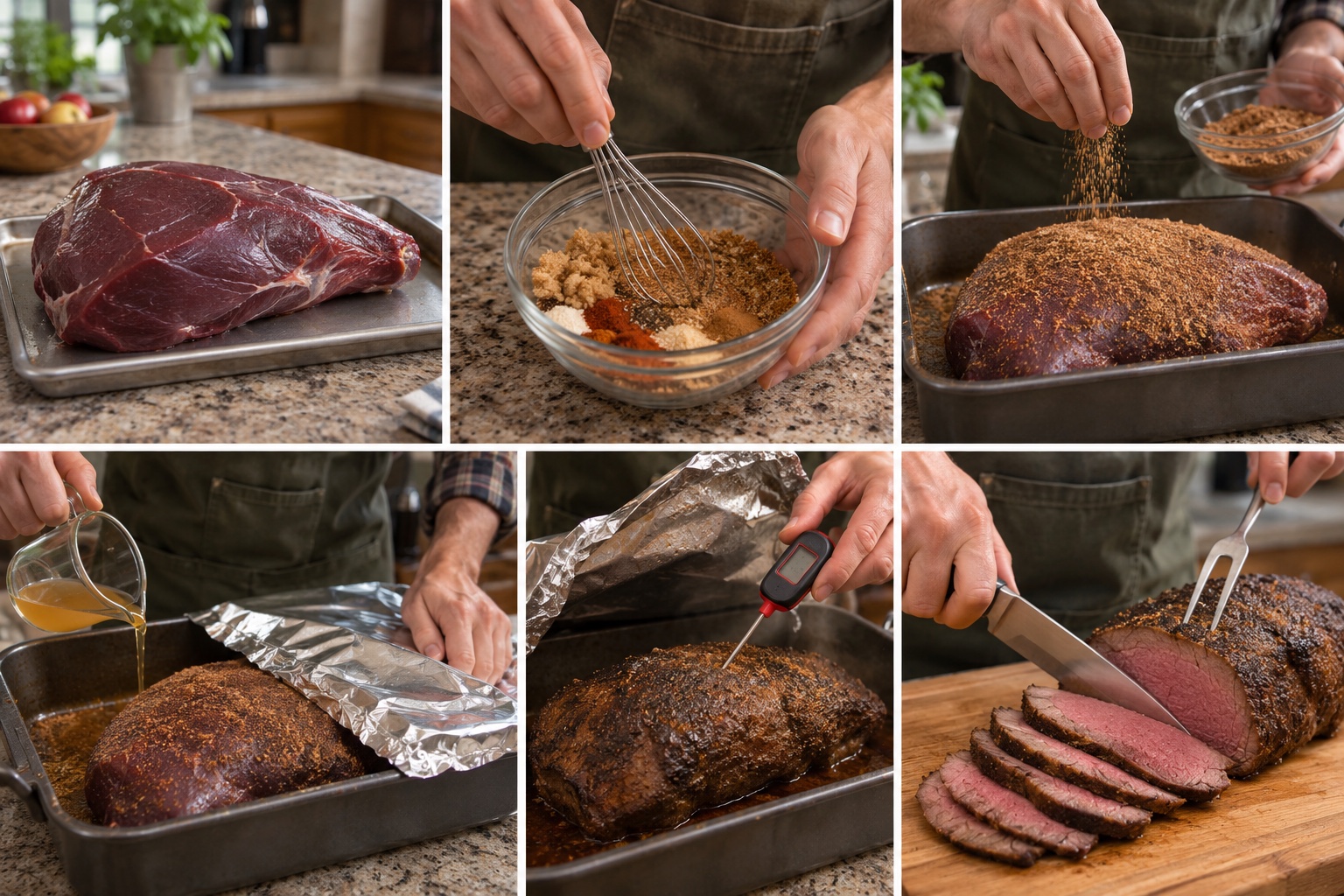
Thaw the venison in the refrigerator if frozen. Trim excess silverskin and visible fat as needed. Preheat the oven to 325°F. Keep raw venison separate from ready-to-eat food and wash hands and surfaces after handling it.
2. Mix the seasoning
Combine the original amounts of brown sugar, garlic powder, ground mustard, smoked paprika, and black pepper in a small bowl.
3. Season the venison
Place the roast in a roasting pan and rub the seasoning mixture over its surface. This is a sweet rub: the original recipe uses a full cup of brown sugar.
4. Add vinegar and cover
Pour the apple cider vinegar into the pan around the roast. Cover the pan tightly with oven-safe foil.
5. Roast to temperature
Roast at 325°F until the thickest part reaches 160°F on a food thermometer, as specified in the original recipe. Check away from bone and pan. Cooking time varies with size and shape; check periodically rather than relying on the clock.
6. Rest, slice, and serve
Let the roast rest at least 3 minutes before slicing, then cut across the grain. If desired, spoon cooked pan juices over the slices. Refrigerate leftovers within 2 hours in shallow containers and reheat leftovers to 165°F.
What temperature should deer ham reach?
The original recipe targets 160°F. For an intact venison roast, Penn State Extension lists 145°F with a three-minute rest as the minimum for whole cuts; this recipe uses the original higher target. Ground venison and reconstructed roasts require different handling, so ask your processor how the cut was prepared.
Ingredients to compare
These two listings were in stock when checked on November 6, 2026. Availability can change.

Amazon Grocery Light Brown Sugar, 2 lb
Check Price
Badia Smoked Paprika, 16 oz
Check PriceWays to use cooked venison
Use safely cooked, refrigerated leftovers in potato soup, a hash with onion and peppers, or a skillet with apples. The earlier article also suggested orange and thyme, cider and sage, honey mustard, or garlic and rosemary as flavor ideas. Reheat leftovers to 165°F. USDA recommends using refrigerated leftovers within 3–4 days, or freezing them for longer storage.
Smoking and curing
Smoked paprika adds flavor but does not cure or preserve venison. If smoking or curing a hindquarter, follow a tested method appropriate to the cut, equipment, and cure; this oven recipe does not provide a curing formula.
Common questions
What does venison ham taste like?
Flavor varies with the animal and preparation. Venison is lean, and this version adds sweet, smoky, and tangy notes.
How should I cook deer ham?
For an uncured hindquarter roast, oven roasting is one option. Use a thermometer and adjust to the size and cut rather than treating a fixed cooking time as proof of doneness.
Explore our old-school deer jerky, deer chops, and deer tongue articles.