
Beef Jerky Using Hamburger: Savory Ground Beef Strips
We may earn commission for items you purchase. As an Amazon Associate we earn from qualifying purchases.
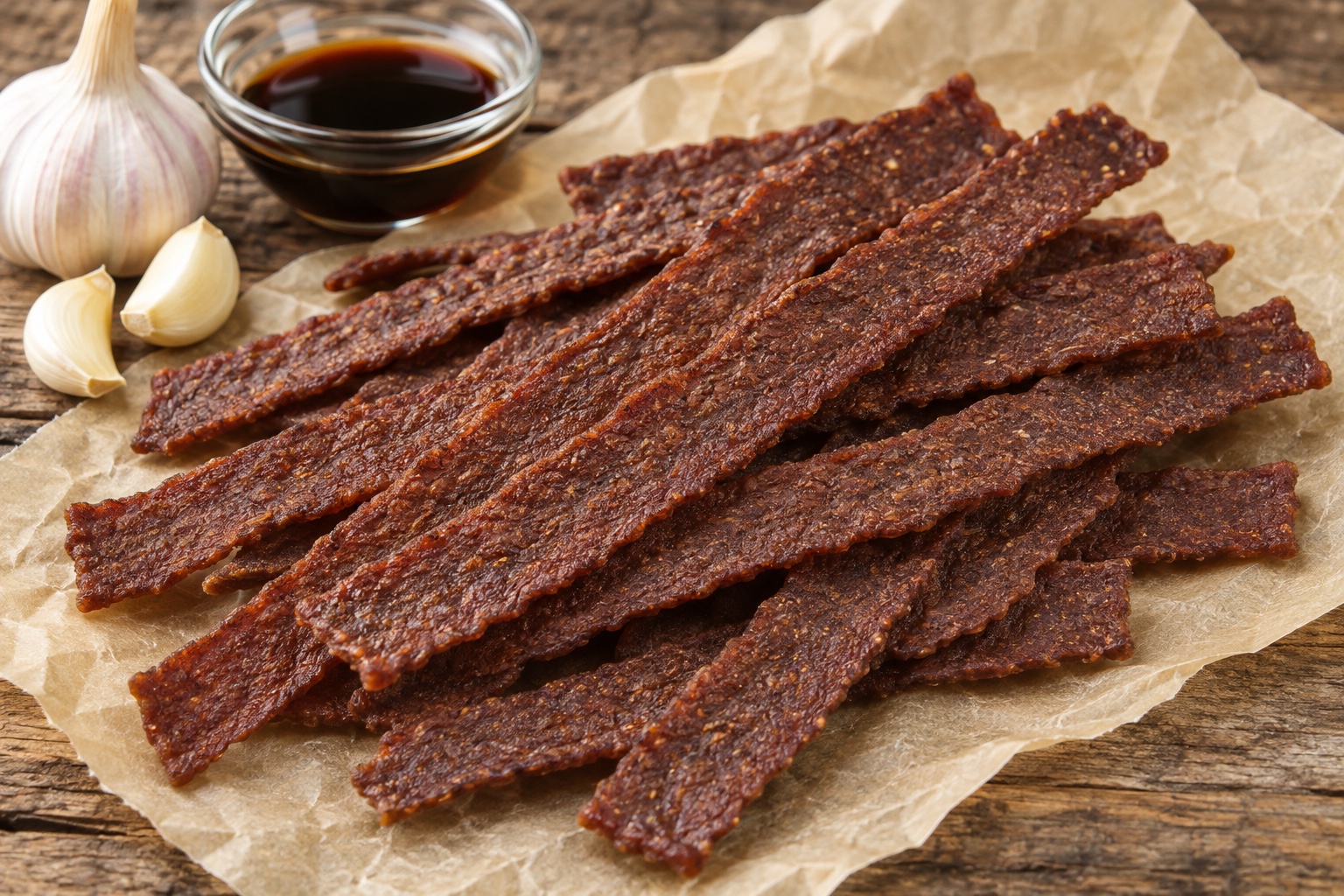
Use lean ground beef, soy sauce, Worcestershire, and liquid smoke to make savory jerky strips with a jerky gun or rolling pin. Heat the shaped meat before drying and use a separate finishing heat treatment for ground-meat jerky.
Recipe correction: An earlier card on this page described sliced beef. The recipe below follows the ground-beef ingredients in the original article. The separate spicy sliced-beef recipe remains available.
Ground beef versus sliced jerky
Ground beef is mixed with seasoning and formed into strips rather than sliced from a whole cut. It needs careful temperature checks because bacteria can be distributed throughout ground meat.
Choose lean hamburger
Use lean ground beef, ideally 90% lean or leaner as the original article suggested. Keep it refrigerated at 40°F or below and thaw frozen meat in the refrigerator. More fat can make jerky greasy and affect storage quality.
Hamburger jerky recipe
Ingredients
- 1 pound lean ground beef
- 2 tablespoons soy sauce
- 2 tablespoons Worcestershire sauce
- 1 teaspoon liquid smoke
- 1 teaspoon garlic powder
- 1 teaspoon onion powder
- Salt and pepper to taste
Salt and pepper were listed to taste in the original ground-beef directions. This adaptation has not been independently kitchen-tested.
1. Mix the ingredients
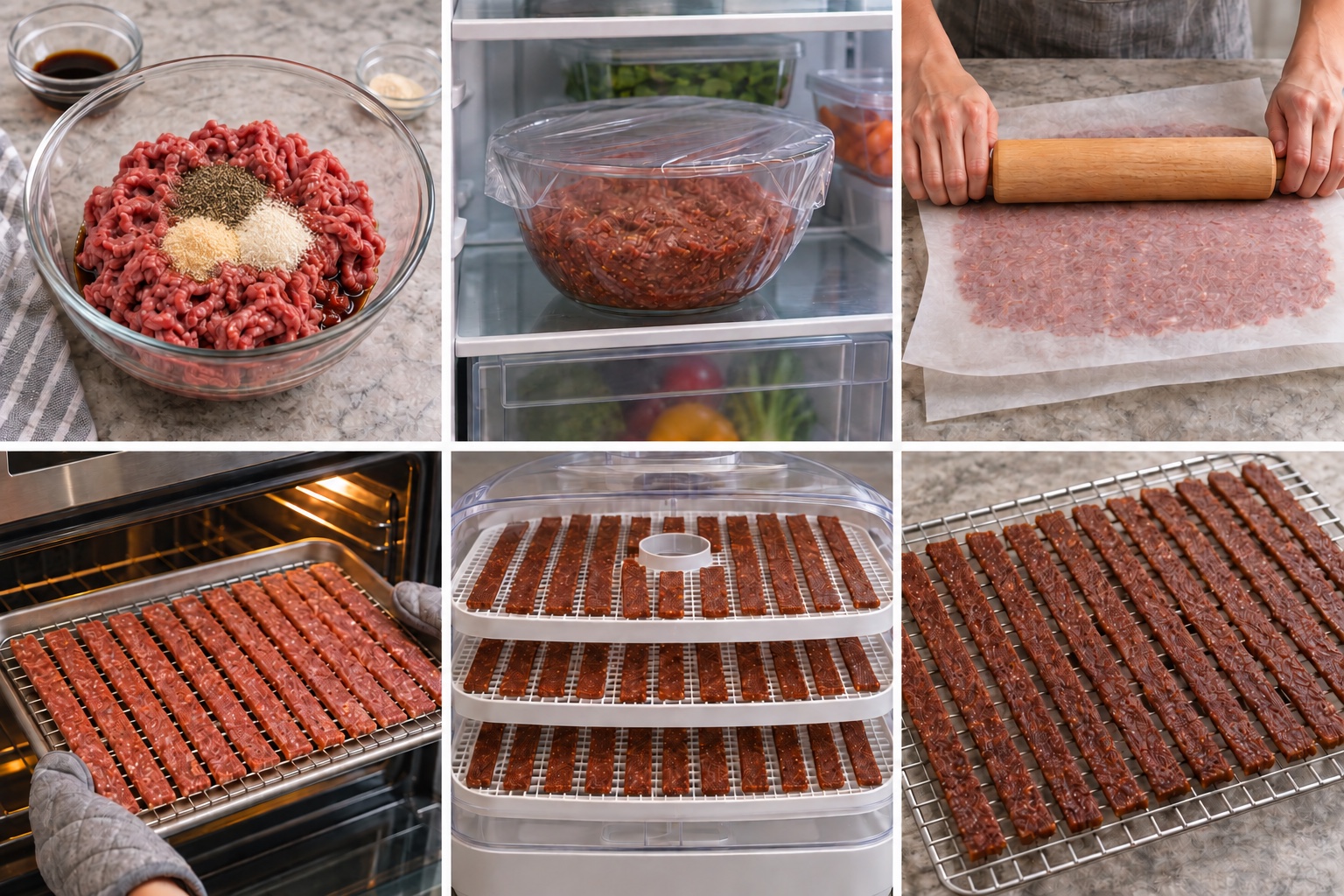
Combine soy sauce, Worcestershire sauce, liquid smoke, garlic powder, onion powder, and salt and pepper to taste. Mix thoroughly into the cold ground beef. Do not taste the raw mixture; wash hands and surfaces after handling it.
2. Chill
Cover and refrigerate at 40°F or below for at least 4 hours or overnight, as the original article suggested. Keep raw ground beef refrigerated while shaping each batch and account for the chilling time in its refrigerated storage time.
3. Shape the strips
Use a clean jerky gun with a flat nozzle, or roll a portion between sheets of parchment and cut into strips. Make the strips even and no thicker than ¼ inch. Arrange them without touching on oven-safe racks over rimmed baking sheets; remove shaping parchment before heating.
4. Heat before drying
Preheat the oven to 325°F. Heat the formed strips until their centers reach at least 160°F on a food thermometer, checking several thick pieces with a thin probe. Keep the probe clear of the rack. Keep any unheated mixture refrigerated until its batch is ready.
5. Dehydrate and finish heating
Promptly transfer the heated strips with clean utensils to clean dehydrator trays. Dry at 140°F with room for airflow, checking cooled pieces periodically for a firm, dry texture with no moist center. After drying, place strips on a baking sheet and heat for 10 minutes in an oven preheated to 275°F, as Kansas State Extension recommends for ground-meat jerky.
6. Cool and store cold
Cool on a clean rack and blot visible fat with clean paper towels. Seal in clean containers and refrigerate or freeze; do not assume homemade jerky is shelf-stable. Discard jerky with mold, an off odor, or other signs of spoilage.
Seasoning and equipment tips
Liquid smoke adds smoky flavor without a smoker. A jerky gun produces uniform strips, while parchment and a rolling pin work for small batches. Use a calibrated thin-probe thermometer; a dehydrator’s air setting or a brown surface does not prove that the centers reached 160°F.
Storage and shelf life
Homemade jerky can dry unevenly. Refrigerate or freeze the cooled strips, and use an insulated cooler when transporting them. Vacuum sealing alone does not make them safe at room temperature.
Heating and drying
Penn State Extension recommends heating meat to 160°F before drying. Kansas State Extension recommends a 275°F finishing treatment for ground-meat jerky. Follow both steps and handle raw and cooked meat separately.
For a different ground-beef seasoning, see our ground beef jerky with brown sugar and cayenne.