
Squirrel Stew with Dumplings: Traditional Stovetop Recipe
We may earn commission for items you purchase. As an Amazon Associate we earn from qualifying purchases.
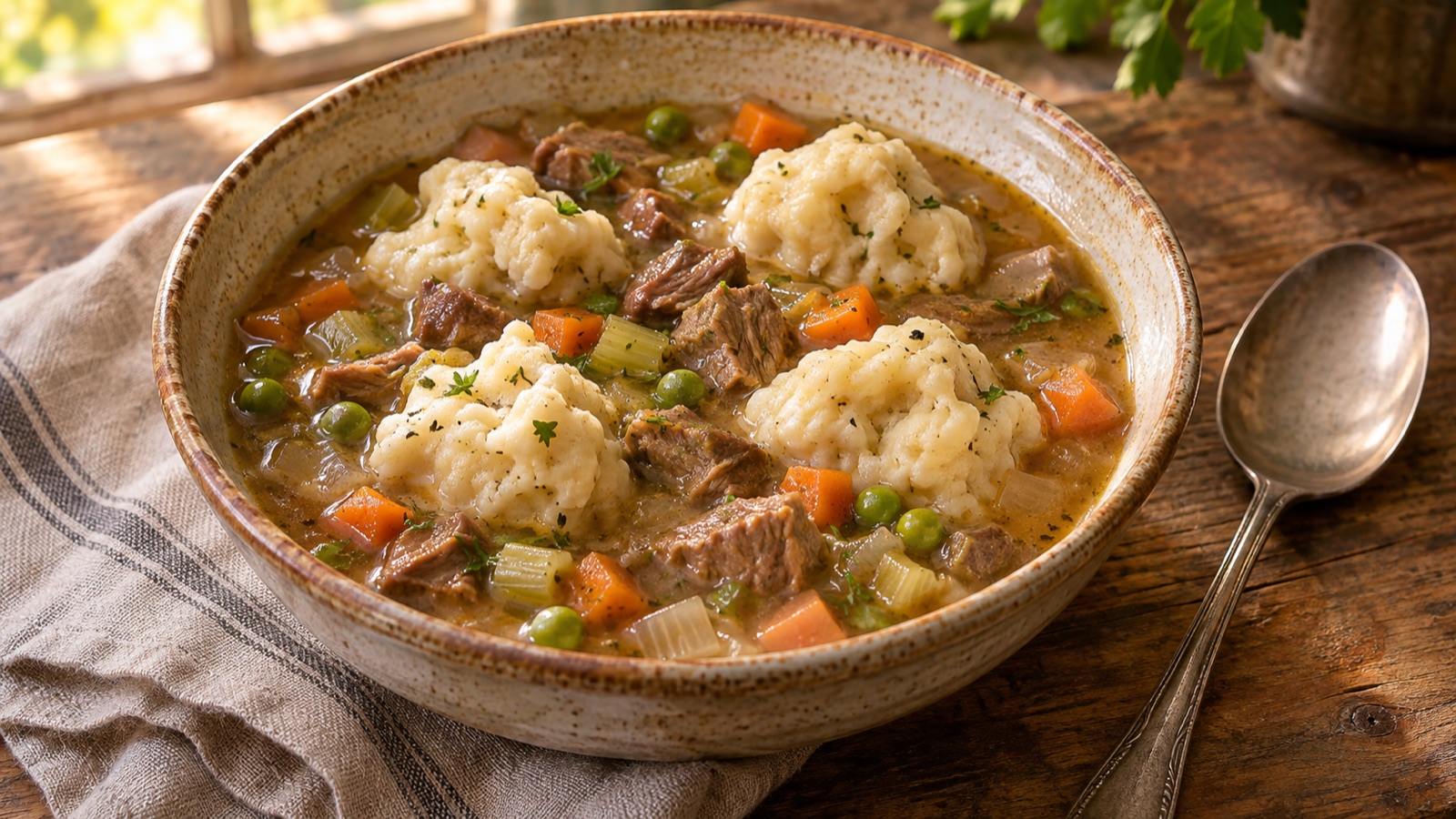
This squirrel stew with dumplings pairs tender, boneless game meat with carrots, celery, onion and peas in a seasoned broth. Small drop dumplings cook on top of the simmering stew under a lid. Prepare the squirrel first, remove the bones carefully, then make the dumplings only when the meat and vegetables are ready.
The recipe below uses the original article’s vegetables, herbs and spices in a complete stovetop method. It replaces an earlier version that mixed stuffed dumplings with stew instructions. The dough and broth quantities have been corrected for this preparation; there is no baking-sheet or oven-finishing step.
Cook and debone the squirrel first
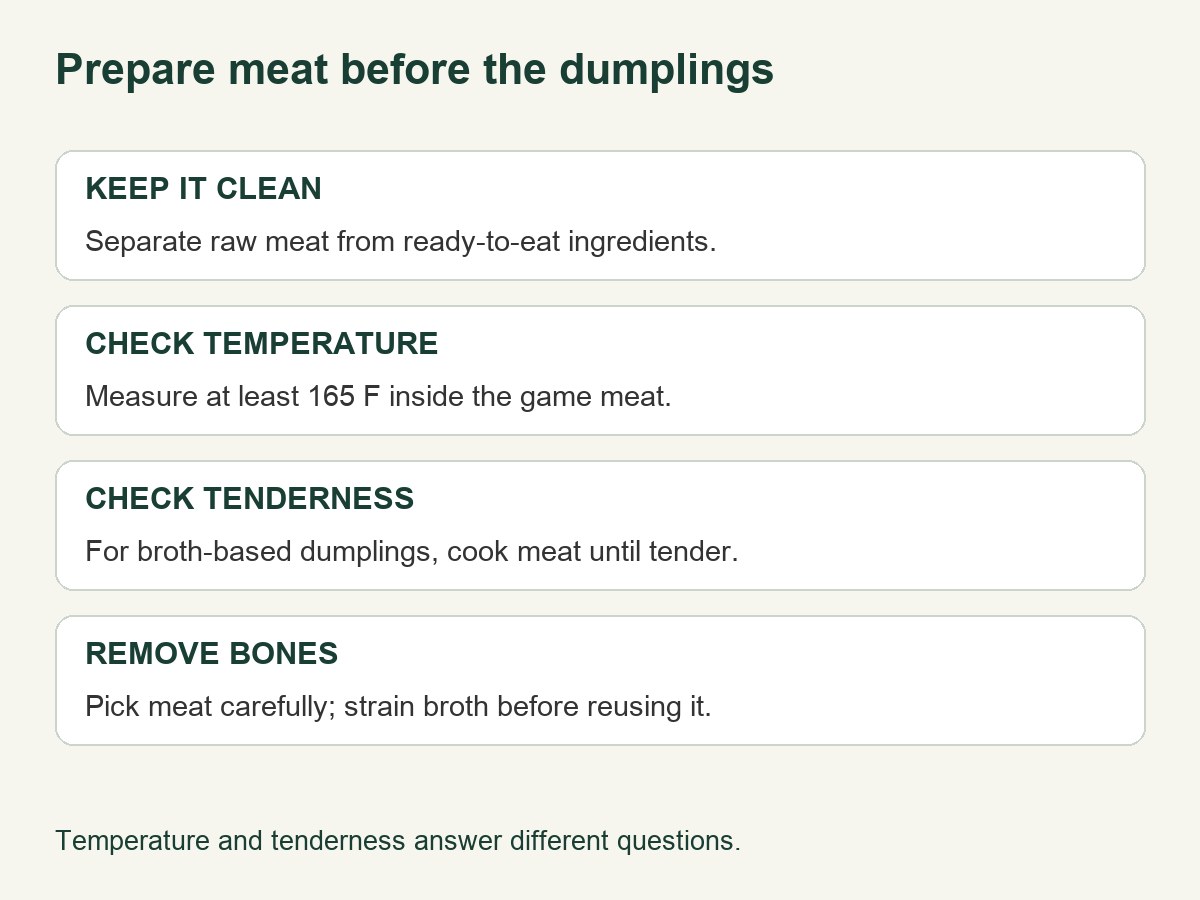
Start with properly handled, chilled game. Wear disposable gloves when cleaning it, separate raw meat from ready-to-eat ingredients, and clean hands, utensils and work surfaces afterward. Do not use an animal found dead or one that appeared sick. Colorado Parks and Wildlife recommends at least 165°F internally for game meat. Measure away from the bone with a food thermometer.
Temperature and tenderness are separate checks. Meat can reach the temperature target while still being difficult to pull from the bones. Continue gentle, moist cooking until it separates readily. A younger animal may soften sooner than an older one; a fixed fifteen-minute simmer is not a dependable method for raw squirrel.
The Missouri Department of Conservation’s squirrel and dumplings recipe uses the same useful sequence: cook the meat, remove the bones and retain the broth before cooking the dough. Its dumplings are rolled egg noodles; this article uses small drop dumplings instead.
Pick the meat over on a clean plate in small portions, checking for tiny bones and shot fragments. Strain cooking liquid before using it as broth. Measure the recipe’s pound of meat after cooking and deboning. A pound of whole bone-in squirrel will yield less usable meat and should not be substituted as though the weights were identical.
A complete stovetop squirrel and dumplings recipe
Traditional squirrel stew with drop dumplings
Author: John Ward. Makes 8 small dumplings with the stew. Start with 1 pound of cooked, deboned meat; the weight of whole squirrel is not an equivalent measure.
Ingredients
- 1 pound cooked, tender, boneless squirrel meat; see preparation instructions
- 1 cup all-purpose flour, spooned into the cup and leveled
- 1 teaspoon baking powder
- 1 teaspoon salt, divided, plus more only if needed
- 1/2 teaspoon ground black pepper
- 1/4 teaspoon garlic powder
- 1/4 teaspoon onion powder
- 1/4 teaspoon dried oregano
- 1/4 teaspoon dried basil
- 1/4 teaspoon dried thyme
- 1/4 teaspoon paprika
- 1/2 cup water for the dumplings, plus additional hot water as needed for the stew
- 2 tablespoons olive oil
- 2 tablespoons cold butter, diced
- 1/2 cup chopped onion
- 1/2 cup chopped celery
- 1/2 cup chopped carrots
- 1/2 cup frozen green peas
- 4 cups low-sodium chicken broth or strained squirrel cooking broth, plus more as needed
Equipment
Wide heavy pot with a lid, separate pot if cooking raw squirrel, strainer, food thermometer, scale, bowl and spoon.
Instructions
- Prepare the meat: If starting with raw squirrel, thaw it in the refrigerator first. Put cleaned, jointed pieces in a pot with enough water to cover. Bring to a boil, reduce to a gentle simmer and cover. Keep the meat covered with liquid, adding hot water as needed. Cook until the thickest pieces reach at least 165°F away from the bone and the meat separates readily from the bones. Start checking tenderness after about 1 1/2 hours; older animals may take 3 hours or longer. Time alone does not establish doneness. Remove to a clean plate, pick through carefully for bones and shot fragments, and weigh out 1 pound of cooked boneless meat. Strain the cooking broth if using it. Continue promptly, or refrigerate meat and broth in shallow containers within 2 hours.
- Build the stew: Heat the olive oil in a wide, heavy pot over medium heat. Add the onion, celery and carrots. Cook, stirring, for about 5 minutes to begin softening them. Add the 4 cups broth, black pepper, garlic powder, onion powder, oregano, basil, thyme, paprika and 3/4 teaspoon of the salt. Bring to a simmer, cover and cook until the carrots are tender, about 10–15 minutes. Add hot broth or water if evaporation reduces the liquid substantially.
- Add the squirrel: Stir in the cooked boneless squirrel and frozen peas. Return the stew to a simmer and heat the meat throughout to at least 165°F, especially if it was refrigerated. Taste the broth and adjust the salt cautiously. Keep enough liquid in the pot to cook the dumplings without the stew catching on the bottom.
- Mix the dumplings: In a bowl, mix the flour, baking powder and remaining 1/4 teaspoon salt. Rub or cut in the cold butter until it forms small crumbs. Stir in the 1/2 cup water just until a soft, spoonable dough forms. Do not knead or roll it. If necessary, use a teaspoon of additional water to moisten dry flour, or a little extra flour if the mixture runs off the spoon. Do not taste raw dough.
- Drop and steam: Bring the stew to a steady gentle simmer. Drop the dough onto the surface in 8 small mounds, leaving gaps for expansion. Use a pot wide enough for one layer; if they will crowd, cook in two batches. Cover with a well-fitting lid and maintain the gentle simmer for about 15 minutes without lifting the lid. Avoid a hard rolling boil, which can break up the dumplings.
- Check and serve: Open the lid carefully away from your face. Cut the largest dumpling through the center: it should be set and fluffy, with no wet, sticky flour paste. If the center is still doughy, cover and cook another 3–5 minutes, then check again. Make sure the meat is hot throughout. Serve the dumplings with the stew in bowls; do not expect a browned or crisp crust from this stovetop method.
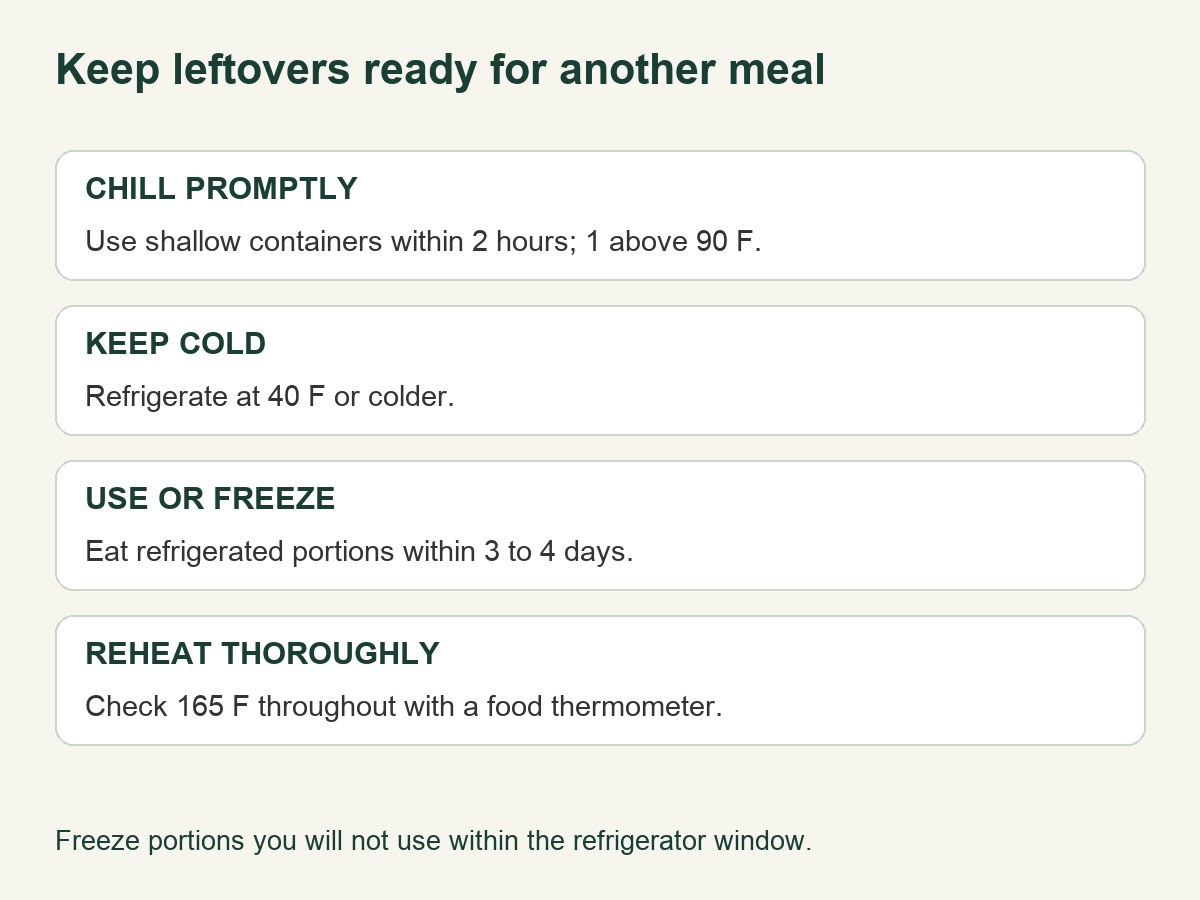
- Cool leftovers: Divide leftovers into shallow containers and refrigerate within 2 hours, or within 1 hour above 90°F. Keep at 40°F or colder and use within 3–4 days, or freeze. Reheat to 165°F throughout using the stove, microwave or oven; add a little broth if the dumplings have absorbed the liquid.
Recipe revision: This replaces the earlier incomplete stuffed-dumpling method with a traditional stew and drop dumplings. Flour is increased from 1/2 cup to 1 cup and broth from 1/2 cup to 4 cups; the meat measurement now specifies cooked, boneless meat. The unspecified marinade and oven step are removed. The original vegetables, fats, herbs and spices remain, with salt divided between stew and dough. This is an editorially developed recipe, not a claim of kitchen testing.
Get the dumpling texture right
Drop dumplings need soft dough that holds a mound on a spoon. They do not need kneading, a rolling pin or sealed edges. Mix only until the dry flour is moistened, then spoon the dough into the simmering stew promptly. Heavy mixing can make a tougher dumpling.
Use small, similarly sized portions so the centers finish at roughly the same time. A wide pot is helpful because the dumplings need room to expand in a single layer. Crowding a narrow pot with large scoops makes the cooking less even. If necessary, cook half the dough first, lift the finished dumplings to covered serving bowls, then cook the second batch and serve promptly.
Keep the lid on for the initial steaming period. After that, check the largest dumpling by cutting it open. A wet center needs more covered cooking; a set center should not contain raw flour paste. The outside can look finished before the middle is ready, so appearance alone is not enough.
Thin rolled dumplings are a different preparation. The Arkansas Game and Fish Commission’s recipe collection includes a rolled-dough version as well as separate filled dumplings. Use a complete recipe for the style you choose rather than mixing its dough with another method’s cooking directions.
Adjust the broth and seasoning
The stew should have enough free liquid to simmer gently without sticking. Dumplings absorb broth and release some flour into it, so the finished consistency will be thicker than the starting liquid. Add hot broth or water in small amounts if it becomes too thick before the dough is done.
Use low-sodium broth when possible and taste before adding more salt. Store-bought chicken broth and homemade squirrel broth can have very different salt levels. The measured herbs, black pepper and paprika season the stew; the dough contains only its allotted salt, butter and baking powder.
The carrots and celery should be tender before adding dumplings. Once the dough is on the surface, vigorous stirring can break it apart. Lift finished dumplings out before making any substantial adjustment to the liquid beneath them. This method produces soft steamed dumplings, not golden baked biscuits.
Store and reheat leftovers
Follow USDA leftover guidance: refrigerate in shallow containers within two hours, or one hour when the surrounding temperature exceeds 90°F. Keep the refrigerator at 40°F or colder. Use refrigerated portions within three to four days, or freeze for longer storage.
Reheat to 165°F throughout, checking several places. Bring soups and sauces to a boil when reheating on the stove, and stir gently for even heating. Add a little broth if the dumplings have absorbed much of the liquid. USDA’s reheating advice recommends the stove, microwave or oven rather than a slow cooker. Dumplings may soften further during storage and reheating.
Common questions
How long does squirrel stew with dumplings take?
The biggest variable is the meat. If starting raw, allow time for gentle cooking until it reaches 165°F and is tender enough to debone; this can take several hours. The recipe’s fifteen-minute dumpling interval begins after the meat is prepared and the vegetables are tender. Always check the dough’s center and extend cooking if needed.
Can I use cooked squirrel from an earlier meal?
Yes, provided it was handled and chilled correctly and remains within the refrigerated storage window. Remove every bone, measure a pound of usable meat and heat it to 165°F in the stew before adding the dumplings. Do not use leftovers that sat unrefrigerated beyond the recommended limits.
Do I need to marinate the squirrel?
No marinade is required for this method. The earlier article called for four hours of marinating without supplying a marinade. Gentle cooking in liquid is the preparation used here. Marinating does not replace temperature checks or thorough cooking.
Is this the same as stuffed squirrel dumplings?
No. Here, meat and vegetables stay in the broth and small pieces of dough cook on top. Filled dumplings enclose meat inside a wrapper and require their own complete formula and cooking method. This recipe uses the stew method throughout.
What should I serve alongside it?
Serve in bowls with a simple green vegetable or salad if desired. The dumplings already provide the starchy part of the meal. For other game-meat ideas, browse our beaver recipe collection or rabbit stew guide; use each animal’s appropriate preparation and cooking instructions.