
Deer Heart Recipe: How to Trim and Pan-Sear Venison Heart
We may earn commission for items you purchase. As an Amazon Associate we earn from qualifying purchases.
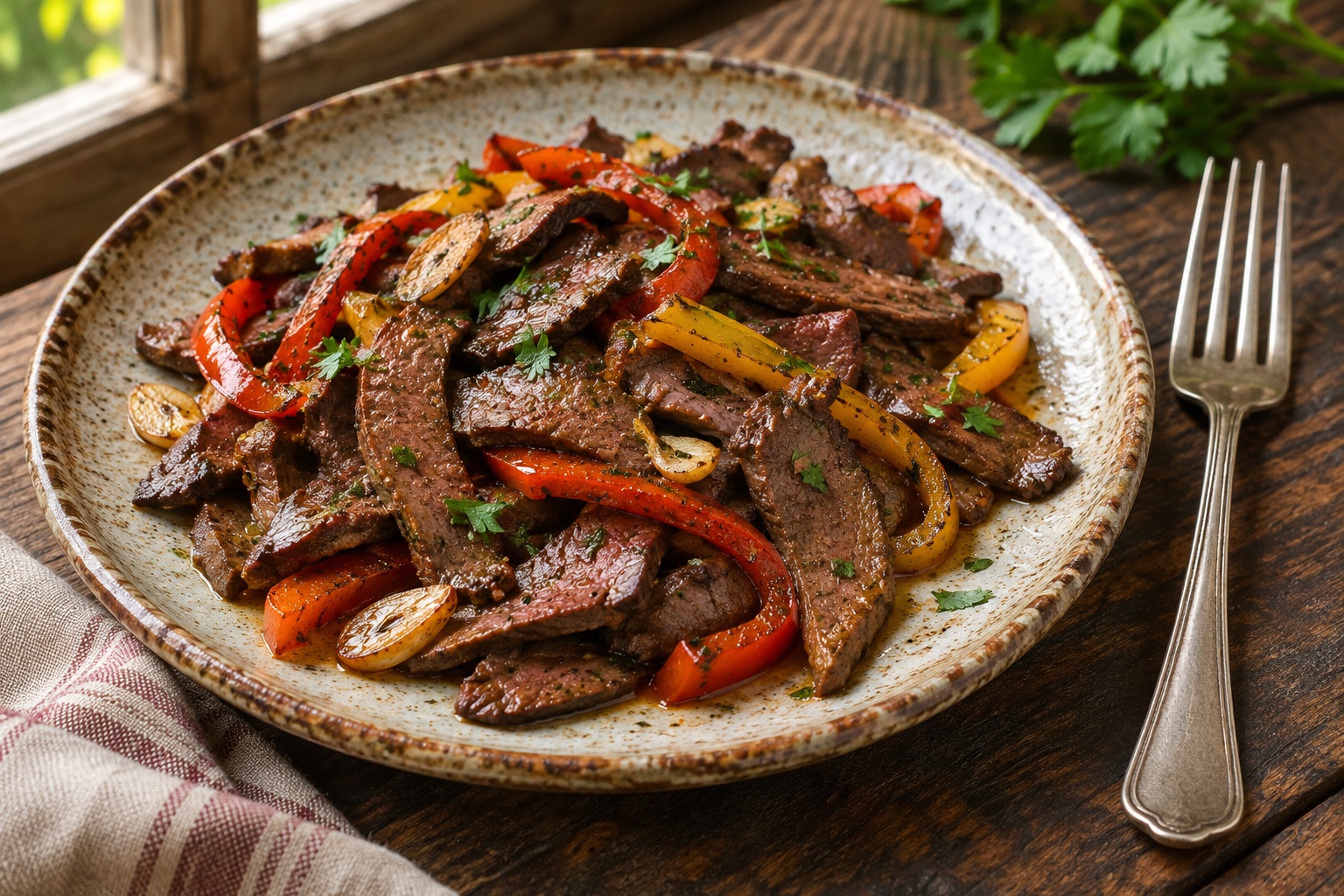
This deer heart recipe uses a simple skillet, salt and pepper, and a little olive oil or bacon fat. Slice the trimmed heart into even pieces, sear in batches, and check the thickest pieces with a food thermometer. Garlic and bell pepper are optional; serve with potatoes, rice, or crusty bread.
Wild-game safety: In areas with chronic wasting disease (CWD), the CDC advises hunters to avoid handling internal organs, consult local wildlife and health agencies, and strongly consider testing the animal before eating its meat. Do not eat meat from a deer that tests positive or appears sick. Cooking to a safe temperature does not make CWD-positive meat safe.
Choosing and handling deer heart
Use a properly handled, promptly chilled heart from a healthy animal and follow local game agency advice. Heart size varies, so one may feed two to four people depending on the amount of usable meat and the sides.
Keep raw meat cold at 40°F or below. Discard meat with an off odor or slimy surface; appearance and smell alone cannot establish safety. Use separate utensils for raw meat and ready-to-eat food. Wash hands, surfaces, and utensils with hot soapy water after contact.
How to trim and prepare deer heart
Place the chilled heart on a dedicated cutting board. Cut it open to expose the chambers, remove clots and trim away large vessels and tough connective tissue. Trim excess firm fat from the top. Pat dry with paper towels; washing raw meat can splash bacteria around the kitchen.
Cut the cleaned muscle into even slices about ½ inch thick. This thickness gives an instant-read thermometer a better chance of reading the center than very thin strips. Insert the probe from the side into the thickest part without touching the pan.
Pan-seared deer heart recipe
Prep: about 20 minutes · Cook: about 10 minutes, depending on thickness and batches · Yield: approximately 2–4 servings
The original recipe listed ingredients without amounts. The amounts below are a practical starting point; adjust seasoning to the size of the heart.
Ingredients
- 1 properly handled deer heart, trimmed
- ½ teaspoon salt, or to taste
- ¼ teaspoon black pepper, or to taste
- 1–2 tablespoons olive oil or bacon fat
- Optional: 2 tablespoons seasoned flour for a light coating
- Optional: 1 minced garlic clove and ½ sliced bell pepper
- Optional for serving: Worcestershire sauce and red wine vinegar
1. Trim the heart
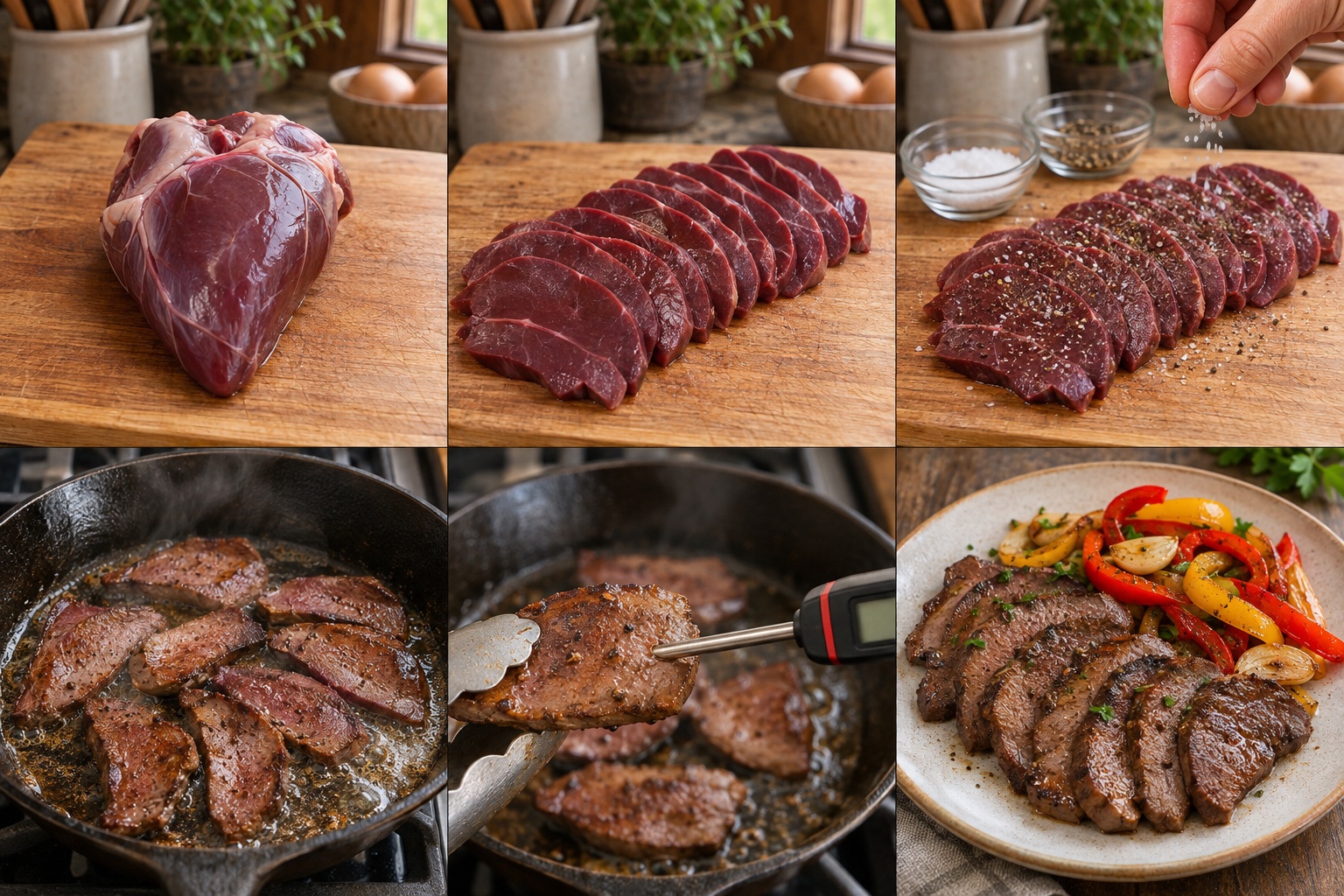
On a dedicated board, cut open the chilled heart. Remove clots, large vessels, tough connective tissue, and firm exterior fat. Pat the meat dry with paper towels.
2. Slice evenly
Cut the trimmed heart into approximately ½-inch-thick slices. Keep the pieces similar in thickness so they cook at a similar rate.
3. Season the slices
Sprinkle both sides with salt and pepper. For the optional crust, lightly dust with seasoned flour and shake off excess. Wash hands and any surfaces that touched raw meat.
4. Sear in batches
Heat the oil or bacon fat in a skillet over medium heat. Add the slices in a single layer and brown on both sides, working in batches if needed. Add the optional bell pepper and garlic to the pan, cooking until softened without burning the garlic.
5. Check the temperature
Continue cooking until the center of the thickest pieces reaches at least 160°F on a food thermometer inserted from the side. Time varies with thickness and pan heat; do not rely on color or a fixed number of minutes. Use a clean thermometer for cooked food.
6. Serve
Transfer the cooked heart to a clean plate and serve hot with the peppers, if using. Offer Worcestershire sauce and red wine vinegar on the side, with mashed potatoes, rice, or bread.
Marinade and seasoning options
For a tangy variation, combine a little olive oil, red wine vinegar, Worcestershire sauce, garlic, and black pepper. Marinate the trimmed meat in a covered container in the refrigerator, never on the counter. Discard marinade that touched raw meat, or boil it before serving as a sauce.
Rosemary, thyme, onion powder, or a pinch of cayenne also suit the savory flavor. A soak in cold water is optional for flavor, not a food-safety step; keep the meat refrigerated if soaking.
Other ways to cook venison heart
Grill evenly cut pieces over moderate heat, checking the center with a thermometer. For a skillet version, use the recipe above. Both methods should reach 160°F for organ meat.
A covered slow cooker with broth, onions, and garlic is another option for a longer cook. Follow your slow cooker's instructions and verify a safe temperature; time depends on the amount and size of the pieces.
Serving suggestions
Serve with sautéed vegetables, potatoes, rice, or bread. A small dish of Worcestershire sauce mixed with red wine vinegar adds sharpness. Use a clean dish rather than a bowl that held raw meat.
Storing leftover cooked deer heart
Refrigerate leftovers in shallow containers within two hours, or within one hour if the temperature is above 90°F. Keep the refrigerator at 40°F or below and use within 3–4 days.
Freeze leftovers in airtight packaging for longer storage; thaw in the refrigerator. Reheat leftovers to 165°F, checking with a thermometer. A splash of broth can help keep slices moist.
What does deer heart taste like?
Heart is muscle with a savory flavor and a firm texture, often milder than liver. Flavor and tenderness vary with the animal, trimming, and cooking. Serve an amount that suits your own dietary needs.
Frequently asked questions
What is the simplest way to cook deer heart?
Trim it, cut even slices, season with salt and pepper, and pan-sear in oil. Check the center reaches 160°F.
Should deer heart be soaked before cooking?
Soaking is optional and changes flavor rather than making unsafe meat safe. Keep it refrigerated while soaking and discard the liquid.
Can I coat deer heart in flour?
Yes. A light coating of seasoned flour can brown in a skillet. Check the meat's internal temperature rather than judging doneness by the crust.
Can you cook deer heart medium-rare like a steak?
USDA guidance calls for cooking organ meats, including heart, to 160°F. A meat thermometer is more reliable than a steak-style doneness description or the color of the heart slices. Check each thick piece so you can avoid cooking it longer than necessary.
Sources: USDA organ-meat temperature guidance and CDC CWD advice for hunters.