
Turkey Drumming: What the Spit-and-Drum Sound Means
We may earn commission for items you purchase. As an Amazon Associate we earn from qualifying purchases.
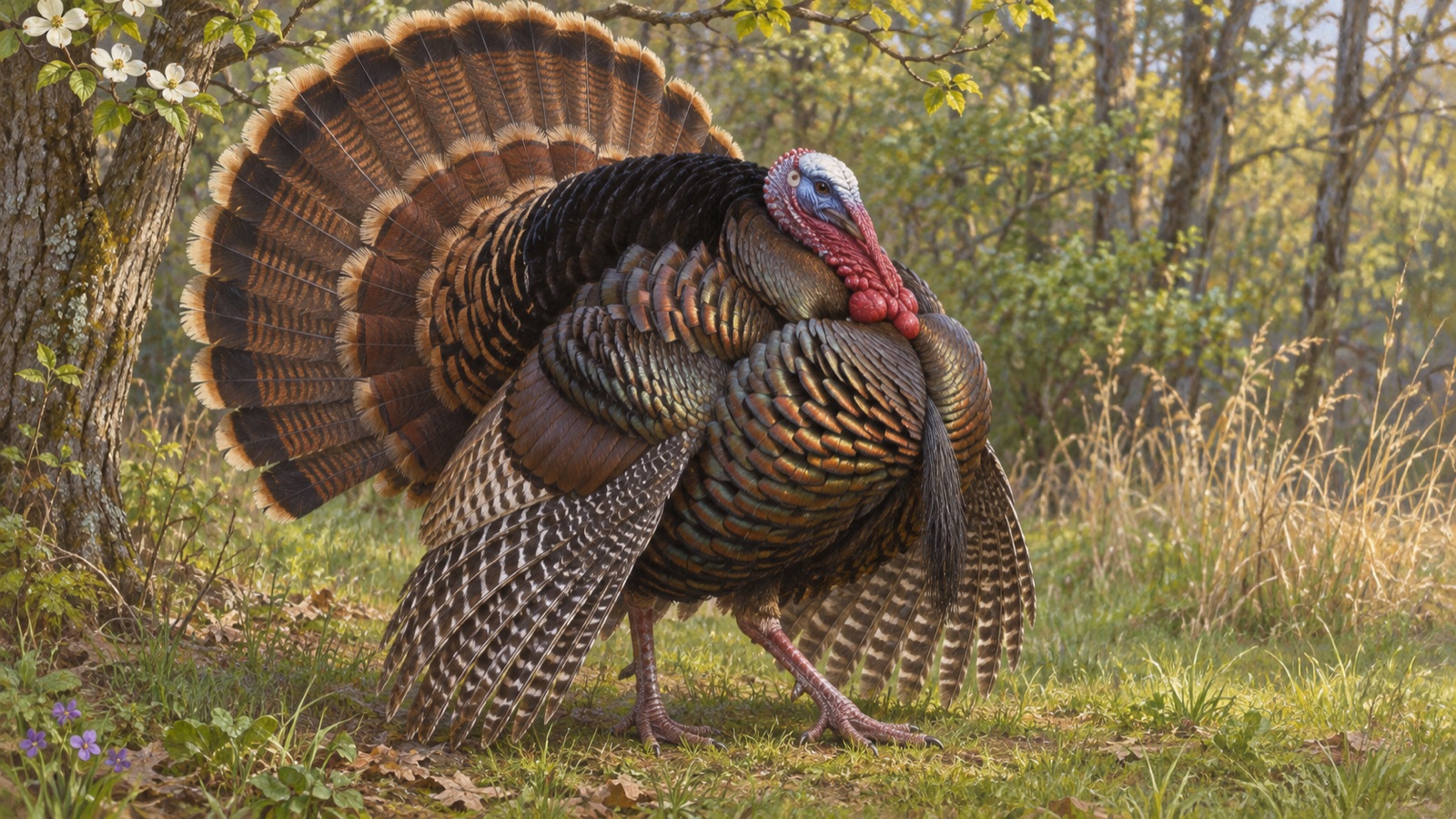
Turkey drumming is the low, soft humming or vibrating sound associated with a male wild turkey's display. It commonly follows a short, sharper sound called the spit. Listen for the two-part sequence, not the loud, rolling gobble most people associate with turkeys.
A strutting gobbler may be easier to see than to hear. Drumming can be subtle, and hearing it does not tell you an exact distance or prove that a hidden bird is a legal target. This guide explains the sound, its display context and the difference between drumming and the cluck-and-purr call linked below.
What does turkey drumming sound like?
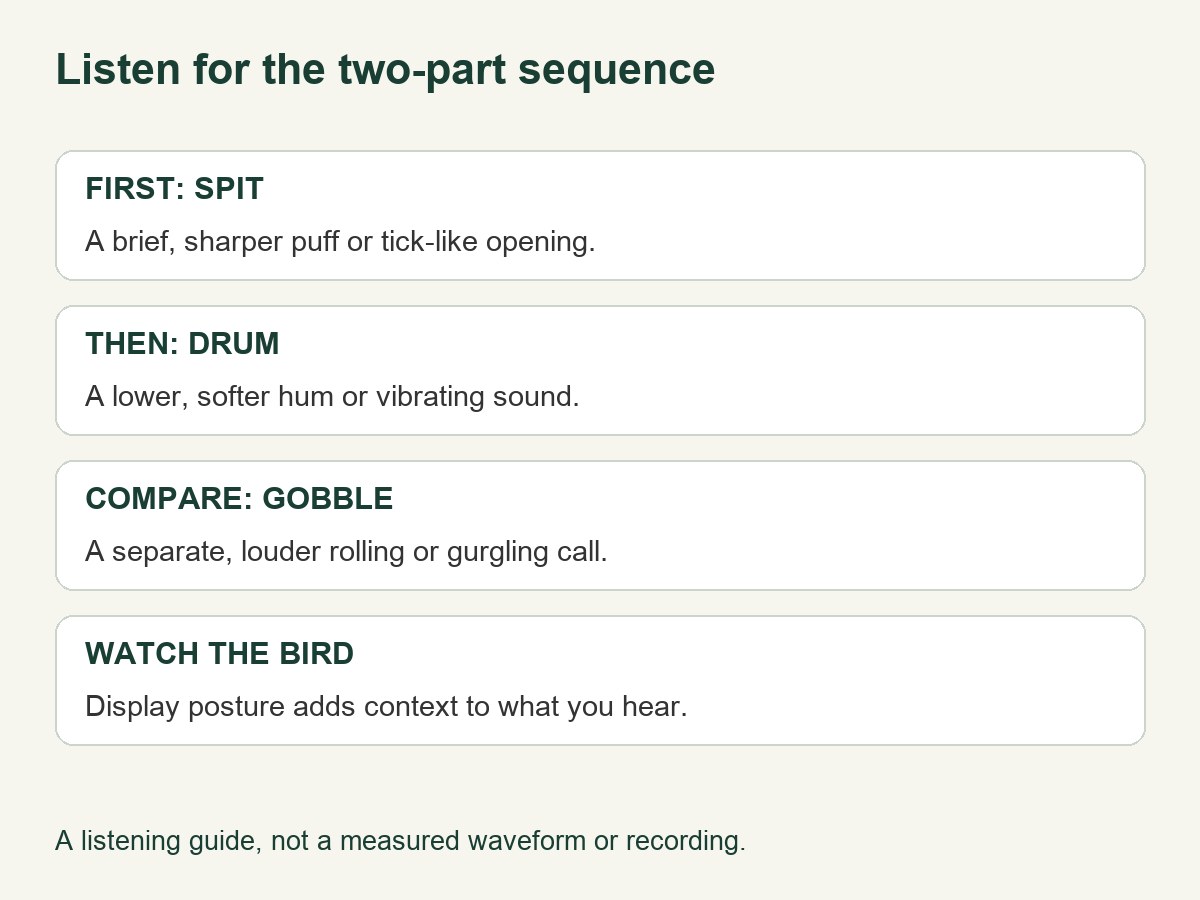
The first part is a brief, crisp puff or tick-like sound. The second is lower and more sustained, often described as a hum or vibration. The National Wild Turkey Federation's listening guide describes this spit-then-drum sequence and notes that males may make it while strutting or outside a full strut.
Try listening for the change between the sharp beginning and the softer bass-like ending. Do not expect a series of loud impacts like someone beating a drum. The name describes the impression of the sound, not a turkey striking a surface with an object.
The existing embedded recording above is retained as a listening reference. Start at a comfortable playback volume. If the low portion is hard to distinguish, compare it with the sharper opening rather than repeatedly increasing the volume. Recording quality, background noise and playback equipment can affect what you notice.
For additional species recordings and descriptions, see the Cornell Lab's Wild Turkey sounds page. Its description distinguishes the strutting male's short opening sound and low hum from the familiar gobble.
Why do male turkeys spit and drum?
Spitting and drumming are associated with display behavior, especially courtship. North Dakota Game and Fish describes a male displaying near a hen with its tail spread, body feathers raised and wings lowered, followed by the spit-and-drum sequence.
The display has a visual component as well as a sound component. Watch the posture and movement of the bird if you have a clear view. A tail fan by itself is not an audio recording, and a still photograph cannot establish which sound the bird was making at that moment.
It is not useful to translate each drum into a precise human emotion such as anger, fear or trust. The previous version made broad claims about those meanings and about drumming establishing territory. This guide focuses on the documented display context rather than assigning a fixed message to every occurrence.
How does a turkey make the drumming sound?
The exact sound-producing mechanism should not be presented as settled here. Cornell's sound account says the source of the strutting male's opening sound and low hum is not well understood. That is a better basis for this article than a confident explanation involving a specific sequence of abdominal muscles and chest air sacs.
“Spit” is the name of the brief sound in the display sequence. It is not evidence that the bird is projecting saliva at another turkey. Likewise, wing dragging or flapping can make separate noises; those should not automatically be labeled the source of the low drum.
For identification, you do not need to resolve the anatomy. Recognizing the two-part sound and observing the accompanying display is more useful than memorizing an unsupported mechanical explanation.
Drumming, gobbling and purring are different sounds
| Sound | What to listen for | Useful distinction |
|---|---|---|
| Spit and drum | A short, sharp opening followed by a low, soft hum or vibration | Associated with male display; easy to miss |
| Gobble | A louder, rapid, rolling or gurgling burst | Not another name for drumming |
| Purr | A soft, rolling call | A distinct flock sound, despite also being quiet |
| Wing noise | Rustling, scraping or wingbeats | Physical movement can accompany a display without being the drum |
The Missouri Department of Conservation's turkey guide treats spit-and-drum, purrs and other calls separately. Matching the rhythm and character matters more than choosing a label because two sounds are both low or quiet.
Listen to short examples one at a time. After learning the contrast, replay a longer field recording and identify the portions you can actually hear. Leave ambiguous background noises unidentified rather than assuming every low sound is a turkey.
How far away can you hear drumming?
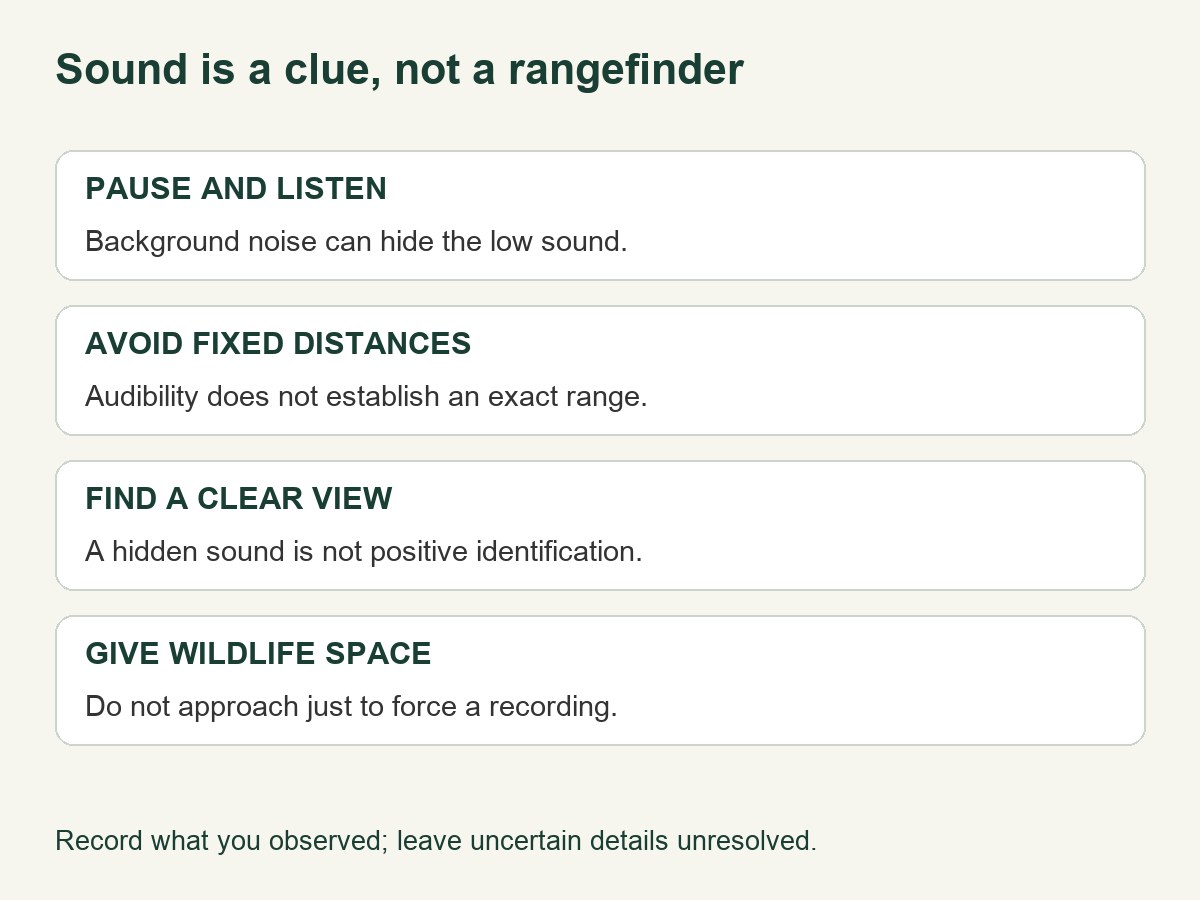
There is no dependable distance rule for an individual listening situation. Drumming is generally a close-range clue for a human listener, and wind, rain, surrounding noise and hearing differences affect detection. A hidden gobbler may also be difficult to locate precisely from the sound alone.
The original mile-away claim confused drumming with gobbling. Washington Department of Fish and Wildlife describes a gobble carrying as far as a mile in favorable weather, then separately tells observers to listen closely for low drumming during displays.
Do not turn “I can hear drumming” into “the bird must be a certain number of yards away.” Pause and observe. If hunting, identify the bird and a safe shot opportunity visually; a sound behind vegetation is not a target.
Can you buy a turkey drumming call?
Turkey calls are sold for different sounds, so check the exact product description and demonstration. A gobble call, a purr call and a dedicated drumming imitation are not interchangeable labels. This article has not verified a dedicated drumming device.
The original linked product is the Flextone Thunder Cluck-N-Purr Gen 2. Its Amazon listing and the manufacturer's call range identify it as a cluck-and-purr call. Keep it in that category when deciding whether it suits the sounds you want to practice.

Original linked call: clucks and purrs
Flextone Thunder Cluck-N-Purr Gen 2
Amazon Creators API confirmed a new in-stock offer on November 4, 2026. This mouth-blown model is listed for clucks and purrs; a drumming capability was not verified. Availability can change. Check the exact model before ordering.
This is a handheld, mouth-blown call with an ergonomic mouthpiece and double-sided sound chamber. It is not an electronic sound library with a volume selector. The previous description implied selectable sounds and guaranteed birds approaching; neither claim belongs in a recommendation for this listing.
Use the maker's instructions and demonstrations to learn the intended sounds. No call guarantees a bird will approach, and a successful imitation does not replace knowing the current hunting rules for your location.
Observe the display without guessing
Choose a position with a clear view and listen between other noises. If the bird stops gobbling, do not assume it has left; a quieter display or other movement may still be occurring. Avoid making sudden movements to investigate a sound you have not located.
For wildlife watching, give the bird space rather than approaching to force a better recording. Note what you actually observed: the visible posture, whether the sharp opening was audible, and whether you heard a separate low ending. Those notes are more useful than an exact distance guessed from volume.
Age identification is a separate subject. Our jake-versus-tom guide explains the physical clues. For cooking after a lawful harvest, the related smoked wild turkey leg recipe remains available.
Turkey drumming questions
Is drumming the same as a gobble?
No. Drumming is the softer, low part of the spit-and-drum display. A gobble is a different, much more conspicuous call.
Does spitting mean the turkey is spitting at me?
Not in this terminology. “Spit” names the short sound before the drum; it should not be interpreted as a directed act involving saliva.
Must the tail be fully fanned for a turkey to drum?
No. The sound is closely associated with strutting, but the NWTF notes that males may also spit and drum when not strutting.
Will the linked Flextone call imitate drumming?
That capability was not verified. The exact linked model is marketed for clucks and purrs, so it is retained as that type of call, with its original affiliate destination unchanged.