
Rabbit Jerky Recipe: Barbecue and Worcestershire Marinade
We may earn commission for items you purchase. As an Amazon Associate we earn from qualifying purchases.
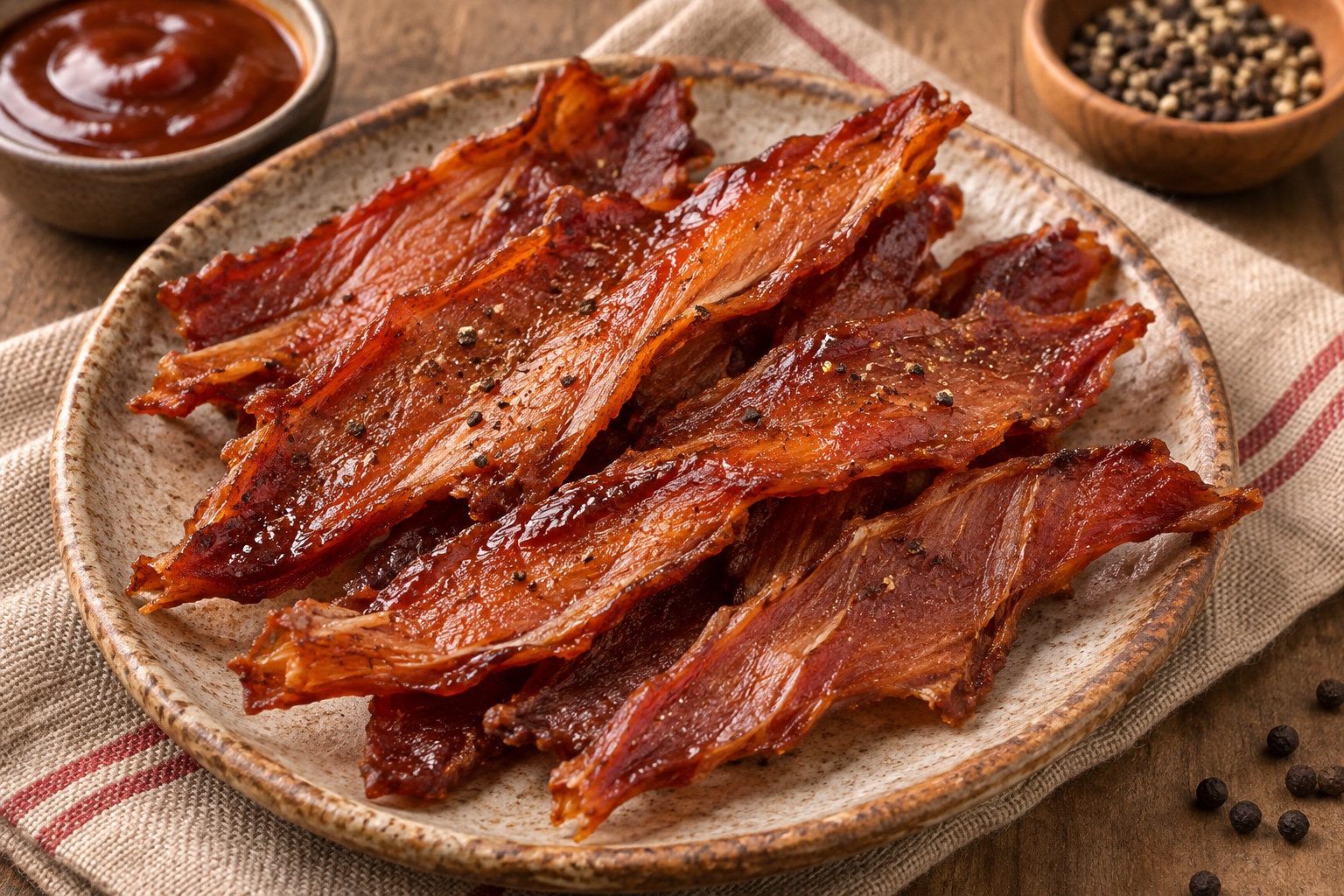
This rabbit jerky uses the original barbecue, Worcestershire and spice marinade. The meat must be heated before drying, and this untested home adaptation should be kept refrigerated or frozen rather than assumed shelf-stable.
Rabbit and jerky safety
Do not handle or eat rabbits that appear sick or are found dead. Wear gloves when handling wild rabbits and clean equipment thoroughly; CDC explains how tularemia can spread through infected animals. Penn State recommends cooking rabbit meat to at least 165°F. For jerky, Penn State advises a heating step before dehydration. This recipe applies the higher rabbit temperature; its particular marinade and method have not been independently tested.
Ingredients and instructions
Ingredients
- 2 pounds of rabbit meat
- 1/4 cup of Worcestershire sauce
- 1/4 cup of your favorite BBQ sauce
- 2 tablespoons of brown sugar
- 2 tablespoons of garlic powder
- 2 teaspoons of onion powder
- 2 teaspoons of smoked paprika
- 1 teaspoon of ground black pepper
Instructions
- Trim and slice. Use boneless rabbit meat. Trim visible fat and slice the meat into even strips on a board reserved for raw meat; keep all meat at 40°F or below.
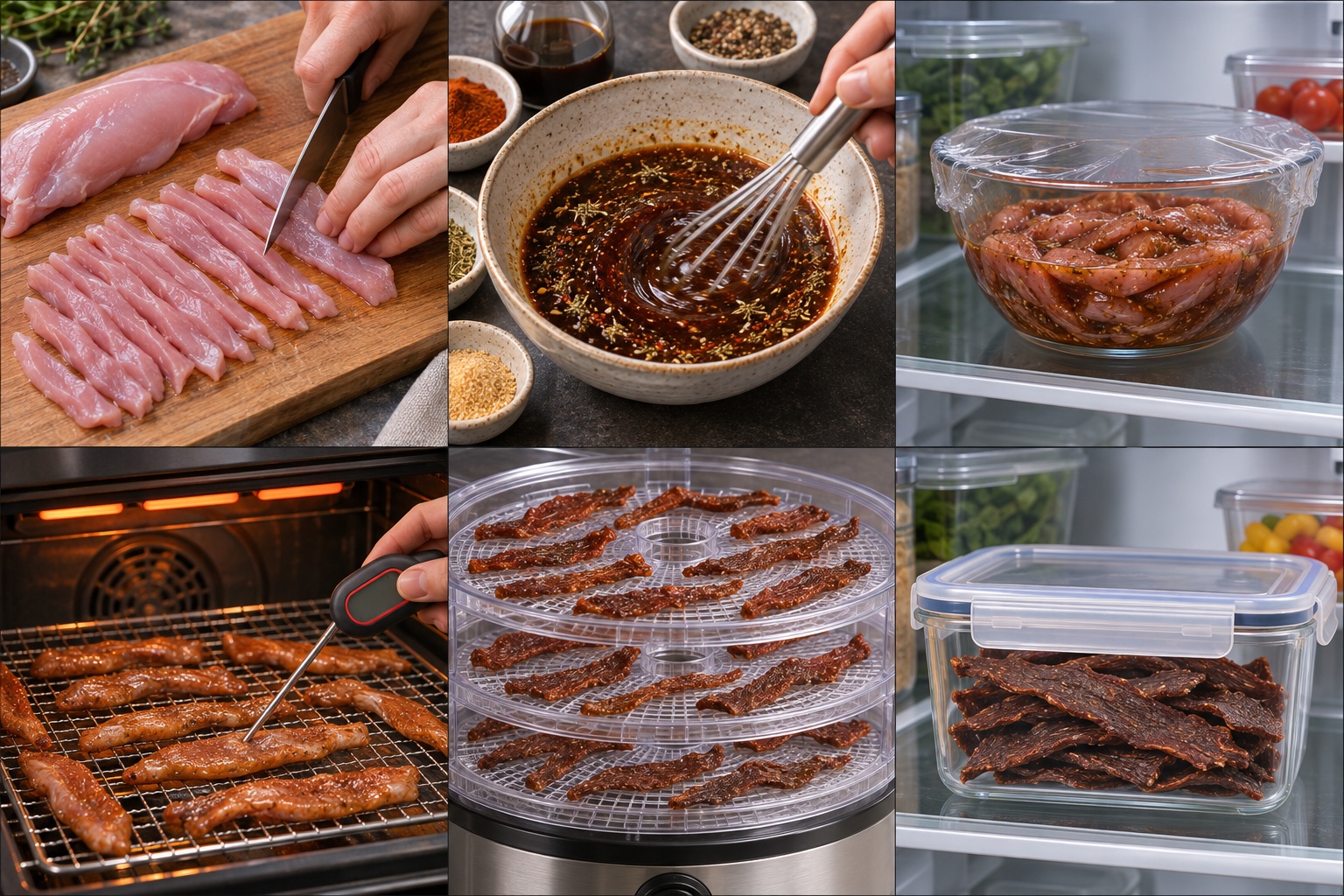
Trim and slice the rabbit on a dedicated board. - Mix the marinade. Combine the Worcestershire sauce, barbecue sauce, brown sugar, garlic powder, onion powder, smoked paprika and black pepper in a clean bowl.
Mix the barbecue and Worcestershire marinade. - Marinate cold. Coat the strips, cover and refrigerate for at least two hours. Wash hands and equipment after handling raw meat; discard the used marinade.
Cover and marinate under refrigeration. - Heat before drying. Work in batches, keeping the rest refrigerated. Arrange strips on a rack in an oven preheated to 325°F and heat each strip to at least 165°F, checking the thickest part of each strip with a thin-probe food thermometer. A thin strip can require inserting the probe sideways. If you cannot measure the temperature reliably, do not proceed; use a validated method instead. Do not rely on the dehydrator alone to reach that temperature.
Heat the meat and check with a food thermometer. - Dry on clean trays. Transfer the heated strips with clean utensils to a dehydrator that maintains 130–140°F throughout drying. Space pieces without overlapping and follow the appliance instructions. Drying time varies; a cooled test piece should bend and crack, not break, with no moist spots.
Space the heated strips on clean dehydrator trays. - Cool and refrigerate. Cool the finished jerky and refrigerate promptly in a clean covered container. Use within the cooked-leftover window of 3–4 days from cooking or freeze promptly. Do not assume a home batch is shelf-stable.
Refrigerate the finished jerky in a covered container.
The original measured ingredients are retained. The revised method and images are illustrative and have not been independently kitchen-tested.
Choosing a dehydrator
A dehydrator with an adjustable thermostat and removable trays helps keep strips spaced during drying. Heat the rabbit separately first; the machine is used for drying, not as proof the meat reached 165°F.

Dehydrator
COSORI six-tray food dehydrator
The checked listing describes six stainless steel trays and adjustable temperature control. Check the current listing and appliance instructions for details.
Storing homemade jerky
This recipe is not a validated shelf-stable process. Keep the finished jerky cold and use it within 3–4 days from cooking, or freeze promptly. Do not use the old claim that it will last six months at room temperature.
Questions about rabbit jerky
Can I use an oven to dry the strips?
Ovens vary in their lowest settings and airflow. Use a dehydrator that can maintain the recommended range for this adaptation; consult a tested extension method before changing equipment.
Why heat the meat first?
Drying alone may not reliably destroy pathogens. The heating step uses a thermometer before the strips go into the dehydrator.
More wild-game recipes
Browse our recipe collection for more ideas.