
LaCrosse vs. Muck Boots: Fit, Warmth and Hunting Use
We may earn commission for items you purchase. As an Amazon Associate we earn from qualifying purchases.
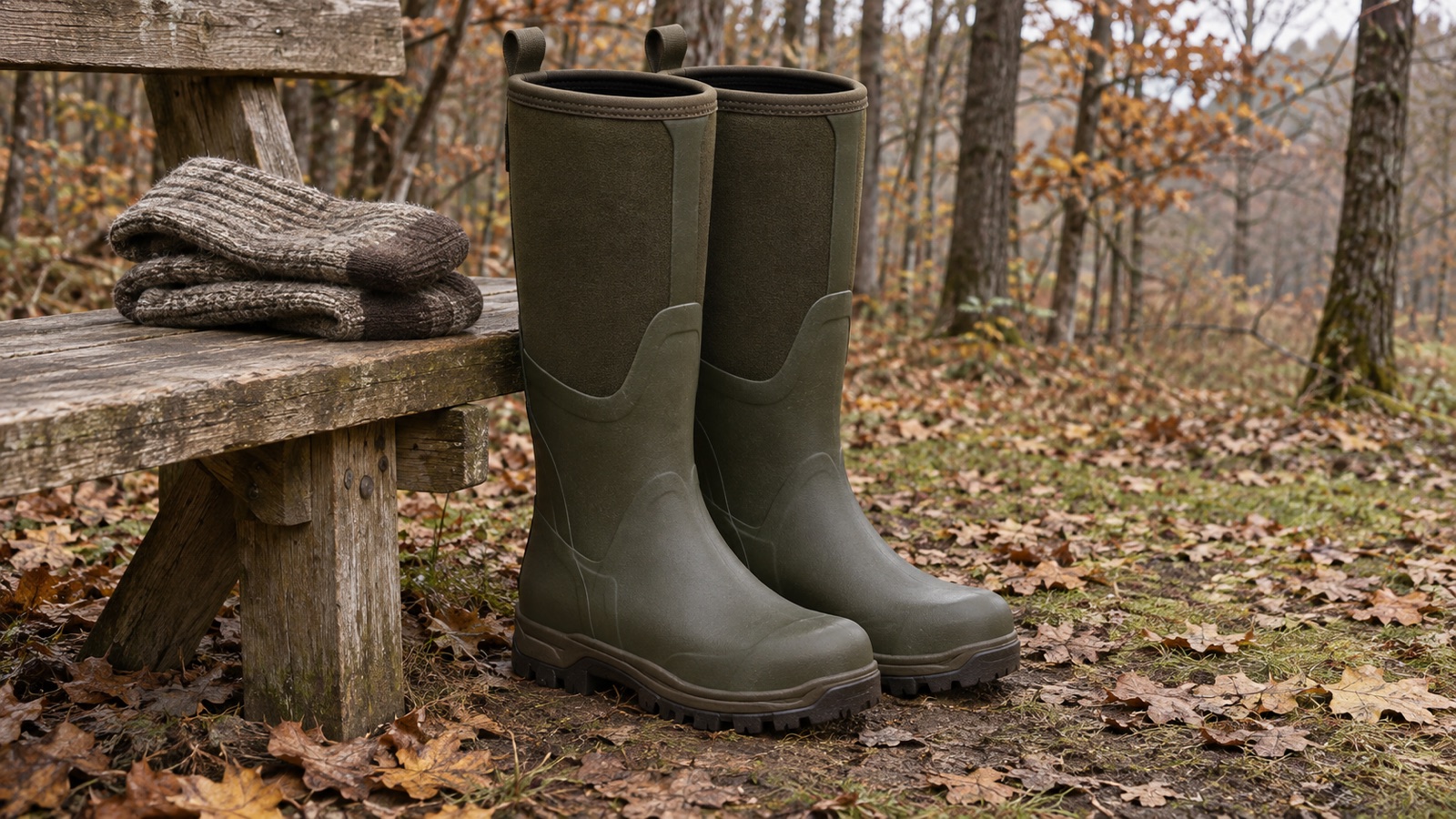
Choose between LaCrosse and Muck by comparing specific boots, not by assuming one brand is always warmer, lighter or tougher. LaCrosse's Alphaburly Pro and Muck's Arctic Pro are both rubber-and-neoprene hunting boot families. The useful differences are their fit, insulation package, shaft design and outsole—not a supposed choice between leather sports footwear and waterproof hunting boots.
For this comparison, start with the Alphaburly Pro's adjustable gusset and ankle fit if those features solve your fit problem. Consider the Arctic Pro's fleece-lined, 8mm-neoprene cold-weather construction if warmth is the priority. Try the exact version with your hunting socks before choosing either. Neither brand name establishes the right fit for your foot.
This is a research-based comparison, not a report of our own wear testing. Manufacturer documentation and the two original Amazon listings were reviewed on November 4, 2026. The LaCrosse listing was unavailable and contains conflicting model information; the Muck offer carried an availability-date status rather than confirmed in-stock status. Both original affiliate destinations remain below. As an Amazon Associate, Sportsman Crew earns from qualifying purchases.
LaCrosse and Muck: compare the boot, not the brand
| Question | LaCrosse Alphaburly Pro | Muck Arctic Pro |
|---|---|---|
| Basic construction | Rubber over neoprene; exact insulation varies by version | Rubber and an 8mm neoprene bootie in the referenced Arctic Pro |
| Fit feature to examine | Adjustable gusset and ankle fit | Stretch-fit topline and fit through the heel and instep |
| Cold-weather example here | Historical 376032: 18-inch, 1600G model | Arctic Pro: fleece lining and additional underfoot thermal foam |
| Outsole caution | Confirm the outsole on the specific model | The linked listing describes Bob-Tracker, not Vibram Arctic Grip |
| Original Amazon destination | Unavailable; title/features conflict | Availability-date status; confirm delivery before ordering |
LaCrosse here means the footwear manufacturer, not the field sport. Claims about players, lace locks and lightweight sports shoes do not describe the rubber hunting boots under discussion. Likewise, Muck makes different categories of footwear; features of a work boot or a steel-toe variant should not be assigned to every Muck hunting boot.
LaCrosse Alphaburly Pro: useful features and a listing conflict

Product details
LaCrosse original 1600G listing — model conflict
Unavailable on November 4, 2026. Original destination retained for reference.
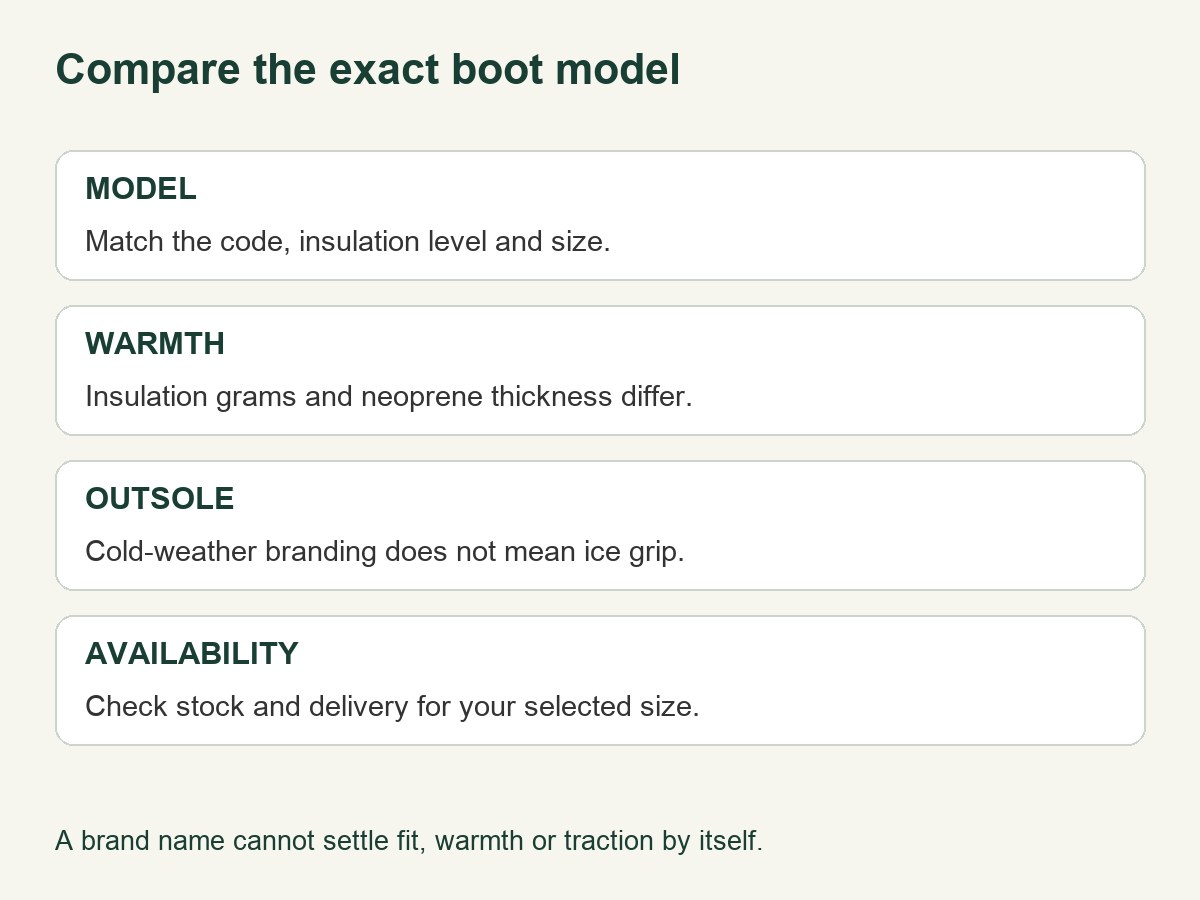
The original destination was labeled LaCrosse 376032 Alphaburly Pro, Realtree Edge, 1600G, size 9. LaCrosse's 2020 manufacturer catalog identifies 376032 as an 18-inch Alphaburly Pro with 1600G Thinsulate Ultra insulation. It describes the family as hand-laid rubber over a 3.5mm neoprene core, with an adjustable gusset and an ankle-focused fit.
That is different from the original article's “4.5mm rubber outsole” explanation. Neoprene-core thickness and outsole thickness are not interchangeable specifications. It is also different from the article's broad claim that LaCrosse hunting boots are primarily leather or canvas and not designed for wet or cold conditions.
The current Amazon data creates another problem: its title still mentions Realtree Edge and 1600g, but its feature text describes Burly ZXT construction, a wool-felt midsole and polymeric foam insulation. Those details do not cleanly identify the historical Alphaburly Pro model. Because the listing is unavailable and internally inconsistent, it is retained for reference rather than presented as a verified current Alphaburly purchase.
What to compare in person: heel retention, instep pressure, room for your socks and how the gusset closes around your calf and trouser leg. What to verify before buying: the exact model number, size, insulation and construction on the seller's package. Do not use one conflicting feature paragraph to override the model's own documentation.
Muck Arctic Pro: cold-weather construction, not an ice-grip guarantee

Product details
Muck Arctic Pro — confirm delivery
Availability-date status returned on November 4, 2026; not confirmed in stock. Check the selected size and current delivery estimate.
The original Muck destination was labeled an Arctic Pro in Mossy Oak Country, size 11. The current API identifies an Arctic Pro tall insulated hunting boot and describes an 8mm neoprene bootie, fleece lining, 2mm thermal foam under the footbed and an EVA midsole. Muck's manufacturer catalog also documents the 8mm bootie, fleece and underfoot foam construction.
The listing describes a 17-inch shaft and Bob-Tracker outsole. It does not substantiate the old article's Vibram Arctic Grip claim. Arctic Pro and other similarly named Arctic models are not interchangeable; do not assume a specialized ice outsole is fitted because a boot is marketed for cold conditions.
The offer check returned an availability-date status, with no useful date in the response. That is not the same as confirmation that the exact size is ready to ship. Check the selected size, pattern and promised delivery on the destination before ordering.
Best reason to try it: you want this specific cold-weather construction and it fits your foot and calf. Potential tradeoff: a heavily insulated boot may be more warmth than you want for an active, mild-weather hunt. The right choice depends on how much you move, how long you sit and the socks you use.
Fit: heel, instep, toes and calf
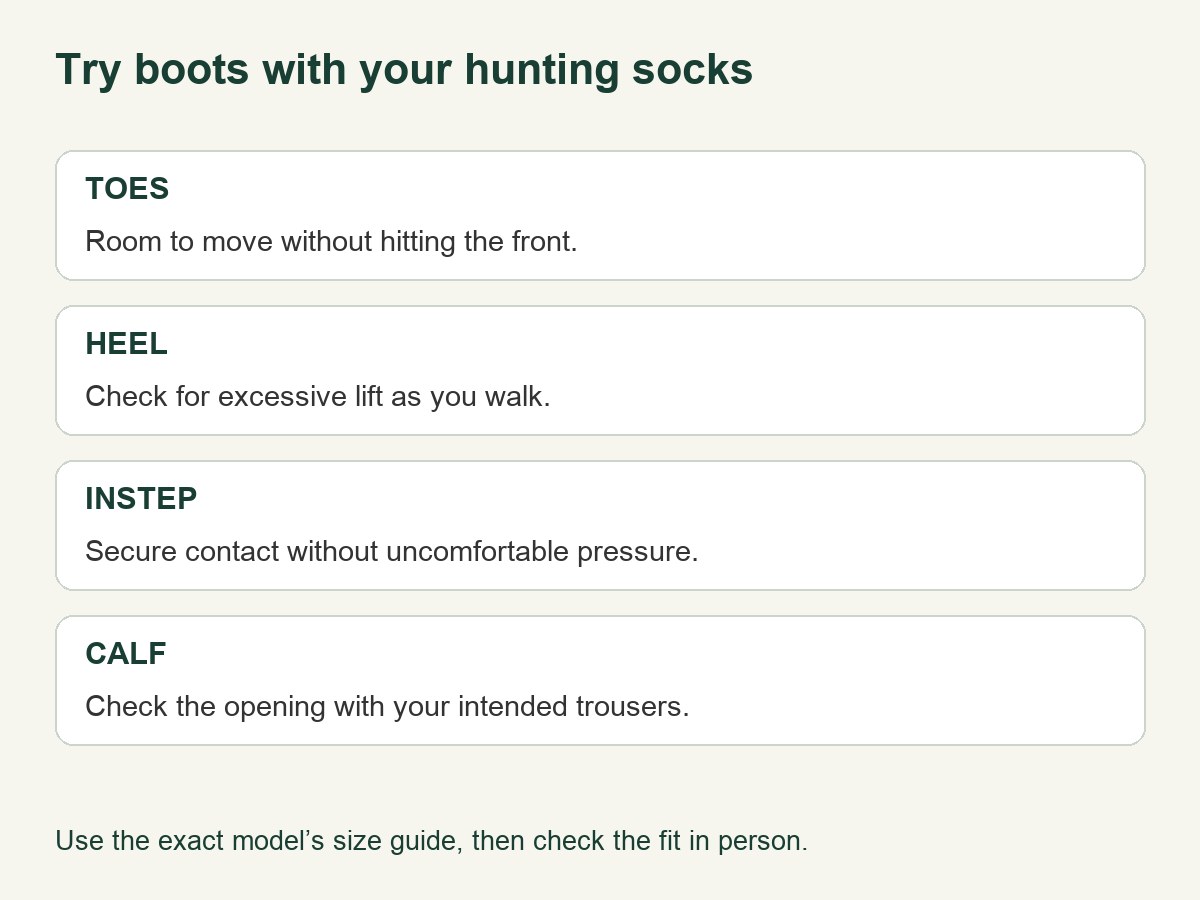
Try both boots with the socks you expect to wear. Walk, bend your knees and check whether your heel stays reasonably secure without pinching the instep. Your toes should have room rather than being pressed against the end. A brand comparison cannot predict those results from your usual shoe size alone.
Muck's US size guide recommends using the longer foot when measuring and ordering the next whole size for half sizes. It also explains that fit varies with style and manufacturing. That guidance does not mean everyone should buy an extra half size in both brands. Use the chart and fit advice for the exact boot, then check the result on your own feet.
Calf fit deserves its own check. Put your intended trousers inside the shaft if that is how you hunt, then close the gusset or assess the topline without forcing it. An adjustable opening may help, but adjustment range is not the same as a guaranteed wide-calf fit. If the top is uncomfortable or the boot moves excessively while walking, try another size or model rather than assuming it will resolve itself outdoors.
Do not solve a poor fit by stacking several thick socks until the boot becomes tight. Start with the sock combination you intend to use, and choose footwear that accommodates it. Our hunting socks guide can help compare that part of the system.
Warmth: compare the insulation system and your activity
The historical Alphaburly Pro example has a 1600G insulation designation; the Arctic Pro description emphasizes an 8mm neoprene bootie, fleece and underfoot foam. Grams of one insulation material and millimeters of neoprene measure different properties. They cannot be converted into a simple winner by comparing the numbers.
Manufacturer comfort-temperature ranges are not a guarantee that every wearer will remain comfortable for a set time. Movement, socks, fit, moisture and exposure all affect the experience. Do not use the lowest advertised temperature as a promise of protection or as a reason to ignore how your feet feel.
For long cold sits, examine the full insulation package and fit with your cold-weather socks. For long walks or mild temperatures, look at less-insulated versions rather than assuming either heavily insulated example is the best all-season choice. LaCrosse's Alphaburly Pro family includes several insulation configurations; choosing a different version is a meaningful change, not just a color selection.
Waterproofing, traction and durability
Both referenced product families use waterproof rubber-and-neoprene construction. That does not make every boot from either brand identical, prevent water entering over the shaft, or establish that a damaged boot still seals. Check the actual model's construction and inspect your pair before relying on it in wet conditions.
A deep tread is not a universal slip-proof claim. Mud, wet rock, frozen ground and ice are different surfaces. The linked Arctic Pro's Bob-Tracker description should not be presented as proof of specialized ice traction. If ice performance is central to your choice, verify the specific outsole and any compatible traction equipment separately.
There is no reliable comparative wear test here establishing that one entire brand lasts longer. Boot age, storage, exposure and use matter, and individual owner reports do not settle a brand-wide lifespan ranking. Examine seams, flex areas, sole attachment and the lining, and compare the current warranty and return terms for the seller and model you are considering.
Clean and dry boots according to their manufacturer's instructions. Use only compatible care products, and do not assume treatments suitable for leather are suitable for rubber and neoprene. Routine care cannot repair structural damage or turn a leaking boot into a dependable waterproof option.
Which should you choose for your hunt?
- Choose an Alphaburly Pro version to try first when its gusset adjustment and ankle fit address your needs. Verify the insulation level and model rather than relying on the conflicted original listing.
- Try Arctic Pro first when its documented cold-weather construction matches your use and the stretch-fit shaft and foot shape fit comfortably. Confirm the exact outsole and delivery status.
- For mild-weather walking, compare lighter insulation options instead of forcing either cold-weather example into an all-season role.
- For terrain that demands a different fit or support, broaden the comparison. A rubber pull-on boot is not automatically the best choice for every route simply because it keeps water out.
If you want options beyond these two brands, see our rubber hunting boot comparison. This page focuses on the LaCrosse-versus-Muck decision rather than repeating that broader roundup.
Frequently asked questions
Are LaCrosse boots made for playing lacrosse?
The boots discussed here are LaCrosse-brand hunting footwear. Advice about field-sport players and lace-lock athletic shoes does not describe the Alphaburly Pro rubber boot family.
Are Muck boots always warmer than LaCrosse?
No brand-wide conclusion follows from the information reviewed. Compare specific insulation packages and fit. A heavily insulated Arctic Pro should not be compared with an uninsulated LaCrosse model as though that settles the brands as a whole.
Does the Arctic Pro have Vibram Arctic Grip?
The exact linked product information describes a Bob-Tracker outsole. Do not transfer a feature from another Arctic-named model to this boot. Confirm the outsole on the exact version before buying.
Do all Muck boots have steel toes?
No such claim is supported here. Protective-toe models are specific versions with their own specifications. If a workplace requires safety footwear, verify the exact model's certification; do not infer it from a brand name or a similar-looking hunting boot.
Which brand sells more or lasts longer?
The sources reviewed do not establish comparable brand-wide sales or service life. We have removed the original article's unsupported sales winner and contradictory durability rankings. Fit, construction and documented features make a more useful buying comparison.
Sources and product limitations
References include LaCrosse's 2020 manufacturer catalog for historical model 376032, the current Alphaburly Pro family listing, Muck's 2018 manufacturer catalog for the Arctic Pro construction, and Muck's US size guide. Historical catalogs identify the original models; they do not prove current stock. Amazon Creators API provided the dated listing and image checks.