
Best Bowie Knives: Compare Blade Size and Design in 2026
We may earn commission for items you purchase. As an Amazon Associate we earn from qualifying purchases.
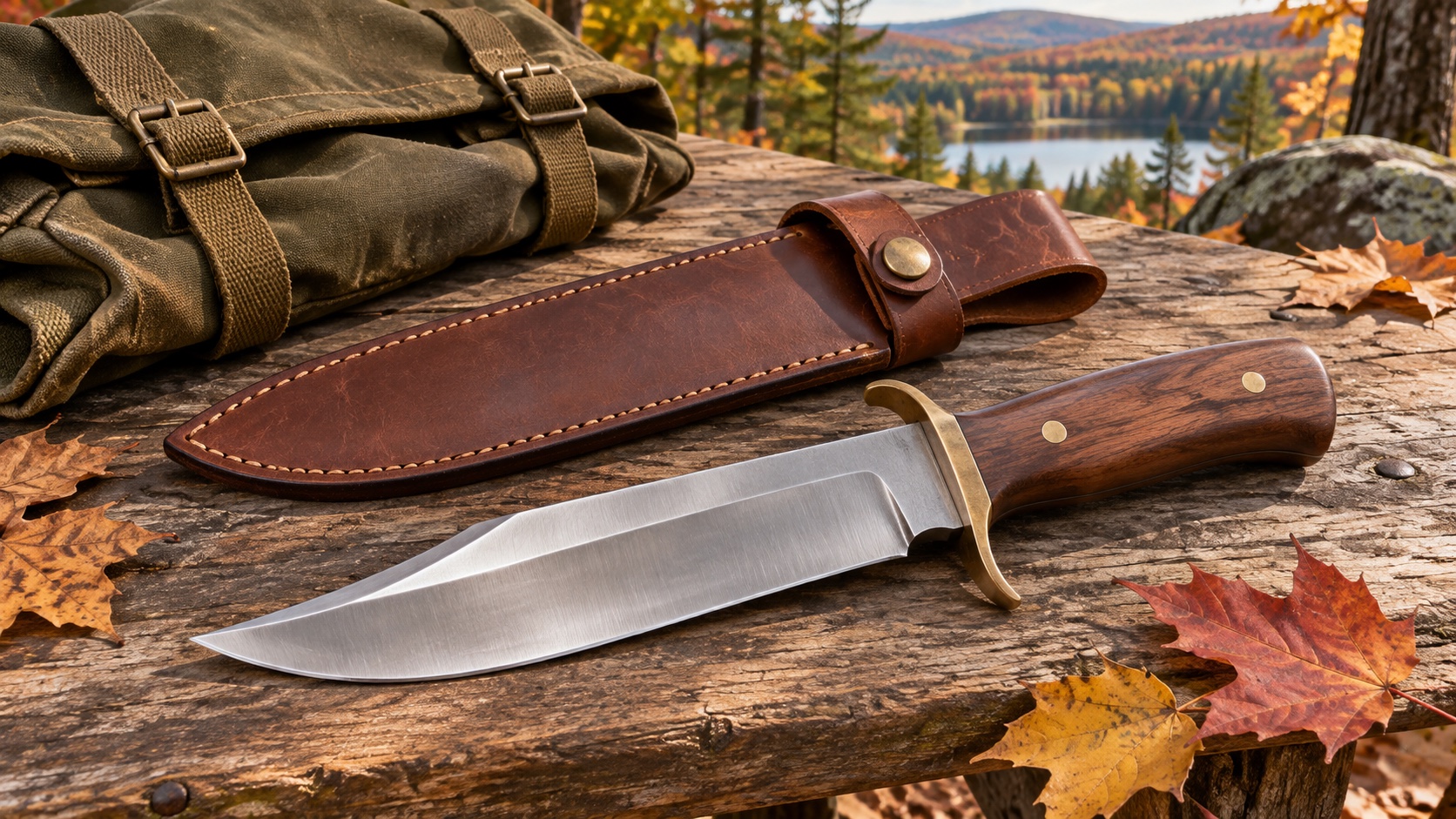
A Bowie knife is a large fixed-blade knife commonly associated with a clipped point and a guard. The best choice depends on whether you want a traditional design for a collection or a cutting tool for camp. Blade length, grip, sheath and weight matter more than the name alone; a smaller fixed blade may be easier to control for detailed work.
These comparisons use the current product listings. They are not hands-on reviews, and availability can change. The last two options are related sporting knives rather than traditional clip-point Bowies.
Bowie and related fixed-blade knives to compare
These affiliate links may earn Sportsman Crew a commission at no additional cost to you. Check the exact model and specifications before ordering.
Mossy Oak 14-inch Bowie

Clip-point fixed blade
Mossy Oak 14-inch Bowie
The listing describes an 8½-inch 3Cr13 blade, full-tang construction, wood handle and leather sheath. The manufacturer advises against chopping or batoning with this model; its 14-inch measurement is overall length.
WARIVO large Bowie knife

Large traditional style
WARIVO large Bowie knife
This large fixed blade is listed at 17 inches overall with an 11½-inch blade and leather sheath. The listing contains conflicting material descriptions, so confirm the steel and handle details with the seller before ordering.
SZCO Gator Back Bowie

Sawback design
SZCO Gator Back Bowie
A listed 15-inch overall fixed blade with a 9½-inch stainless-steel sawback blade, shaped wood handle and nylon sheath. The pronounced finger grooves and sawback are preferences worth considering before choosing it.
Gil Hibben Alaskan Survival Knife

Sporting fixed blade
Gil Hibben Alaskan Survival Knife
A related sporting knife rather than a classic clip-point Bowie. The listing describes a 6⅞-inch stainless blade, black Micarta handle, full tang and leather sheath. It offers a shorter blade than the larger options above.
Poshland TR-1168

Patterned fixed blade
Poshland TR-1168
A related handmade patterned-steel fixed blade with a sheath. The listing differs on handle details; verify the current construction and dimensions with the seller. Its blade profile differs from a traditional clip-point Bowie.
How to choose a Bowie knife
Blade steel and maintenance
Stainless steels generally resist corrosion better than many non-stainless carbon steels, but neither is maintenance-free. Edge retention, toughness and ease of sharpening vary with the steel, heat treatment and blade geometry; material names alone cannot establish which knife will perform best. Clean and dry the blade after use and follow the maker’s care instructions.
Handle and grip
Wood, leather and synthetic handles differ in texture and care needs. Look for a grip that fits your hand without forcing fingers into uncomfortable grooves, and a guard that suits the work. Consider how the handle feels with gloves and when damp, without assuming any handle is slip-proof.
Blade size and shape
Compare blade length separately from overall length: a “14-inch knife” may have a much shorter cutting blade. A clip point is a common Bowie feature, though designs vary. A large blade adds reach and weight; a smaller knife is often more manageable for detailed camp or game work.
Balance and weight
A knife that feels manageable on a bench may be cumbersome on a long walk. Check the listed weight and consider the sheath as part of the load. When possible, handle a knife safely in person before buying, because balance and grip are personal.
Sheath and retention
A fitted leather or synthetic sheath should cover the edge, hold the knife securely and attach reliably to your intended carry system. Check stitching, fasteners and fit. A sheath is important for transport, but do not assume it will retain a knife during every activity without checking it.
Care and carry
Keep the edge clean and dry, maintain it with a suitable sharpener, and store the knife securely away from children. Follow the manufacturer’s advice about long-term storage; Ontario Knife Company recommends dry storage outside the sheath. Local rules and property policies can restrict blade length or carry, so check the requirements for your destination.
For other tasks, compare our guides to a hunting fixed blade, deer hunting knives, knife steel and sharpeners.
Frequently asked questions
What makes a knife a Bowie?
There is no single universal specification. Many modern Bowie-style knives have a substantial fixed blade with a clipped point and a guard, but historical and current designs vary.
Is a Bowie knife good for field dressing?
A Bowie can cut, but its length and weight can make fine, controlled work awkward. Many hunters prefer a smaller fixed blade or a dedicated field-dressing knife; select a tool you can handle safely for the job.
Is carbon steel always better than stainless?
No. Steel choice involves corrosion resistance, edge behavior, toughness and maintenance, and performance depends on the particular alloy and heat treatment. Choose for the environment and care you can provide.
Choose for the job
Start with a manageable size, a handle that fits and a secure sheath. Review the exact product details and use instructions before ordering, especially when a listing uses broad or inconsistent specifications.