
What Is the Fastest Hunting Bow? Understanding Speed Ratings
We may earn commission for items you purchase. As an Amazon Associate we earn from qualifying purchases.
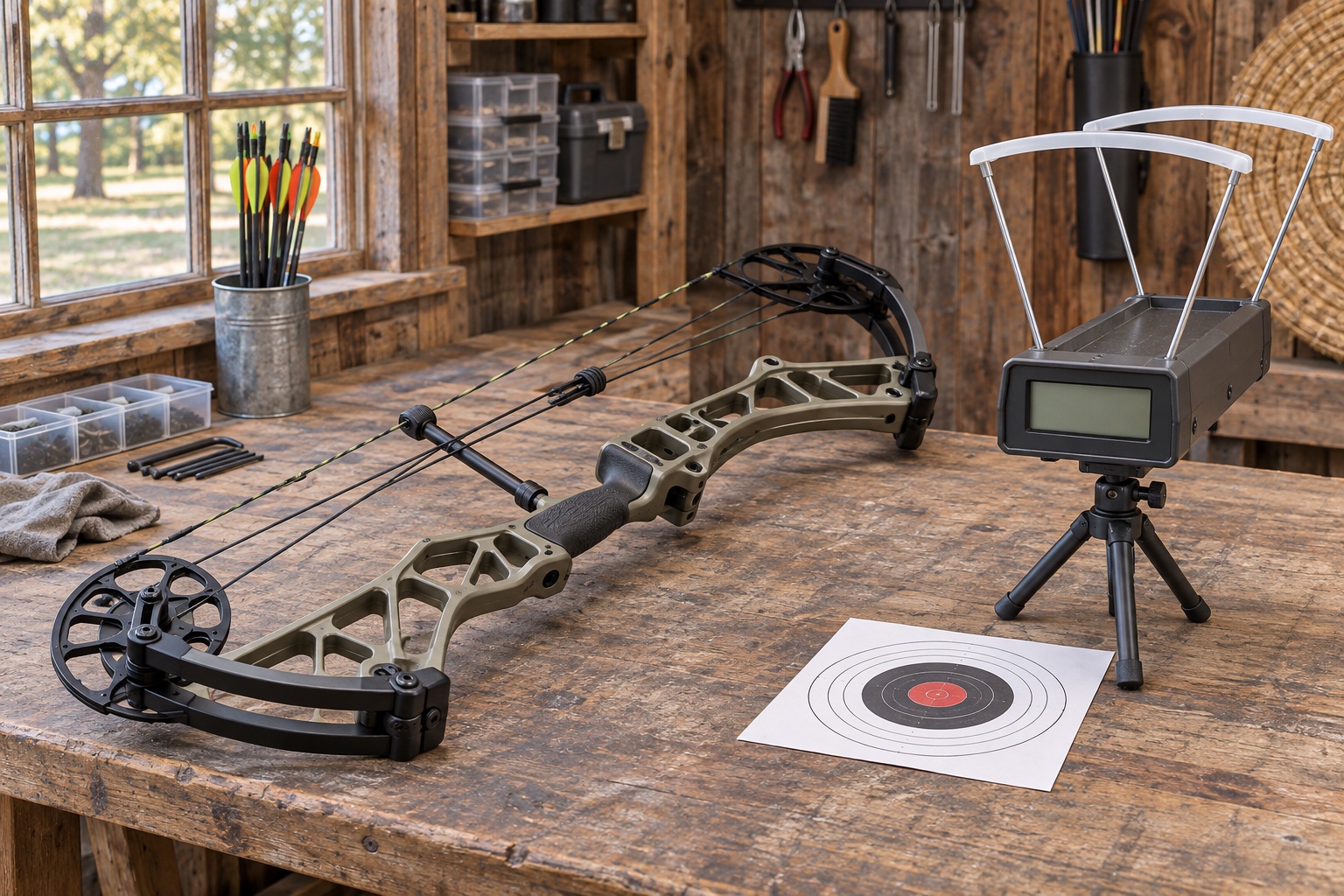
There is no reliable single answer without defining the bow category, model year and test method. Manufacturers publish speed ratings under specified conditions, and those figures are useful for comparing specifications—not a promise of the speed your hunting setup will produce. Draw length, draw weight, finished arrow weight and accessories all affect the result.
For one current example, Mathews lists its 2026 ARC hunting bow at up to 348 feet per second under its IBO rating. That is a manufacturer specification, not an independent test or a claim that the ARC is the fastest bow on the market. Compare specific models and test conditions directly, and verify their current specifications with the manufacturers.
What does a bow speed rating mean?
Speed is usually expressed in feet per second (fps). A manufacturer’s rating describes performance in a particular test configuration; testing standards and stated conditions can differ. Before comparing two ratings, check the draw length, peak draw weight, arrow weight and other conditions used for each. Do not treat an IBO-labeled figure and an ATA-labeled figure as an identical test without checking the details.
For example, Hoyt’s 2026 hunting bow white paper states its ATA test parameters and reports comparisons at several draw lengths. Those examples illustrate why a published maximum and a particular archer’s result can differ.
Why your hunting setup may shoot at a different speed
A bow fitted to your body may use a shorter draw length or a different draw weight from the test. Your finished arrow, including its point or broadhead, insert, nock and vanes, may also differ in mass. Accessories on the string can affect the result. To know your setup’s speed, ask a qualified archery shop to measure it with a chronograph using the arrows you actually shoot.
Never reduce arrow weight below the bow manufacturer’s minimum in pursuit of speed. Select a shaft with the correct spine and safe length for your setup; see our compound hunting arrow guide.
How to compare fast hunting bows
- Confirm the same category and test conditions. A compound bow and a crossbow, or differently measured ratings, should not be treated as a direct leaderboard.
- Get fitted. Have a technician measure draw length and help select a draw weight you can control smoothly.
- Try the complete setup. Compare draw cycle, grip, equipped weight and clearance with your sight, rest and quiver installed.
- Check service and adjustability. Ask about adjustment range, modules, string replacement and local technician support.
Our hunting bow fit guide covers these choices in more detail.
Speed is only one part of a hunting setup
Higher arrow speed may change trajectory, but it does not guarantee accuracy, penetration or an ethical shot. Practice with correctly matched equipment at distances and from positions you can handle consistently. Inspect the bow, arrows and release before use; never dry-fire a bow. Identify your target and a safe background, and check current local rules for bow type, draw weight, broadheads and accessories.
Frequently asked questions
Which hunting bow has the highest speed?
The answer changes with model year, bow category, test method and the models compared. Consult current manufacturer specifications and independent tests under comparable conditions; the example above is not a verified overall ranking.
Will my bow reach its advertised speed?
Not necessarily. The published figure reflects a test configuration that may differ from your fitted draw length, draw weight, arrows and string accessories. A chronograph can measure your actual setup.
Should I choose the fastest bow I can find?
Fit and control come first. Choose a bow you can draw smoothly and shoot consistently, with matched arrows and settings that satisfy local regulations.