
How to Choose a Good Hunting Bow
We may earn commission for items you purchase. As an Amazon Associate we earn from qualifying purchases.
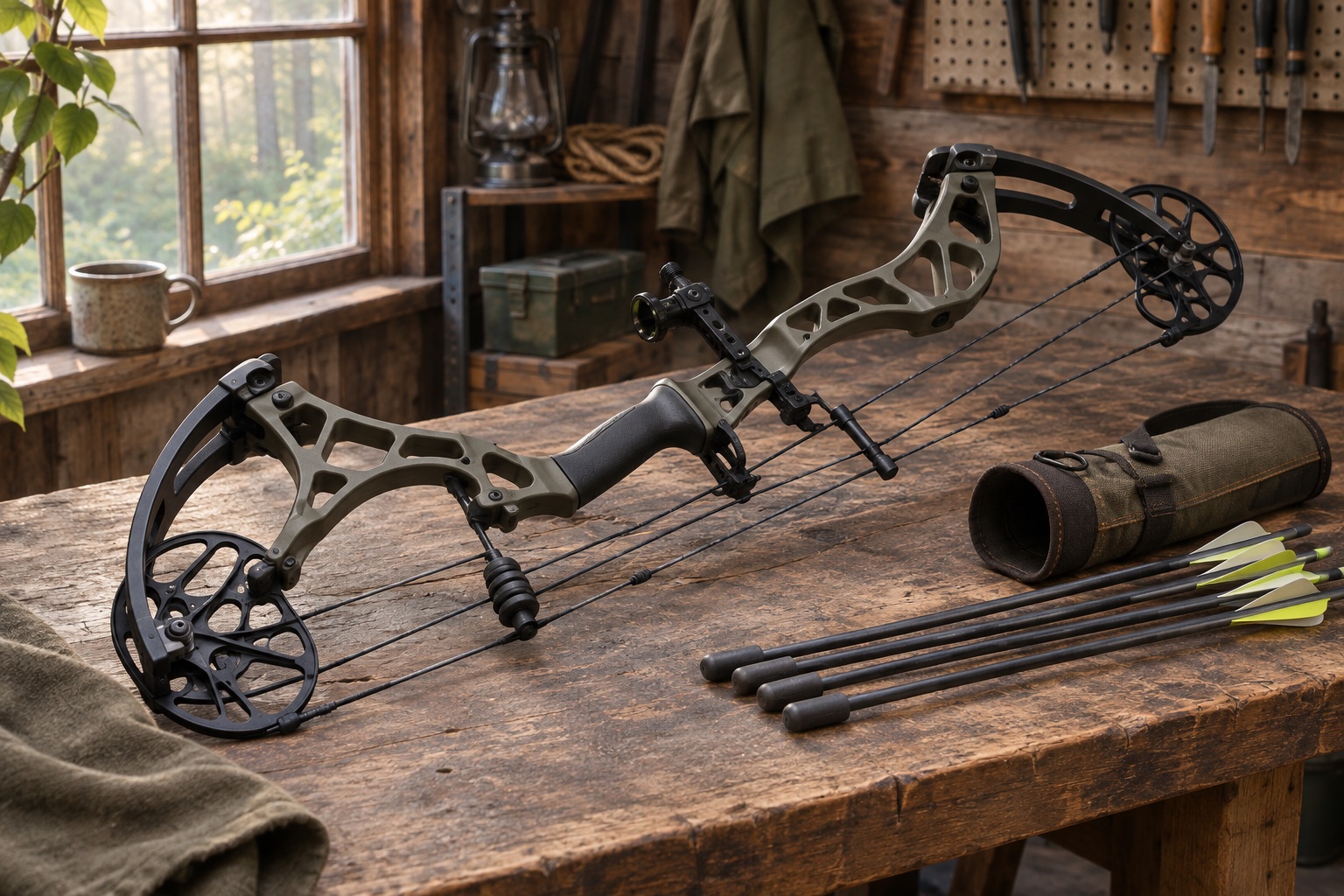
A good hunting bow fits your draw length, has a draw weight you can control and meets the rules for the place and game you plan to hunt. For a beginner, the best first step is to visit an archery shop for a fitting and instruction. A bow that feels manageable and lets you practice consistently is more useful than one chosen for its advertised speed alone.
Compound bow, recurve or longbow?
Compound bows use cams and cables to reduce the holding weight near full draw. Many models allow some draw-length and draw-weight adjustment, although the range and adjustment method depend on the bow. Sights, rests and mechanical release aids are common accessories.
Recurve bows and longbows have simpler designs and do not use compound-style let-off. They demand a different technique and can be rewarding hunting tools with appropriate equipment and practice. Local rules may treat bow types and accessories differently, so check the current regulations for your hunt.
If you are undecided, try each style with an instructor. A shop can help you compare the grip, draw cycle and total weight without assuming one style suits every archer. Our recurve hunting bow fit guide covers traditional-bow considerations in more detail.
Get draw length and draw weight right
Draw length
Have a qualified archery technician measure your draw length and observe your shooting form. A compound bow should be set to fit your anchor and alignment; stretching or collapsing your posture to fit an incorrect setting can make repeatable form harder. Some bows need different modules or a bow press for an adjustment, so ask what is involved before buying.
Draw weight
Choose a weight you can draw smoothly and control without raising the bow arm or straining. Practice builds strength; starting too heavy can encourage poor form. Check minimum draw-weight and equipment requirements for the species and jurisdiction you intend to hunt. If a legal hunting weight is not yet comfortable, continue practicing and building strength before hunting.
The Wisconsin bowhunter education guide discusses fit and controlled draw weight. Regulations vary, so consult the current rules where you will hunt.
Compare the full setup
Draw cycle, let-off and holding comfort
A smooth draw cycle is a matter of how a particular bow feels to you, not a guarantee based on its name or a single specification. For compounds, let-off reduces the weight held near full draw; it does not remove the need to handle the peak draw weight safely. Try the bow with your intended release and hunting clothing, under supervision at a suitable range.
Bow size, weight and maneuverability
Compare how the fully equipped bow carries and fits your stand, blind or terrain. A short bow can be easier to maneuver in confined spaces, while overall balance and personal comfort matter as well. Include the sight, rest, stabilizer and loaded quiver when evaluating total weight.
Advertised speed and arrows
Published speed ratings are measured under specific test conditions and are not a promise of the speed you will obtain with your draw length, draw weight and finished arrows. Select arrows with the correct spine and safe length for your setup, and follow the bow maker’s minimum finished arrow-weight specification. Our compound-bow arrow guide explains what to check.
New or used?
A used bow can be an option if it fits and can be inspected and serviced. Ask a shop to check limbs, cams, strings and cables, confirm adjustment parts are available, and explain any work needed before shooting. Compare the complete cost of the bow, fitting, service and necessary accessories.
Practice before hunting
Take a lesson and practice with properly matched equipment at an appropriate range. Inspect the bow and arrows before use, keep the bow pointed in a safe direction and never dry-fire it. Always identify your target and what is in front of and beyond it. Follow the bow manufacturer’s instructions for adjustment and let-down; work requiring a bow press belongs with a qualified technician.
Check current local requirements for seasons, hunter education, draw weight, broadheads and accessories. Practice at distances and from positions you can manage consistently, and pass on a shot when conditions or the background are uncertain.
Frequently asked questions
What makes a good hunting bow for a beginner?
A beginner needs a bow that fits their measured draw length and can be drawn smoothly at a manageable weight. Adjustable models can offer room to change settings, but instruction, proper arrows and enough time to practice matter just as much.
Is a faster bow always better?
No. Speed ratings are measured under specified conditions, and a fast bow that does not fit or cannot be controlled is a poor choice. Compare fit, draw cycle, total setup weight and serviceability as well.
How much draw weight do I need?
There is no universal number for every archer or hunt. Start with a weight you can draw comfortably and accurately, then check the current minimum for your location and species. Get help from a technician when changing settings.