
Best Type of Tree Stand for Bow Hunting: Compare Your Options
We may earn commission for items you purchase. As an Amazon Associate we earn from qualifying purchases.
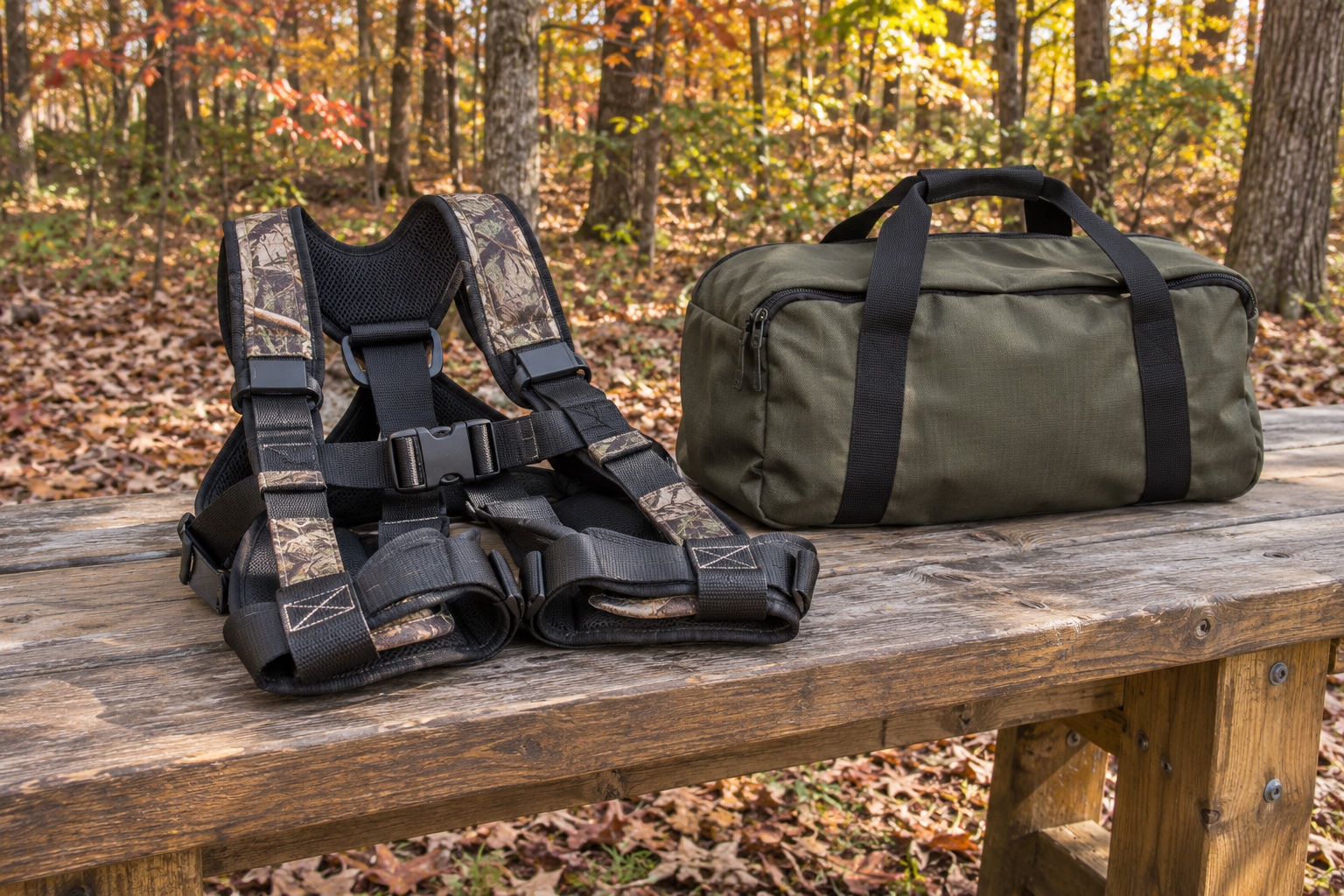
Ladder, hang-on and climbing tree stands each involve different tradeoffs in transport, setup and use. The best choice depends on the specific stand, the trees and terrain where it will be used, your physical ability and local rules. A ground blind is another option if an elevated stand is not appropriate for you.
No type is inherently fall-proof. Before choosing any elevated stand, plan for a compatible full-body fall-arrest system, safe access and a prompt rescue if a fall occurs. This guide compares stand categories; it is not a hands-on test or a substitute for the manufacturer's instructions.
Compare tree stand types
Ladder stands
A ladder stand combines an elevated platform with a ladder. Some are bulky or heavy to transport and assemble, so check the instructions, assistance requirements and all weight limits for the model. A ladder does not remove the need for fall protection.
Hang-on stands
A hang-on stand attaches to a suitable tree and uses a separate approved means of access. Portability, platform size and setup requirements vary. The stand, climbing equipment and fall-protection system must be compatible and used according to their instructions.
Climbing stands
A climbing stand is designed to move up an appropriate tree using its components. Suitable tree characteristics, physical demands and operation differ by model. Do not assume a climber fits every tree or that it can be used without fall protection.
Ground blinds
A ground blind avoids climbing into an elevated tree stand, though it has its own setup, visibility and site considerations. Check local rules and landowner or land-manager permission for any blind or stand.
How to compare stands
Review the manufacturer's rated capacity for the person and equipment, the model's tree requirements, platform dimensions, transport weight, assembly instructions and service life. Consider whether you can move and sit comfortably while using your full clothing layers and safety equipment. Ask a qualified instructor or retailer about fitting the complete system.
Do not rank categories as universally safer or sturdier based only on their names. Condition, compatibility, installation and correct use matter. Inspect the stand, climbing equipment and fall-protection components according to their manufacturers' instructions, and do not use damaged equipment.
Fall protection and rescue planning
Use an appropriate full-body fall-arrest system and remain connected from the time you leave the ground until you return, using a compatible connection system and following the manufacturers' instructions. The Wisconsin DNR's tree-stand safety guide recommends a lifeline while ascending and descending and three points of contact when climbing.
Texas Parks and Wildlife's elevated-stand guidance explains the importance of a full-body fall-arrest system and practicing with it at ground level. Read and follow the exact instructions for your stand and fall-protection equipment; do not improvise connections or modify equipment.
Have a rescue plan before climbing. Tell someone your location and return time, carry a way to call for help on your person, and understand the manufacturer's suspension-relief instructions. Suspension after a fall can be life-threatening. Never rely on a harness alone as the plan for getting down.
Check current landowner permission, stand-placement and removal rules, and visibility-clothing requirements for the area. If you cannot use the equipment as directed or arrange a suitable rescue plan, choose a ground-level option.
Common questions
Is a ladder stand safer than a hang-on stand?
No category is automatically safe. Compare the specific products and their access and fall-protection requirements, and follow their instructions every time.
Do I need a harness in a climbing stand?
Use a suitable full-body fall-arrest system for any elevated stand, including while ascending and descending, following the instructions for the complete system.
What should I check before buying?
Consider the rated capacity, tree compatibility, transport and setup demands, fall-protection compatibility and your ability to carry out a rescue plan.
Can I place a stand on public land?
Rules differ by agency and property. Check the land manager's current permissions, placement and removal requirements before installing equipment.
See our bow hunting tree stand comparison and hunting blind guide for related options.