
Best Rubber Hunting Boots for Wet Ground: Fit and Insulation
We may earn commission for items you purchase. As an Amazon Associate we earn from qualifying purchases.
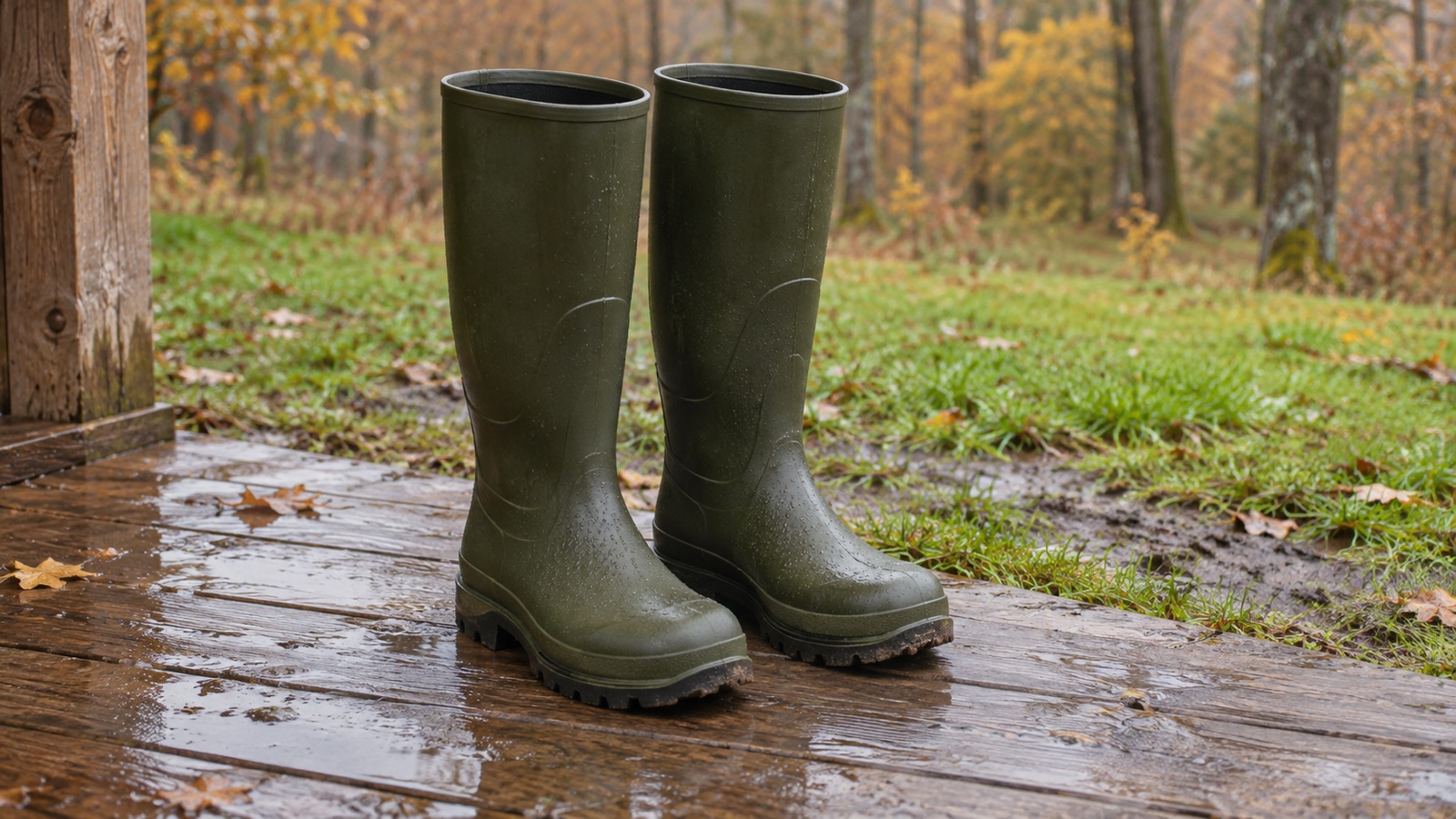
The best rubber hunting boots for wet ground are the pair that fits your foot and calf, suits your activity level, and keeps the boot opening above the water. A waterproof shell is useful in wet grass and shallow mud, but it cannot stop water coming over the top or eliminate perspiration inside.
Of the five exact listings checked for this guide, the Muck Arctic Pro in Tan/Bark size 12 and TIDEWE 6mm Black men's size 11 had new offers available on November 3, 2026. The other three linked variants were unavailable. Start with the Arctic Pro for its cold-oriented construction or the 6mm TIDEWE for a simpler rubber-and-neoprene option, then confirm your size and intended use. Neither is an uninsulated warm-weather boot.
This comparison uses Amazon Creators API product details and offer checks, supported by manufacturer guidance. It is not a hands-on leak, traction or temperature test. Links may earn us a commission; availability can change after the dated check.
Rubber hunting boots compared
| Exact linked variant | Listed construction | Availability at check | Main consideration |
|---|---|---|---|
| Muck Arctic Pro, Tan/Bark, 12 | 8mm neoprene, fleece, 2mm underfoot thermal foam | New offer available | Cold-oriented build; assess warmth against walking effort |
| TIDEWE Black, men's 11 | 6mm neoprene/CR Flex-Foam, stretch nylon | New offer available | Pull-on wet-ground option; check foot and ankle fit |
| TIDEWE Camo, 9, 6mm | 16-inch listing, 6mm neoprene | Unavailable | Reference listing, not a confirmed current purchase |
| TIDEWE Camo, 9, 800g | 800g insulation plus 7mm neoprene | Unavailable | Different insulation package from the standard 7mm model |
| TIDEWE Camo, 11, standard 7mm | 7mm neoprene, air-mesh lining, EVA midsole | Unavailable | Do not assume it includes 800g insulation |
The checks apply to these sizes and colors, not every variant sold under the same family name. Changing a size selector can change the product, seller and availability. Read the selected variant before ordering.
Muck Arctic Pro: cold-oriented rubber boots

Product details
Muck Arctic Pro — Tan/Bark, size 12
A new offer was available on November 3, 2026. Confirm the exact variant and current availability.
The linked Muck Boot men's Arctic Pro is Tan/Bark in size 12. Its catalog specifies an 8mm neoprene bootie, fleece lining and 2mm of thermal foam underfoot. Muck's own Arctic Pro description also identifies that insulation combination. These are useful details for comparing construction; they do not establish a safe exposure time or guarantee warm feet at a particular temperature.
The listing also describes an EVA midsole, Bob-Tracker outsole, rear pull loops and reinforcement around the instep, heel and Achilles area. Consider it when cold, wet approaches and relatively inactive hunting make a warmer pull-on boot relevant. A long, energetic walk can call for a different balance.
Check before choosing: try your intended socks, assess heel movement and make sure the topline is comfortable around your calf. We have not measured this pair's weight or tested the tread on ice, slick roots or steep slopes. Its reinforced areas are not evidence of puncture or snakebite protection.
TIDEWE 6mm Black: a current pull-on option
Product details
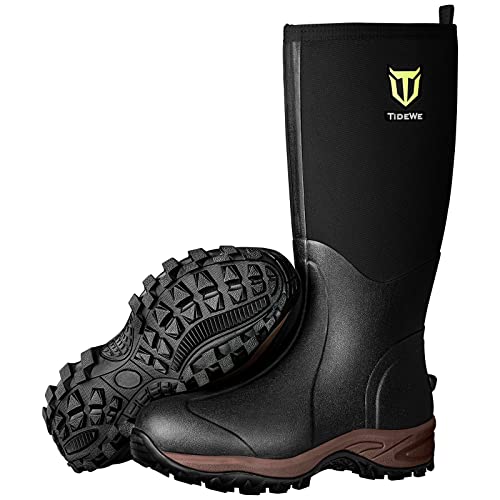
TIDEWE 6mm — Black, men’s size 11
A new offer was available on November 3, 2026. Confirm the exact variant and current availability.
This destination is the Black men's size 11 rubber/neoprene work and rain boot, listed with 6mm CR Flex-Foam and four-way stretch nylon. The catalog describes a reinforced toe and a heel kick for removal. A new offer was available for the exact variant during the check.
Its construction makes it worth comparing for wet-field access, muddy tracks and other outings where a pull-on rubber boot is useful. The 6mm specification is neoprene thickness, not a temperature rating or the equivalent of a gram-rated insulation layer. We have omitted the listing's broad body-heat-retention promise because it is not a useful guarantee of comfort on your hunt.
Check before choosing: use the size chart for this particular listing and confirm the selected men's size. A boot that is easy to pull on may still lift excessively at the heel when walking. Camouflage, brown and other sizes should not be assumed to have the same availability as this Black size 11.
Unavailable TIDEWE variants retained for reference
These original destinations remain so readers can identify the products previously covered. None had a confirmed available new offer at the November 3 check. The buttons lead to the retained listings to check their current status; they are not confirmation that a pair can be purchased now.
TIDEWE Camo size 9: 6mm, 16-inch listing
Product details
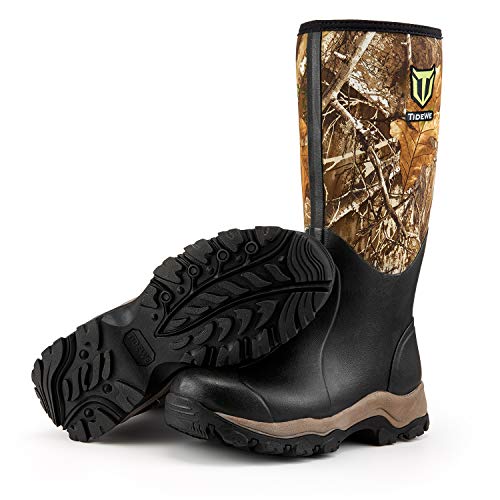
TIDEWE 6mm — Camo, size 9, unavailable
Unavailable on November 3, 2026. Original destination retained for reference.
This is the 6mm Camo size 9 model, with CR Flex-Foam and a stretch upper. Its listed 16-inch height describes the boot, not an approved water depth. The opening remains a route for water entry, particularly as your foot sinks into mud or your leg bends. Keep this model separate from the Black size 11 above when comparing availability.
TIDEWE Camo size 9: 800g plus 7mm neoprene
Product details
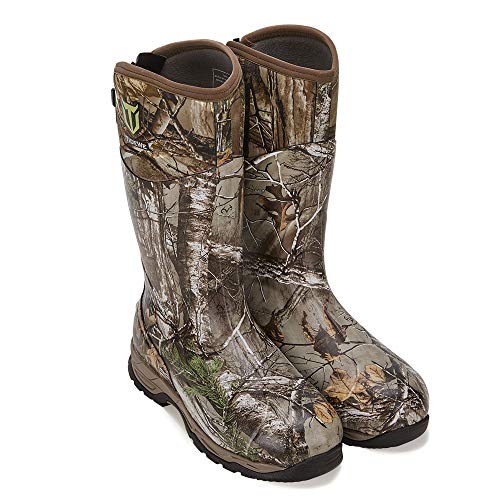
TIDEWE 800g and 7mm — Camo, size 9, unavailable
Unavailable on November 3, 2026. Original destination retained for reference.
This exact listing specifies both 800g insulation and 7mm neoprene, plus an EVA midsole, a rear gusset with cinch adjustment, and reinforced toe and heel areas. It is the more heavily insulated TIDEWE configuration in this comparison, but it was unavailable. The materials alone do not establish how long you can sit comfortably in freezing weather.
TIDEWE Camo size 11: standard 7mm

Product details
TIDEWE standard 7mm — Camo, size 11, unavailable
Unavailable on November 3, 2026. Original destination retained for reference.
This standard 7mm model has an air-mesh lining, EVA cushioning, a rear gusset and cinch buckle, and a heel kick. The checked catalog does not establish the separate 800g insulation layer described for the size 9 variant above. Do not transfer that specification between similarly named boots. A breathable or air-mesh lining also does not mean moisture can freely escape through the rubber exterior.
How to fit a tall rubber boot
Evaluate the foot, ankle and calf separately. A rear gusset changes the opening around your leg; it does not make the toe box wider or cure a loose heel. Begin with the manufacturer's chart and the socks and trouser layers you actually plan to wear.
- Foot room: your toes should have room to move without being pressed into the front. Adding several thick socks to fill an oversized boot can create pressure elsewhere.
- Heel and ankle: walk indoors and use a small step while the boots are still returnable. Notice repeated heel lift, rubbing, or your foot sliding forward.
- Calf opening: check that trousers fit inside without a tight band or uncomfortable buckle pressure. Bend your knees as well as standing upright.
- Removal: confirm you can remove the boots without wrenching the upper. Use a designed heel kick or a suitable boot jack according to the maker's instructions.
A snug fit is not a guarantee against a blister. Stop and address rubbing early. If the shaft fits but the foot does not, choose another shape rather than expecting the calf adjustment to solve it.
Waterproof shells, wet feet and boot height
Rubber boots can help keep your feet dry from external moisture while the shell is intact and the water stays below the opening. They are not waders. Tall shafts provide more coverage than ankle boots, but crossing an unknown creek or bog is not made safe by a height measurement.
Leave room for uneven footing, waves and sinking mud instead of treating the top edge as a working waterline. Water entering through the opening can remain inside even after you reach dry ground. A cinch buckle helps fit the shaft; it is not a watertight seal.
When socks get wet, consider three separate causes: water over the top, damage or a failed seam, and perspiration. Dry and inspect the pair before assuming every damp patch is a leak. Look for cuts, cracks or separation around flexing areas and consult the maker if you suspect a defect. Do not use a leaking pair for an outing that depends on dry footwear.
Insulation, walking and traction
Choose insulation for both the conditions and your activity. An early-season walk through wet fields is different from a late-season treestand sit. If you overheat easily while moving, compare less insulated or uninsulated boots beyond this five-product set; all five here include neoprene, and two specify additional insulating materials.
Neoprene thickness in millimeters and insulation weight in grams describe different construction details. They cannot be converted into one reliable comfort temperature. Sock choice, fit, moisture, wind exposure above the boot and how much you move all affect the experience. For a deeper discussion, see our cold-weather hunting boots guide.
For traction, consider the terrain rather than accepting an “anti-slip” label as a promise. Examine the outsole pattern, wear and mud buildup. Wet wood, smooth rock and ice can challenge a tread that works acceptably in soft soil. We have not performed comparative grip tests on these pairs.
If your route involves long sidehill travel, heavy loads or extensive rocky walking, compare the fit and support of a structured lace-up boot. Our general hunting boots comparison covers broader footwear choices. Rubber pull-ons solve a particular wet-ground need, not every terrain problem.
Cleaning, drying and storage
Muck's boot care guide recommends removing dirt with a soft brush or cloth and rinsing with cold water; soapy water can help with stubborn dirt. It advises against solvents or other cleaners and says to air-dry boots away from artificial heat, which can crack rubber and compromise waterproofing. Follow the instructions for your own model when they differ.
Inspect the exterior after cleaning, when mud no longer hides damage. Let the inside dry between outings, and follow the manufacturer's directions for removable insoles and liners. Putting a damp pair straight back into use can make it hard to tell yesterday's moisture from a new problem. Avoid assuming a household adhesive, leather conditioner or heater is suitable for a rubber/neoprene upper.
Frequently asked questions
Are rubber boots better than leather hunting boots?
They serve different needs. A pull-on rubber shell is convenient for wet grass and mud; a well-fitting lace-up can offer a different level of foot retention and adjustment for extended walking. Compare the actual fit, route and construction rather than choosing by material alone.
Do rubber boots keep scent away from deer?
This guide does not establish a scent-blocking advantage or promise that any boot prevents deer from detecting you. Choose these models for their fit and wet-ground construction, not a guarantee of concealment.
Can I use these as snake boots?
No snakebite-resistance specification was verified for these exact products. A tall rubber shaft, reinforced toe or camouflage finish is not evidence of that protection.
Which of these should I check first?
Start with the Muck Arctic Pro if its cold-oriented construction matches your use, or the Black 6mm TIDEWE if you want to compare a simpler neoprene pull-on. Both had available new offers in the checked variants. If neither fits your foot, calf and activity, keep looking; the right specification in the wrong fit is not the best rubber boot for you.