
Best Hunting Ear Protection: Compare Plugs and Earmuffs
We may earn commission for items you purchase. As an Amazon Associate we earn from qualifying purchases.
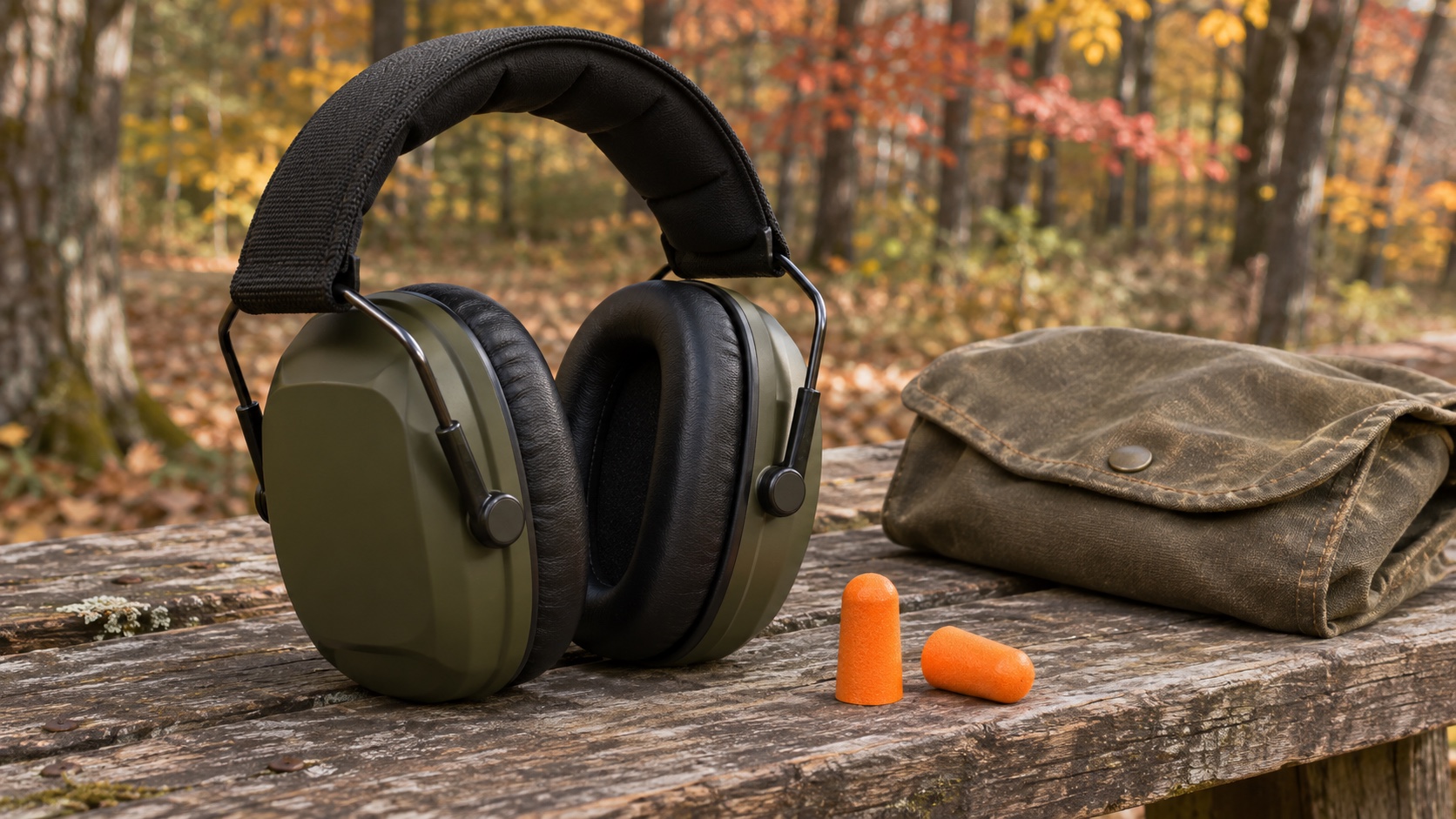
Firearm noise can damage hearing. For impulse noise such as gunfire, NIOSH recommends double hearing protection: properly fitted earplugs with earmuffs worn over them. Choose protectors designed for the exposure, check that both layers seal correctly, and follow the instructions for your equipment and range.
The comparisons below use current product listings; they are not hands-on tests. A noise reduction rating is a laboratory measure, not a guarantee of protection in the field. Availability and specifications can change.
Hunting hearing protection to compare
These affiliate links may earn Sportsman Crew a commission at no additional cost to you. Ratings below are manufacturer or listing claims and depend on the specified fit and configuration.
Pro For Sho earmuffs

Passive earmuffs
Pro For Sho earmuffs
The listing states a 34 dB NRR for this passive earmuff. Choose the correct size and ensure the cushions seal around the ears; the laboratory rating is not a guarantee of actual protection for an individual.
PROHEAR 016 earmuffs
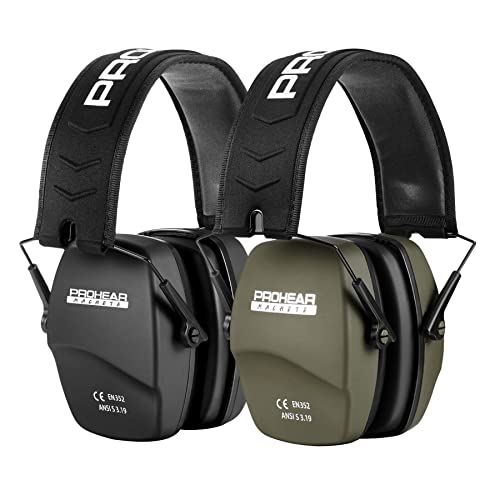
Passive earmuffs, two-pack
PROHEAR 016 earmuffs
The listing describes a two-pack of passive muffs with a 26 dB NRR. Check that each wearer can obtain a complete seal, especially when wearing glasses or a hat.
PROHEAR 066 electronic earmuffs

Electronic earmuffs
PROHEAR 066 electronic earmuffs
An electronic over-ear model with a listed 23 dB NRR and sound amplification. Check battery requirements and the cup seal. Electronics do not make a poor fit protective.
Decibullz percussive-filter earplugs

Moldable filtered plugs
Decibullz percussive-filter earplugs
These moldable plugs use a percussive filter. Follow the exact molding and tip instructions; the maker distinguishes impulse-protection measurements from continuous-noise ratings, and fit remains critical.
Corded reusable earplugs

Reusable corded plugs
Corded reusable earplugs
The listing describes reusable corded plugs and states a 25 dB NRR. Check the package and fit instructions for the exact variant, clean as directed, and make sure the cord does not interfere with an earmuff seal.
Walker’s wireless hearing-protection earbuds

Electronic in-ear plugs
Walker’s wireless hearing-protection earbuds
The listing states a 25 dB NRR for these electronic in-ear protectors and includes multiple fitting tips. Check the selected configuration, seal and battery instructions.
Pro Ears Stealth 28

Electronic in-ear plugs
Pro Ears Stealth 28
Pro Ears lists a 28 dB NRR for the Stealth 28. It is an in-ear electronic model; choose and insert the specified tips correctly and verify compatibility before wearing earmuffs over it.
GLORYFIRE Bluetooth hearing protector

Bluetooth hearing protector
GLORYFIRE Bluetooth hearing protector
The listing states a 26 dB NRR but uses both earplug and earmuff descriptions. Confirm the actual form, model and labeled rating on the package before ordering or using it; the checked listing had limited stock.
How to choose and fit hearing protection
Understand NRR
NRR is measured under laboratory conditions. Real-world attenuation is often lower and depends on fit, insertion and consistent use. It is not a number to simply subtract from a gunshot level as proof of safety; impulse noise presents additional measurement challenges. Individual fit-testing is the best way to assess the attenuation a wearer achieves.
Fit plugs and muffs together
Follow the plug manufacturer’s insertion instructions and use the specified tips. Fit earmuff cushions completely around the ears; glasses, hair and hats can break the seal. Try both layers together before exposure and do not assume that their ratings add directly.
Passive and electronic protection
Passive plugs and muffs reduce sound through their physical seal. Some electronic protectors also pass or amplify quieter sounds while limiting some loud sound transmission, but performance varies. A battery-powered feature cannot compensate for a poor seal, and no protector guarantees that you will hear every warning.
Care and replacement
Inspect eartips, cushions, headbands and cables for wear. Clean and replace parts according to the manufacturer’s instructions. Keep spares available and check whether electronic models retain passive protection with the power off.
Compatibility and awareness
Check fit while wearing your usual eye protection and headwear. An ill-fitting cap or thick glasses arms can interfere with an earmuff seal. Follow range commands and keep any audio volume low enough to remain aware of your surroundings. For an individualized fit assessment, consult an audiologist or hearing-conservation professional.
NIOSH’s hearing-protector guidance recommends double protection for impulse sounds. Ordinary noise-cancelling music headphones should not be assumed to provide hearing protection; see our hunting earbuds guide for more on rated in-ear models.
Weather cap: not hearing protection
The original article also linked a Gisdanchz winter cap with fabric ear flaps. It is clothing for warmth, not a rated hearing protector. Do not use the cap in place of earplugs or earmuffs, and check that any headwear does not interfere with an earmuff seal.
Gisdanchz winter cap

Weather clothing only
Gisdanchz winter cap
A cap with fabric ear flaps for cold weather. It is not hearing protection. The checked listing had limited stock.
Frequently asked questions
Should hunters use earplugs or earmuffs?
For firearm impulse noise, NIOSH recommends both properly fitted plugs and earmuffs together. Fit matters for each layer, and no combination eliminates all risk.
Are higher NRR numbers a guarantee?
No. NRR is a laboratory rating and actual results vary. Use the specified components, wear protection consistently and consider fit-testing.
Can regular noise-cancelling earbuds protect against gunfire?
Do not assume so. Use hearing protectors designed and rated for the exposure; ordinary music headphones with active noise cancellation are not a substitute.
Choose protection that fits
Start with correctly fitted plugs and earmuffs for firearm impulse noise, check the seals with your other equipment, and follow current product and range instructions.