
Best Hunting Clothing: Layers for Weather, Fit and Comfort
We may earn commission for items you purchase. As an Amazon Associate we earn from qualifying purchases.
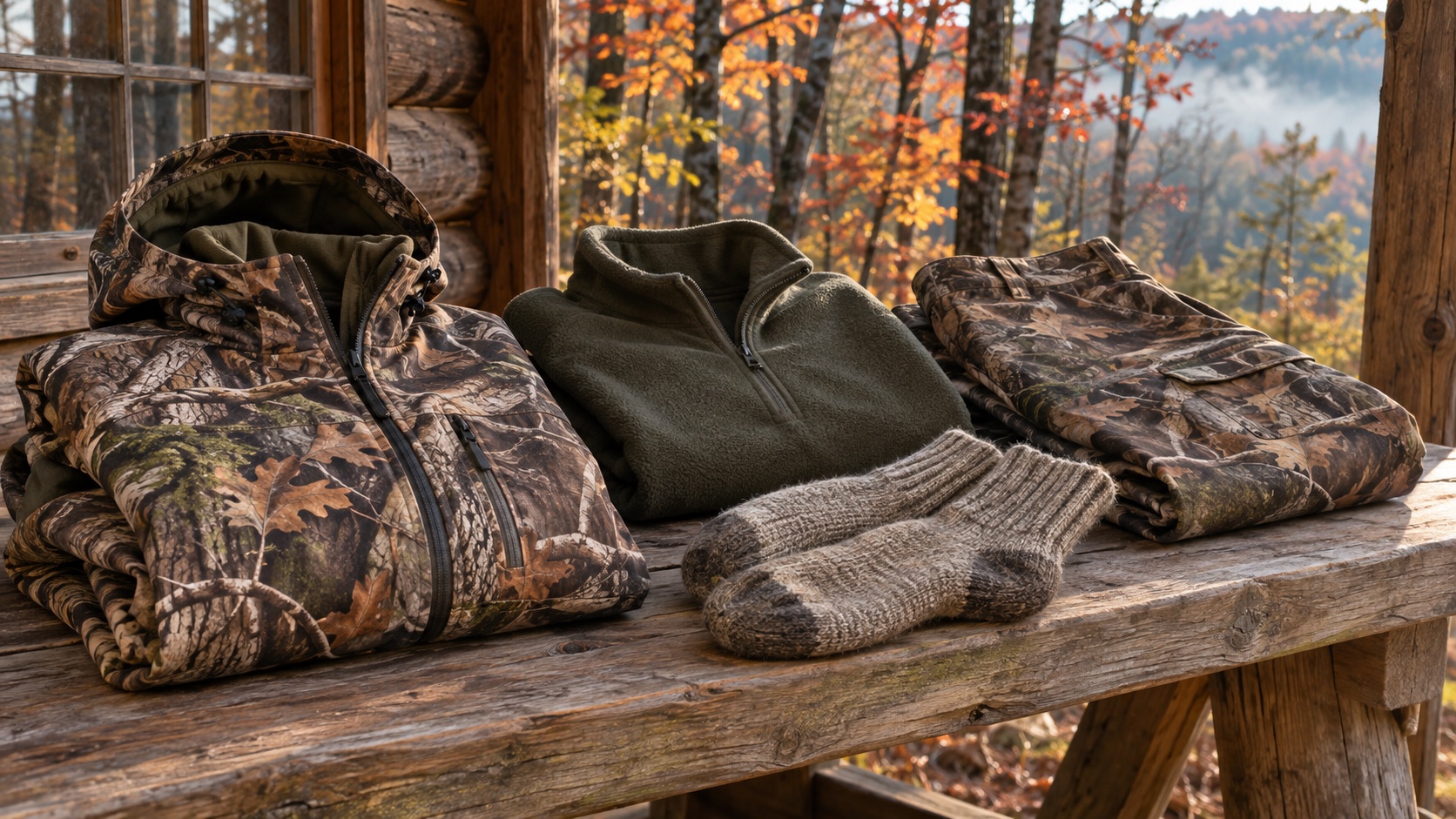
Good hunting clothing is a system: a comfortable base layer, insulation suited to your activity, and outerwear for the wind and rain. The right combination for a cool walk can differ from what you need for a long, cold sit. Fit, visibility to other hunters and the actual forecast matter more than the print alone.
Compare these current listings as starting points. The descriptions are based on catalog information and listing checks, not hands-on product testing. Sizes, availability and features can change.
Hunting clothing to compare
These affiliate links may earn Sportsman Crew a commission at no additional cost to you. Check the exact size, color and included items before ordering.
TIDEWE hunting clothes

Fleece-lined jacket and pants
TIDEWE hunting clothes
This jacket-and-pants set has a fleece lining and a water-resistant outer fabric. The listing describes a rear opening for a safety harness; the harness is not included. Water-resistant fabric is not the same as a fully waterproof rain shell.
Mossy Oak camouflage hoodie

Fleece midlayer
Mossy Oak camouflage hoodie
The listing describes a polyester-spandex outer fabric with a performance-fleece interior, hood and hand-warmer pocket. It is a layering option, not a rain shell; check the size and selected pattern.
Mossy Oak lightweight camo shirt

Lightweight shirt
Mossy Oak lightweight camo shirt
This lightweight shirt has a synthetic stretch fabric and mesh back panel according to the listing. The checked variant was an extra-large shirt; confirm your own size and color before ordering.
Mossy Oak Tibbee Flex hunting pants

Lightweight pants
Mossy Oak Tibbee Flex hunting pants
The checked medium Bottomland listing describes lightweight stretch fabric, a partly elastic waistband and cargo pockets. The listing flags frequent returns for tight fit, so consult its size chart and return terms.
EDTREK camo beanie

Reversible beanie
EDTREK camo beanie
The listing describes a reversible knit-and-fleece beanie with a waterproof and windproof claim. Verify the color, size and design selected. A patterned orange hat does not necessarily satisfy local hunter-orange rules.
TIDEWE rain suit
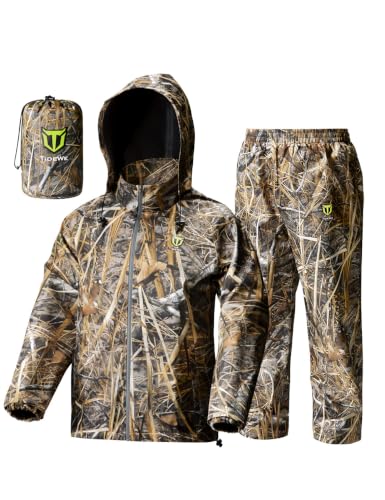
Rain jacket and pants
TIDEWE rain suit
This two-piece rain suit is described as waterproof, with sealed seams, an adjustable hood and a storage bag. The checked listing was size large. Confirm garment fit over your layers and inspect seams and closures; performance varies with conditions and wear.
Merino.tech midweight base-layer set

Merino base-layer set
Merino.tech midweight base-layer set
The checked listing describes a 100% merino wool long-sleeve top and bottoms, plus wool hiking socks. Check the weight, size, package contents and care instructions for the variant you select.
How to choose hunting clothing
Camouflage and visibility
Choose muted colors or a pattern suitable for the background if you prefer, but do not assume camouflage makes you invisible. Check your state and hunting-area rules for required hunter orange or other high-visibility clothing, including overlapping seasons. A camo-orange garment may not meet the rules; verify the required design and coverage with your wildlife agency.
Base-layer materials
Synthetic and merino wool layers can help move moisture away from skin. Choose a comfortable weight for the temperature and activity, and check the care label. Cotton can be comfortable in dry conditions but dries slowly when wet; consider the weather and carry dry layers. Our hunting underwear guide compares more base-layer options.
Insulation for walking and sitting
Fleece or other insulating layers help retain heat. A long climb may call for less insulation than a stationary stand; adjust layers as conditions and exertion change. REI’s layering guide explains the different roles of base, middle and outer layers.
Scent-control claims
Clean clothing and attention to wind are useful considerations, but no garment or wash guarantees that wildlife cannot smell you. Wind can shift, so plan for changing conditions rather than relying on a product to eliminate scent.
Fit and mobility
Try the full outfit together: base layers, outerwear, boots, gloves, pack and any fall-arrest harness you use. Walk, sit and kneel to check for binding and exposed gaps. Follow your harness and treestand manufacturers’ instructions; a garment opening is not itself a fall-arrest system.
Rain and wind protection
A water-resistant garment can help with light moisture but is not necessarily waterproof in sustained rain. Check the garment’s construction, seam treatment, closures and care instructions. Waterproof shells can still collect condensation during exertion, so use ventilation and layers appropriate to the conditions.
Pockets and practical features
Check that pockets are accessible with a pack or harness on, and that cuffs, hoods and closures adjust comfortably. Rub the fabric and operate its fasteners to judge noise yourself. Store essential items securely and make sure straps and loose clothing do not interfere with equipment.
Hunting clothing by conditions
- Warm weather: Consider lightweight, breathable fabric, sun protection and clothing suited to local insects and vegetation.
- Cold and stationary: Add insulation, protect hands and feet, and carry layers to put on after the walk in.
- Wet or windy: Bring a suitable protective shell and a way to keep spare clothing dry. Weather ratings do not guarantee comfort in every storm.
Frequently asked questions
What should I wear under hunting clothes?
Choose a base layer suited to the temperature and activity, then add insulation or a shell as needed. Avoid a fit so tight that it restricts movement or crowds insulating layers.
Is water-resistant hunting clothing waterproof?
Not necessarily. Water-resistant fabrics can repel some moisture, while a rain shell relies on its materials, seam construction and closures. Check the item’s specifications and care instructions.
Does hunting clothing have to be camouflage?
No single pattern is required everywhere. Local safety rules may require specific high-visibility clothing; check current regulations for your season and area.
Build around the hunt and forecast
Start with comfortable layers, add protection for the expected weather and verify any visibility requirements. For more on matching colors and fabrics to your surroundings, see our bow hunting camouflage guide.