
What Is the Best Stabilizer for Bow Hunting?
We may earn commission for items you purchase. As an Amazon Associate we earn from qualifying purchases.
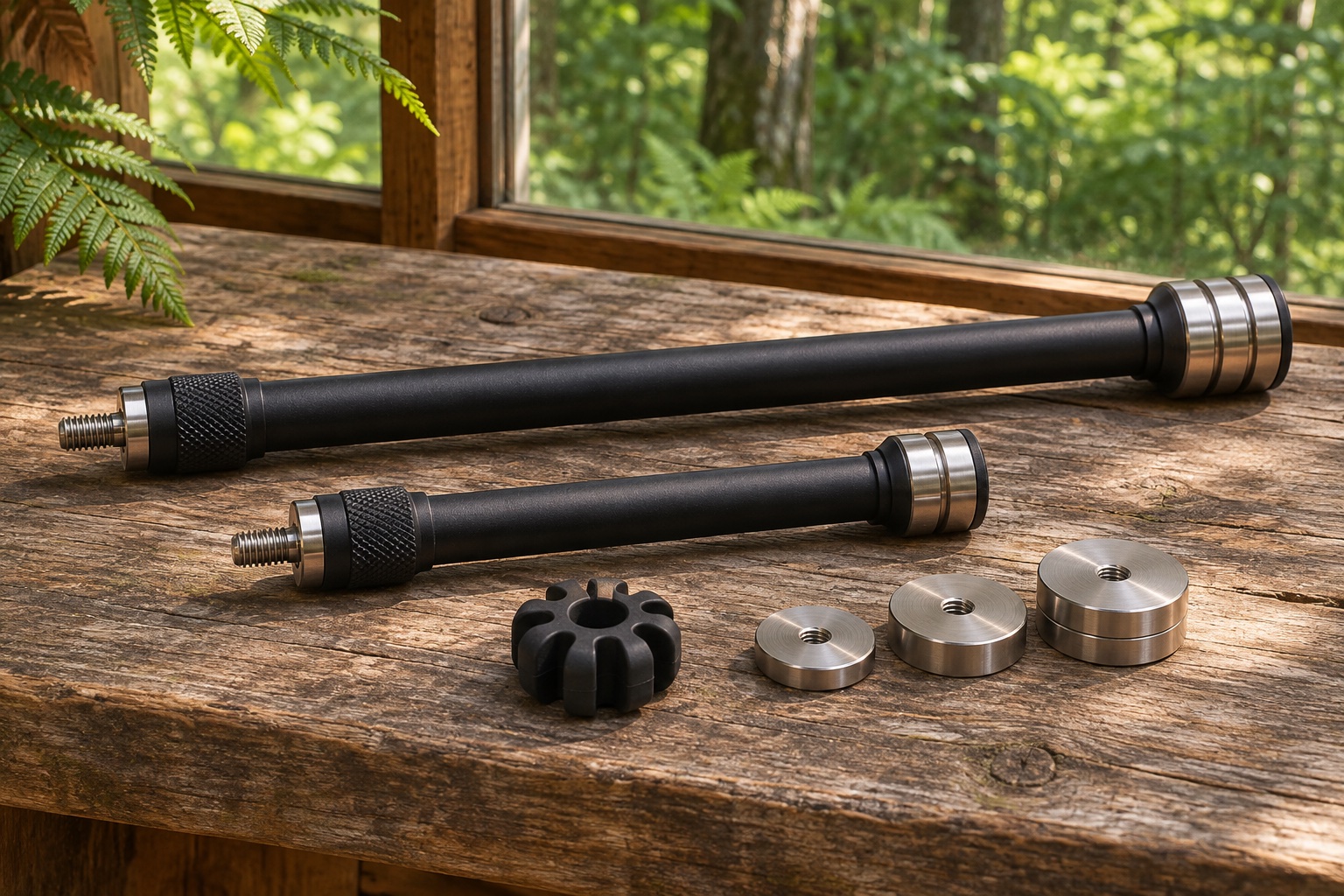
The best bowhunting stabilizer is the one that balances your particular bow without making it uncomfortable to carry or hold. If you want a compact setup for a blind or dense cover, start by considering a short dampener. If you want more control over balance, compare a longer rod with removable end weights and practice with your full hunting setup.
We compare the models below using manufacturer and current listing information, not claims of hands-on testing. Check the selected size, included hardware and availability before ordering. As an Amazon Associate, we earn from qualifying purchases.
Start with balance and clearance
A weighted stabilizer changes how a bow balances and moves by placing mass away from the grip. Some designs also use dampening material to change the vibration felt after a shot. These functions overlap in some products, but a short dampener and a longer weighted rod will not necessarily feel the same.
Consider the space around you in a tree stand or ground blind, as well as the weight of your sight, quiver and arrows. A longer rod can provide more leverage for a given end weight, but can snag or make the bow less convenient in tight cover. Too much mass can tire your bow arm. Try different configurations at an archery shop or range rather than assuming a particular length is best for everyone.
Bee Stinger Sport Hunter Xtreme
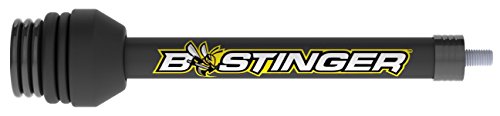
8-inch weighted rod
Bee Stinger Sport Hunter Xtreme, 8-inch, Black
The selected listing describes an 8-inch stabilizer with individual 1-ounce end weights for adjusting balance. Verify the included weights and any mounting hardware; the listing showed limited stock when checked.
This longer weighted-rod option gives you a way to experiment with weight at the front of the bow. The individual rod and the brand’s front-and-side kits are different packages; do not assume a quick disconnect or side mount is included in every listing.
Trophy Ridge Static stabilizer

3-inch compact option
Trophy Ridge Static Stabilizer, 3-inch, Camo
The current 3-inch listing describes a lightweight design, two 1-ounce weights and a braided wrist sling. Confirm the exact length, finish and included parts; stock was limited when checked.
The 3-inch version is a compact option if clearance is a priority. Weight placement and the complete installed length matter; try the bow with its sight and quiver fitted to see whether the balance feels comfortable.
LimbSaver S-Coil stabilizer

Compact dampener
LimbSaver S-Coil Stabilizer, 4½-inch, Black
The listing describes a 4½-inch, 4.5-ounce S-Coil using the maker’s vibration-dampening material. Check the selected model: the smaller Mini S-Coil is a separate product.
This short, compact design emphasizes vibration dampening. It may be convenient in tight spaces, but it does not promise a silent shot or guaranteed improvement in accuracy.
Set up and compare safely
- Check the bow’s mounting threads and the stabilizer maker’s instructions. Verify that the rod and any mount clear the sight, rest, quiver and moving parts.
- Secure the stabilizer and weights as directed. Start with a manageable configuration and recheck fasteners before practice.
- At a suitable range, compare your usual setup against one change at a time. Note how long you can hold comfortably as well as how the bow balances.
- Stop if extra weight causes discomfort or fatigue. An archery shop or coach can help assess fit and form.
Equipment feel varies with the archer and setup. A stabilizer is optional and cannot replace good form, practice or safe shot selection. Archery 360 explains how stabilizers and added mass affect balance.
Frequently asked questions
How long should a hunting stabilizer be?
There is no universal length. Consider the way the fully equipped bow balances, what you can hold comfortably and the clearance you need in your hunting environment. Measure adapters and end weights as part of the installed setup.
Does a heavier stabilizer always improve accuracy?
No. Added weight can help some archers hold steadier, while too much can cause fatigue. Form, fit and practice matter, so test changes at a range.
Do I need a rear bar for hunting?
Not necessarily. A side or rear bar can help counterbalance accessories on some bows, but adds weight and bulk. Start with a configuration you can carry and shoot comfortably and get help from an archery technician if needed.
For more options and a broader guide to mounts and accessories, see our hunting bow stabilizer comparison.