
What Is Slay Herbicide? Food-Plot Uses and Label Guidance
We may earn commission for items you purchase. As an Amazon Associate we earn from qualifying purchases.
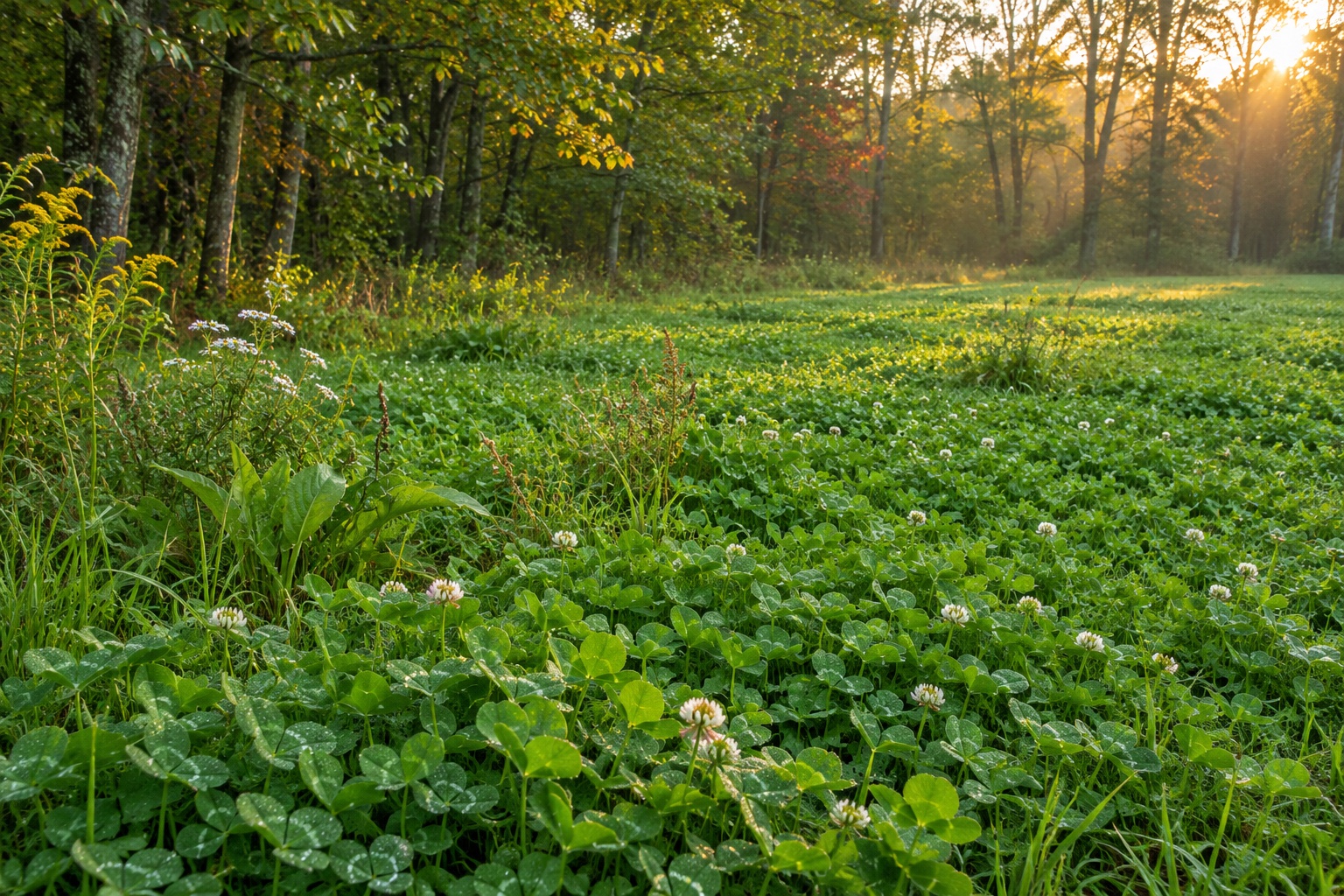
Slay is a selective herbicide sold by Whitetail Institute for managing certain weeds in food plots. The company now lists Slay MAXX for established clover and alfalfa. The active ingredient identified on the published Slay and Slay MAXX labels is imazethapyr, a Group 2 herbicide.
Slay is not a general-purpose lawn or vegetable-garden treatment. Whether it is appropriate depends on the exact product, the plants in your plot, the weed species, local registration and the label on your container. This guide is an overview, not application directions.
What is Slay herbicide?
The older Slay label and the manufacturer’s published Slay MAXX label identify imazethapyr as the active ingredient. It is a selective herbicide, meaning crop tolerance and weed control depend on the particular product and labeled conditions; “selective” does not mean harmless to every desirable plant.
The manufacturer describes Slay MAXX as a selective broadleaf-weed herbicide for established clover and alfalfa that also controls certain sedges and grasses. It describes uptake through leaves and residual activity in soil. The product is not intended for clearing a seedbed before planting. Consult your exact label for the weeds controlled and all restrictions.
Earlier versions of this article incorrectly described Slay as a granular pre-emergent lawn product and claimed it was safe for lawns and gardens. Do not rely on those claims or assume a weed-control product is suitable for turf, vegetables, pets or every food-plot blend.
Can you use Slay on a food plot?
Some clover and alfalfa plots are included in the product's labeled uses, but not every plot or growth stage is suitable. Whitetail Institute’s current product page specifies established, not seedling, clover and alfalfa for Slay MAXX. Check the label on the exact container and the state where it will be used before making a decision.
Identify every planted species and target weed first. A mixture containing chicory, brassicas or grasses can respond differently from a pure clover or alfalfa stand; do not assume that an entire seed blend is compatible. The company’s Slay fact sheet warns that certain mixed plantings are unsuitable. If the label and product guidance do not clearly cover your plot, ask the manufacturer or your local cooperative extension office before applying anything.
Some formulations leave soil residues that restrict which crops can be planted later. Rotation and plant-back intervals vary by crop and label, so check those restrictions before deciding what to plant next season. Do not apply a rate or timing from an older Slay package to Slay MAXX, or vice versa, without checking the exact label.
Product listings to compare
The following Amazon listings were checked on November 7, 2026. Stock and product versions can change. The four-ounce listing is identified simply as Slay in Amazon’s catalog; confirm the actual container and its label before purchase. As an Amazon Associate, we earn from qualifying purchases.
Whitetail Institute Slay, four ounces
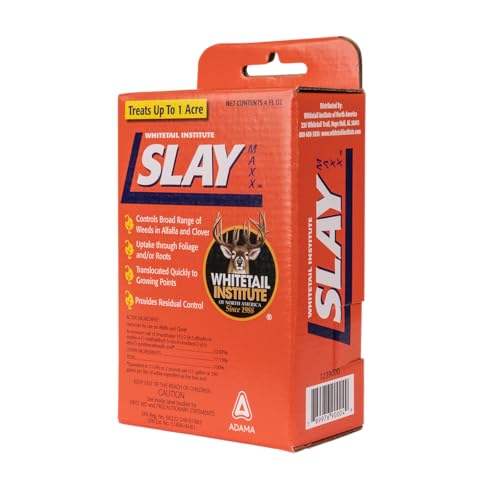
Food-plot herbicide
Whitetail Institute Slay, four ounces
Amazon showed an available new offer at the check. Verify the product name, label and local availability; coverage depends on label directions.
Whitetail Institute Arrest Max, eight ounces
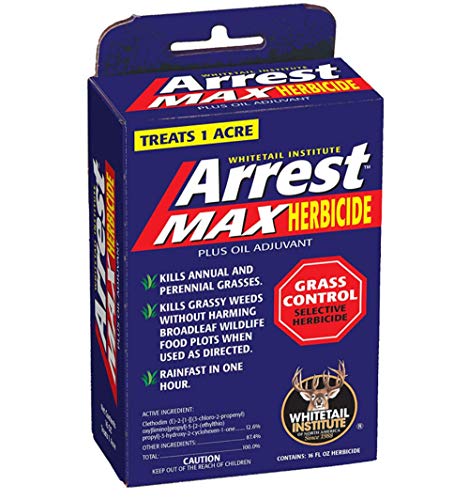
Different product
Whitetail Institute Arrest Max, eight ounces
This original destination now identifies an eight-ounce product and showed an available new offer. It is a grass-control product, not Slay.
Whitetail Institute describes its current Arrest MAXX as a selective grass herbicide and Slay MAXX as primarily a broadleaf-weed herbicide with additional labeled targets. They are different products with different labels; one is not automatically a substitute for the other. Confirm the exact version and target plants before choosing.
What to check on the label
The EPA explains that pesticide labels are legally enforceable. Read and follow the complete label attached to your container, as well as state and local requirements. Check:
- The product name and EPA registration number, permitted use site and crop, and the weeds listed.
- Required protective equipment, handling precautions, first aid, storage and disposal.
- Application restrictions, drift and water precautions, and whether an adjuvant is required or allowed.
- Re-entry, grazing, harvest and plant-back restrictions relevant to the intended use.
- State registration and any additional local restrictions.
Keep children and animals away as directed by the label. Do not apply near desirable plants or water in a way that conflicts with label precautions. If you cannot identify the product or understand its label, stop and contact the manufacturer or a qualified local extension professional.
Common questions
Does Slay kill grass?
Some grasses are listed among the targets of Slay MAXX, but control varies by species and label. The company markets Arrest MAXX primarily for grass control. Identify the unwanted plant and consult the exact product label instead of assuming either product controls every grass.
Can I use Slay in my lawn?
Do not use it on a lawn unless the exact product label permits that site and use. The manufacturer describes Slay MAXX for food-plot clover and alfalfa, not as a general lawn treatment.
Can I plant another crop afterward?
Possibly, but only after the applicable label's rotation interval and conditions have been met. Imazethapyr can persist in soil, and susceptible crops can be injured. Check the exact crop on the exact label before planting.
Is Slay safe for pets or wildlife?
Do not assume unrestricted access is safe. Follow the container’s precautions and all re-entry, grazing and environmental restrictions; contact the manufacturer or a qualified professional if the label does not address your situation.
Choosing a food-plot weed treatment
Start with the weeds and the plants you want to keep, then confirm that the exact product is registered and labeled for your situation. For Slay or Slay MAXX, the label on the container is the essential reference.