
What Is a Raghorn Elk? Meaning, Antlers and Age
We may earn commission for items you purchase. As an Amazon Associate we earn from qualifying purchases.
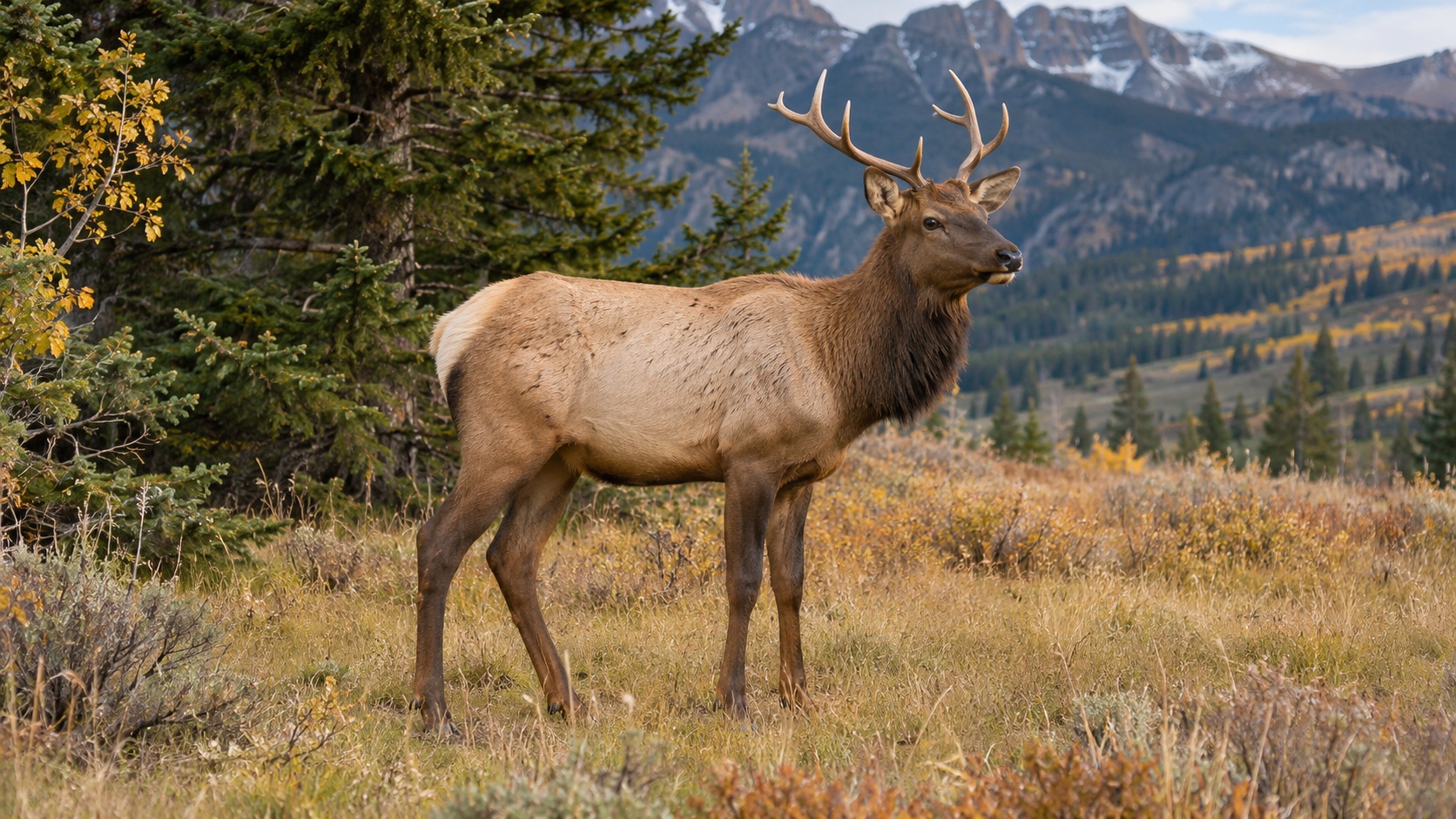
A raghorn elk is an informal term for a bull elk with branched antlers that are generally smaller and less massive than those of a fully mature bull. It describes an animal's appearance or a survey classification—not a separate species, subspecies or kind of antler.
Hero image: an illustration of a bull elk with relatively modest branched antlers.
What does raghorn mean?
People often use “raghorn,” also written “rag horn,” for a bull beyond the spike stage whose rack is not as developed as a mature bull's. The term does not have one universally applicable point count. In its 2024 draft elk management plan, Idaho Fish and Game described a raghorn survey category as a bull older than a spike that does not meet the agency's mature-bull criteria; its description includes most branched bulls with fewer than six points on a side and some with six.
That is an example of a specific survey method, not a rule for determining the legality of an animal in every hunting area. Consult the regulations for the exact location and license if a season uses antler restrictions.
Can antler points tell you an elk's age?
No. A bull's antlers can offer a rough clue about physical development, but the number of points does not reliably reveal its exact age. North Dakota Game and Fish notes that nutrition and local conditions affect antler and body development, and that point count does not correspond directly to age.
Elk shed and regrow their antlers annually. A spike generally refers to an unbranched or minimally branched antler, while a raghorn usually refers to a more developed rack that is still smaller in appearance than a mature bull's. These are descriptive labels with exceptions, not birthdays. The U.S. Fish and Wildlife Service explains the annual growth cycle and why antlers are unreliable for aging most animals.
Where can you find raghorn elk?
Because “raghorn” describes an individual bull rather than a distinct population, one can occur wherever elk live. Elk use forests, grasslands and meadows, and their seasonal movements depend on local habitat and conditions. Yellowstone National Park describes its herds and seasonal distribution as one example; patterns are not identical everywhere.
Elk habits and predators
Raghorn bulls share the general biology of other elk. They eat vegetation, and their social groupings change with season and location. During the fall breeding season, bulls may vocalize and compete with other bulls. Individual behavior varies, so a particular rack does not guarantee a particular temperament.
Predator communities also vary. Yellowstone identifies wolves, bears and mountain lions among animals that use elk as food; calves can face different risks from adults. A raghorn is not a separate prey species, and a predator list for one ecosystem should not be assumed to apply to every herd.
Conservation and responsible viewing
Raghorn is an appearance category, so it does not have its own independent species listing. Elk population status, management and legal protections differ by location; consult the relevant wildlife agency for the herd or area rather than assigning one conservation status to all elk.
Give elk plenty of space, especially during the fall rut and around calves. Follow the local park or land manager's viewing-distance rules. Never approach an animal for a photograph or come between a cow and calf.
Common questions
Is a raghorn a separate species of elk?
No. The word describes a bull's antler development or an agency's observation category.
Is a raghorn always a young bull?
The label often suggests a less-developed bull, but rack size alone cannot establish an exact age.
Do all raghorns have the same number of points?
No. Usage varies, and a survey category is not automatically a legal definition.
Are antlers the same as horns?
Elk have antlers, which are normally shed and regrown each year. “Raghorn” is the established informal name even though elk carry antlers.