
Best Hunting Horns: Compare Signal Horns and Bugles
We may earn commission for items you purchase. As an Amazon Associate we earn from qualifying purchases.
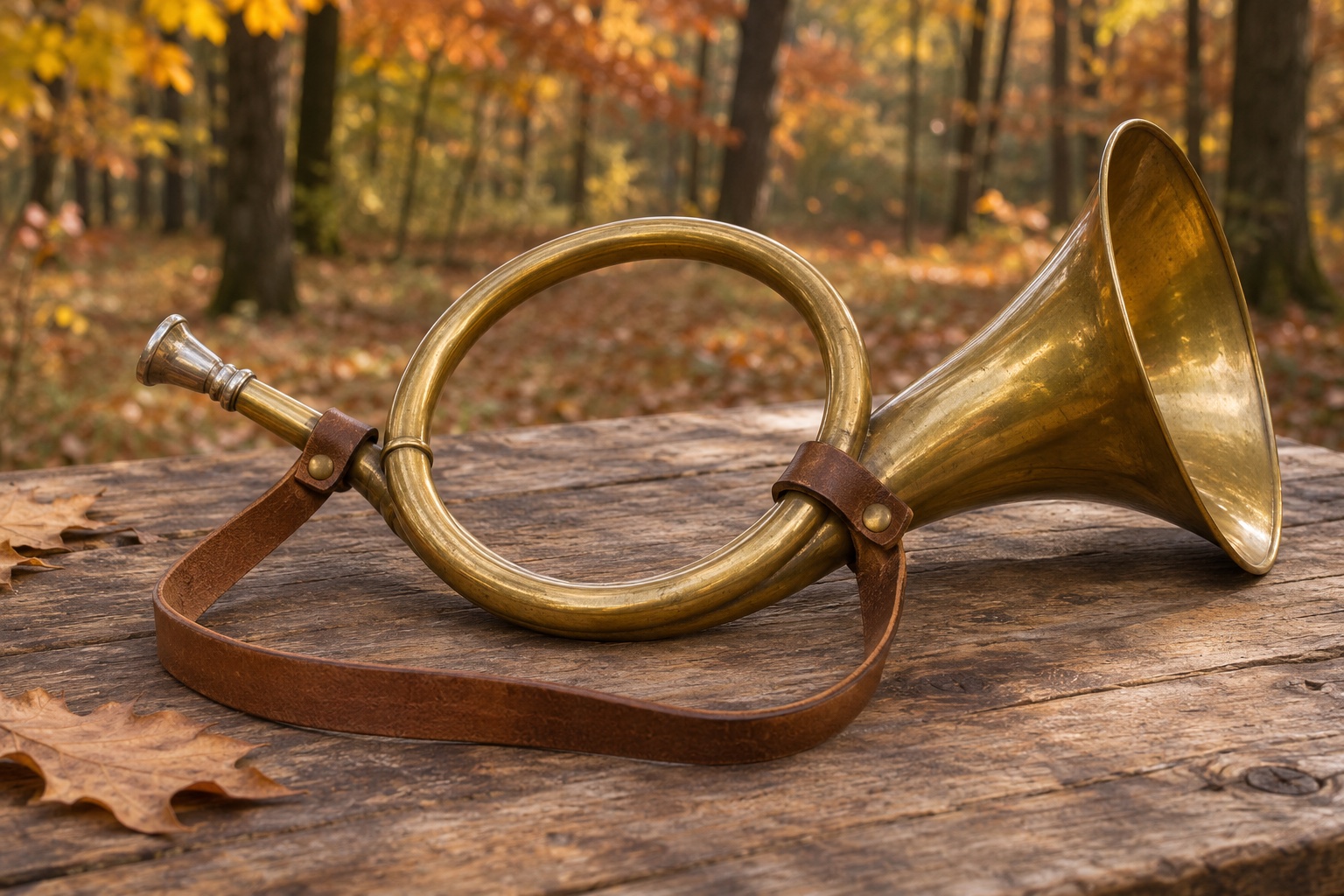
A hunting horn is a wind instrument traditionally used for signaling or music. When choosing one, decide whether you want a compact signal horn, a straight bugle or a coiled horn, then check the size, mouthpiece, materials and carrying arrangement. A decorative horn may not be a suitable playable instrument.
The options below are comparisons of available product listings, not hands-on sound tests. A hunting horn is different from a wildlife call and should not be your only emergency communication plan.
Hunting and signal horns to compare
These affiliate links may earn Sportsman Crew a commission at no extra cost to you. Stock and listing details can change.
A.B. Instrument Co. Hunting Bugle Horn

Brass signal horn
A.B. Instrument Co. Hunting Bugle Horn
The listing describes a brass horn with a chain and mouthpiece. Confirm dimensions and included parts before ordering.
Roy Benson HH-101 Hunting Horn

Coiled brass horn
Roy Benson HH-101 Hunting Horn
The listing describes a yellow-brass bell, synthetic-leather wrapping and a nylon bag. Check the model and package contents.
ACME Hunt Small Beater Horn 171

Small signal horn
ACME Hunt Small Beater Horn 171
The listing identifies this as a small beater horn. Availability was limited when checked; confirm dimensions and materials in the selected listing.
Brass and Copper Signal Bugle

Straight signal bugle
Brass and Copper Signal Bugle
The listing describes a brass-and-copper bugle with rope binding and a mouthpiece. Verify the selected finish and included accessories.
How to choose a hunting horn
Purpose and format
Signal horns, bugles, musical hunting horns and decorative replicas can look similar but serve different purposes. Read the listing carefully, check whether a mouthpiece is included and ask the seller about playability if it is unclear. A coiled instrument may be compact in a different way from a straight bugle; compare actual dimensions rather than assuming one is easier to carry.
Sound and construction
Materials, tubing, mouthpiece and the player affect an instrument's sound. The Metropolitan Museum of Art's hunting horn collection illustrates the history of brass hunting horns used for signaling and music. For a particular product, seek a reliable demonstration or try it in person; a listing alone cannot establish sound quality, volume or range.
Carry and finish
Check the weight, strap or chain, protective case and finish. A horn that will be carried outdoors needs suitable protection from dents and moisture. Some products are intended as gifts or decor, so confirm whether the construction meets your intended use.
Care and outdoor planning
Follow the manufacturer's care instructions for the mouthpiece and finish, and dry and store the instrument as directed. Avoid assuming that every metal horn can be cleaned with the same abrasive products.
For outdoor trips, tell someone your itinerary and carry a suitable way to request help. The National Park Service's emergency plan discusses whistles, communication and signaling. Do not assume a horn will be heard everywhere or replace reliable communication equipment.
Common questions
Is a hunting horn the same as an animal call?
No. A signal or musical horn is used to make instrument sounds, while an animal call is designed for a different purpose. Check the product description for its intended use.
Can every decorative horn be played?
Not necessarily. Ask the seller whether the instrument is playable and whether a suitable mouthpiece is included.
Does a longer horn always sound deeper?
Not on length alone. Tubing, shape, mouthpiece and how an instrument is played also influence its sound. Listen to a demonstration when sound is important to your decision.
Can I rely on a horn in an emergency?
Do not rely on one device alone. Consider terrain, weather and other people’s ability to hear you, and carry suitable communication and emergency equipment for your trip.