
Best Hunting Gloves: Compare Warmth, Dexterity and Weather Protection
We may earn commission for items you purchase. As an Amazon Associate we earn from qualifying purchases.
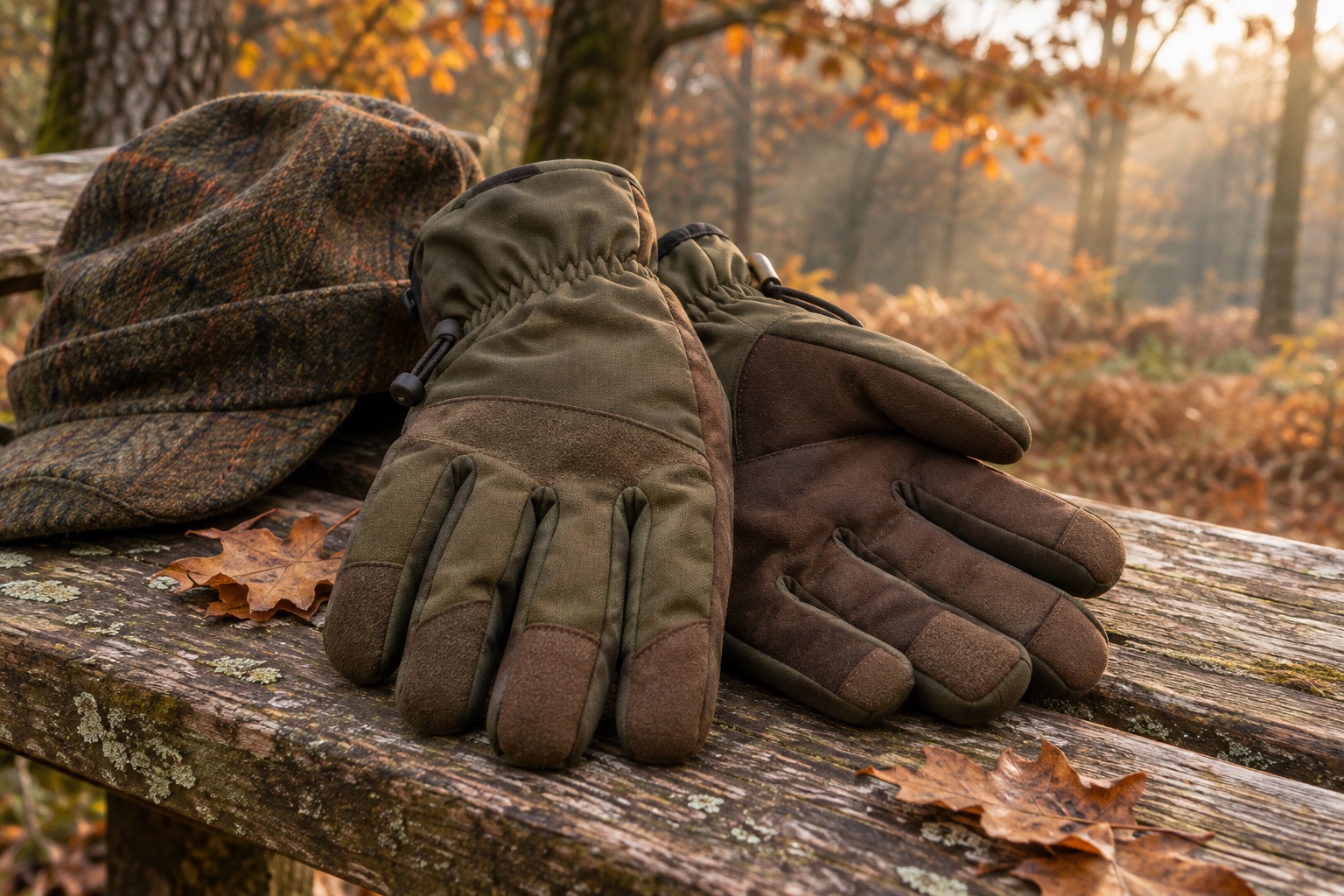
The best hunting gloves are the ones that fit your weather and the work your hands need to do. A thin fleece glove or liner gives more finger control while walking or handling equipment; an insulated glove or convertible mitten is often more comfortable during a cold, stationary sit. Wet weather calls for a waterproof layer, but even a waterproof glove can become damp from sweat or water entering at the cuff.
Below are current listings to compare, followed by practical advice on warmth, fit, dexterity and keeping hands dry. Availability and sizes can change. Product descriptions are based on the listings, not a claim of hands-on testing.
Hunting gloves to compare
These affiliate links may earn Sportsman Crew a commission at no additional cost to you. Check the selected size, color and availability on the product page.
BASSDASH winter fleece gloves

Lightweight fleece
BASSDASH winter fleece gloves
A stretch fleece glove with touchscreen material on the thumb and index finger and a printed palm. Its water-resistant outer is intended for light moisture, not prolonged immersion.
Manzella Stretch Coyote gloves
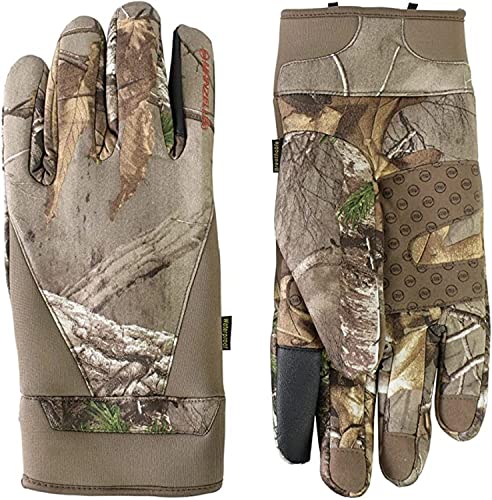
Insulated softshell
Manzella Stretch Coyote gloves
The listing describes a softshell with a waterproof, windproof layer and 40-gram insulation. Check the specific size and pattern before ordering; a close fit still needs room for your fingers.
HOT SHOT Huntsman pop-top mittens

Convertible mitten
HOT SHOT Huntsman pop-top mittens
The mitten cap and thumb fold back for finger access, while the listed insulation and hand-warmer pocket make this style worth considering for a stationary sit. Exposed fingertips lose protection when the cap is open.
Carhartt Hunt insulated gauntlet gloves

Wet-weather coverage
Carhartt Hunt insulated gauntlet gloves
The listing describes an insulated glove with a waterproof insert, adjustable wrist and longer cuff. The bulkier gauntlet may provide less fingertip feel than a thin liner.
EAmber camouflage gloves
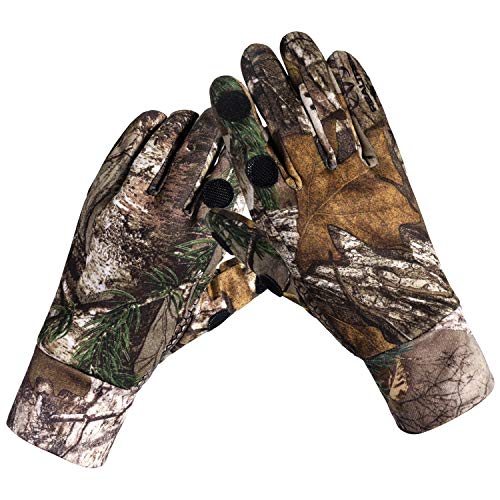
Open-finger liner
EAmber camouflage gloves
These thin polyester and fleece gloves have openings for the thumb and index finger and silicone on the palm. They prioritize finger access; exposed skin and light fabric offer limited protection in severe cold or rain.
How to choose hunting gloves
Material and movement
Stretch fleece and lightweight synthetic gloves are comfortable choices for active travel and fine tasks. Leather palms can add abrasion resistance, depending on construction, while neoprene and waterproof shells are useful in wet conditions. Material alone does not establish that a whole glove is waterproof: seams, inserts and cuff construction matter too.
Warmth versus dexterity
Thicker insulation traps more air but can make small tasks harder. For long sits, consider an insulated glove or mitten, a hand muff, and a thin liner for brief tasks. For an active hike, lighter gloves can reduce overheating; carry a dry warmer pair for stops. Mittens of comparable construction often keep fingers warmer than separate-finger gloves, at the cost of dexterity.
Waterproof or water-resistant?
Water-resistant fabric can shed light precipitation, but it is not a promise of dry hands in sustained rain. A waterproof insert or shell provides a stronger barrier; use the cuff under a rain sleeve to reduce water running inside. Moisture can also build up from sweat, so adjust layers to your activity and dry damp gloves between trips.
Color, noise and grip
Choose a subdued color or pattern suited to your setting if concealment matters to you. Camouflage does not make a hunter invisible. Rub the fabric together to check noise, and try the palm on your pack straps, binoculars and other gear; grip and noise vary with fabric and conditions.
Fit and field use
Measure your hand using each maker’s size chart. Fingers should reach comfortably without being cramped, and the cuff should work with your jacket. If adding a liner, try both layers together: a tight outer glove can compress insulation and restrict movement. Practice operating your equipment safely in the gloves before heading out; never use a glove that interferes with safe control.
Care and durability
Follow the manufacturer’s cleaning and drying instructions. Inspect seams, palms and closures for wear. Air-dry gloves after a wet trip and carry a spare pair when conditions make dry hands important.
Frequently asked questions
Are fingerless hunting gloves warm enough?
They can be useful in mild conditions or beneath a fold-back mitten, but exposed fingertips cool quickly. For colder, wetter or windier conditions, pack an insulated full-finger glove or mitten as well.
Can one pair handle every season?
Usually a layered system is more adaptable. A thin glove works for movement and detail work, while an insulated outer glove or mitten helps during colder stops. Your circulation, weather, activity and time outdoors all affect comfort.
Are touchscreen gloves always reliable?
Conductive fingertips may help, but performance varies with fit, screen protectors and moisture. Try your own device before relying on it outdoors.
Choosing your pair
Start with expected weather and whether you will be moving or sitting. Then prioritize a comfortable fit, the finger control your gear requires and a dry spare. See REI’s guide to keeping hands warm for more on layers, fit and moisture management.