
Best Hunting and Shooting Ear Protection: Compare Plugs and Muffs
We may earn commission for items you purchase. As an Amazon Associate we earn from qualifying purchases.
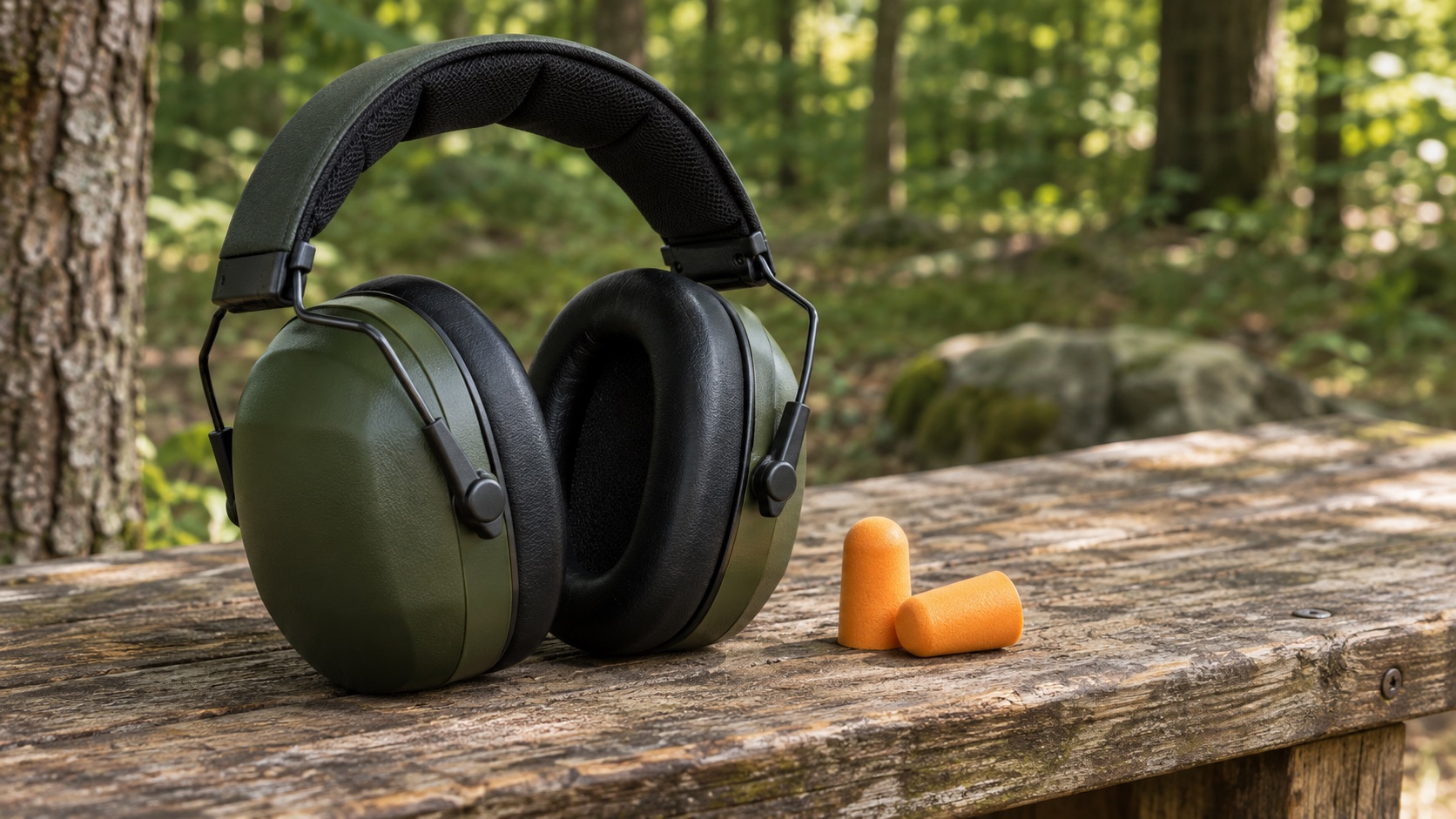
Firearm noise can damage hearing, including after a single exposure. For firearm use, the National Institute for Occupational Safety and Health (NIOSH) recommends double hearing protection: properly fitted earplugs under well-seated earmuffs. Choose both devices for fit and compatibility; a product listing or noise reduction rating alone cannot guarantee protection.
The products below are current listing descriptions, not a hands-on ranking or a finding that any individual product provides adequate protection by itself. Ratings are manufacturer or seller claims from the checked listings. Verify each package and follow the manufacturer’s fitting instructions.
Hearing protectors to compare
These affiliate links may earn Sportsman Crew a commission at no additional cost to you. Check the exact model, package, rating and instructions; stock can change. Use compatible plugs and earmuffs together for firearm noise as NIOSH recommends.
PROHEAR electronic earmuffs
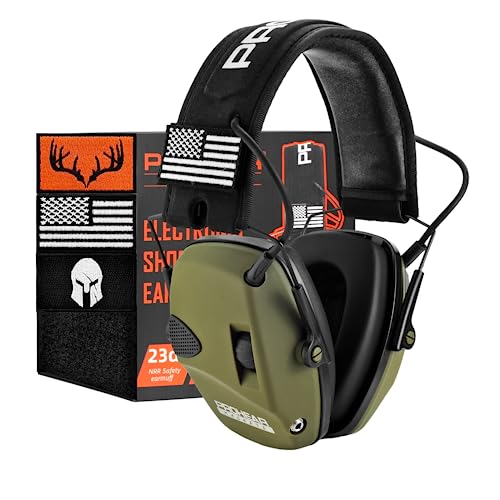
Electronic earmuffs
PROHEAR electronic earmuffs
The checked green listing describes electronic earmuffs with a stated NRR of 23 dB. Verify the model, label and fit.
PROHEAR 016 earmuffs, two-pack
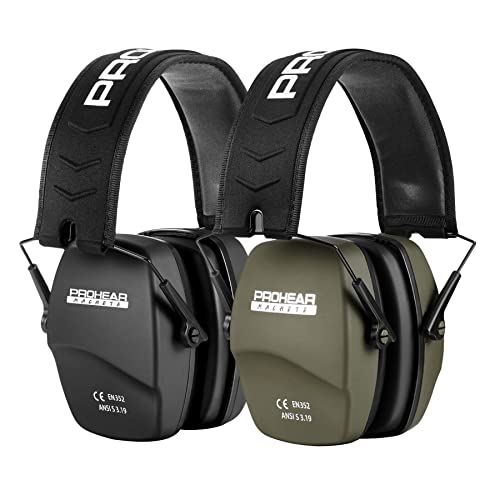
Passive earmuffs
PROHEAR 016 earmuffs, two-pack
The checked black-and-green two-pack listing states an NRR of 26 dB. Check the package contents and fit for each wearer.
GLORYFIRE Bluetooth hearing-protection earbuds

Electronic in-ear protection
GLORYFIRE Bluetooth hearing-protection earbuds
The checked listing shows in-ear earbuds and states an NRR of 26 dB; its text also uses conflicting earmuff terminology. Stock was limited. Confirm the exact product and instructions.
Corded reusable earplugs, ten pairs

Reusable earplugs
Corded reusable earplugs, ten pairs
The checked listing states an NRR of 25 dB and describes a removable cord. Check fit and instructions; a cord must not interfere with an earmuff seal.
Walker’s electronic hearing-protection earbuds

Electronic in-ear protection
Walker’s electronic hearing-protection earbuds
The checked black listing states an NRR of 25 dB and includes different-sized tips. Check the selected model and fit.
PROHEAR 016 earmuffs
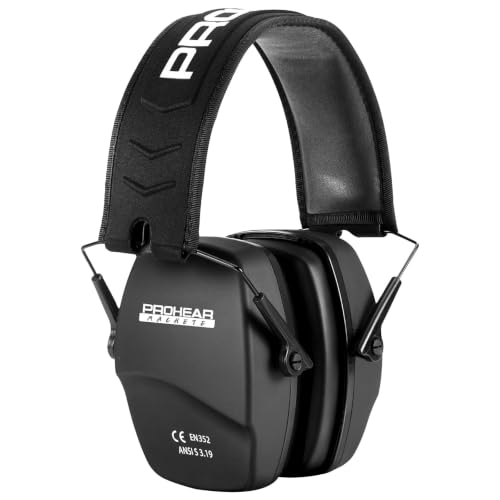
Passive earmuffs
PROHEAR 016 earmuffs
The checked black single-pair listing states an NRR of 26 dB. Confirm the chosen color and package contents.
Mack’s Covert Ops foam earplugs

Foam earplugs
Mack’s Covert Ops foam earplugs
The checked seven-pair listing states an NRR of 32 dB. Follow the included fitting and replacement directions.
Howard Leight Impact Pro electronic earmuffs

Electronic earmuffs
Howard Leight Impact Pro electronic earmuffs
The checked listing describes Impact Pro electronic earmuffs with a stated NRR of 30 dB. Verify the selected model and fit.
How to choose hunting and shooting ear protection
Understand the noise reduction rating
The NRR is a laboratory-derived rating, not a promise of the reduction any particular person will receive. Real-world fit and use matter. Do not add the numbers on plugs and muffs together or treat the result as a guarantee. NIOSH explains the limitations of labeled ratings and the value of individual fit testing.
Earplugs and earmuffs
Earplugs fit in the ear canal; earmuffs cover the ears. NIOSH recommends both for firearm use and describes deeply inserted foam plugs with well-seated earmuffs as its preferred combination. Electronic in-ear devices or earmuffs vary in design; check the maker’s directions, compatibility and rating rather than assuming any combination performs the same way.
Seal and compatibility
Fit plugs as directed and make sure earmuff cushions seal around the ears. Glasses, hair, headwear, straps or cords can disrupt the seal. NIOSH advises special care with safety glasses; OSHA cautions that cords and bands can interfere with earmuff seals. An audiologist or hearing-conservation professional can help with selection and fit testing.
Condition and maintenance
Inspect cushions, headbands and ear tips before use and replace worn or damaged parts according to the maker. Follow the product’s cleaning and storage instructions. Disposable and reusable plugs have different care requirements.
Electronic features are not a substitute for fit
Some electronic protectors provide sound-restoration or communication features. Check how the selected device works, including its battery and user instructions. Ordinary music earbuds or noise-canceling headphones should not be assumed to be hearing protectors. Confirm that you can hear range instructions and maintain awareness while protecting your hearing.
Fit and double protection
Put hearing protection on before entering a noisy area and keep it in place throughout exposure. Use properly fitted plugs under well-seated earmuffs as recommended by NIOSH for firearm noise. Check that eyewear and other gear do not break the seal, and follow range rules and staff instructions. If a protector does not fit or you cannot hear essential instructions, seek qualified help before exposure.
For related choices, see our hunting hearing protection guide.
Common questions
Are electronic earmuffs enough by themselves?
Do not assume so. NIOSH recommends double protection for firearm use. Fit, the exposure and the specific devices matter, and no listing can establish your personal level of protection.
Can I add two NRR numbers together?
No. NRRs are lab-based ratings and should not be added together as if they were independent guarantees. Seek professional help if you need an assessment of your protection.
Are regular noise-canceling earbuds hearing protection?
Do not assume they are. Look for a device specifically intended and labeled as a hearing protector, follow its instructions, and use appropriate double protection for firearm noise.
Protect your hearing every time
Choose compatible plugs and earmuffs, check the fit and condition, and follow NIOSH and range guidance before exposure.