
Best Fishing Hook Cutters: Metal Cutters vs. Fishing Pliers
We may earn commission for items you purchase. As an Amazon Associate we earn from qualifying purchases.
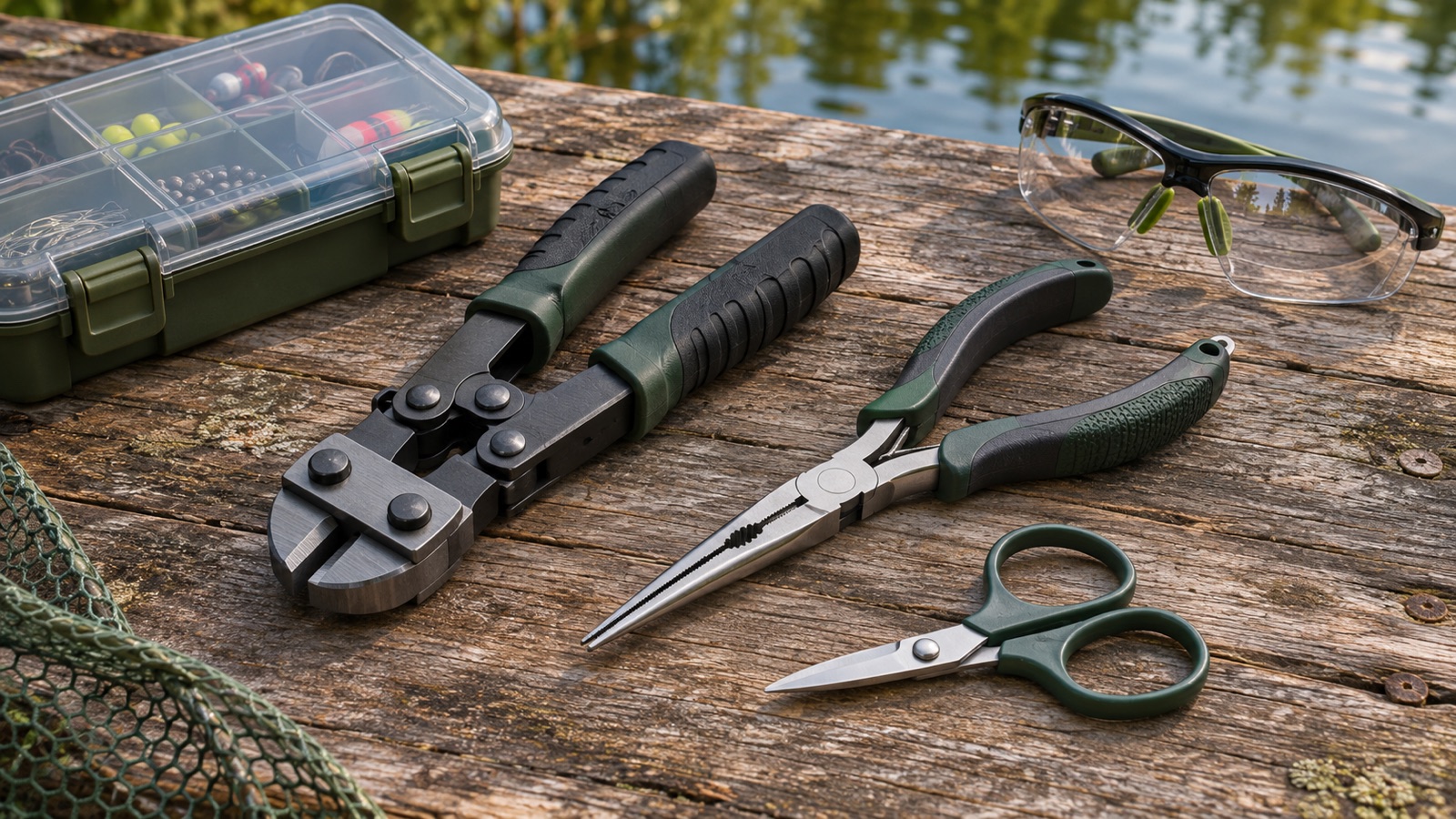
The best fishing hook cutter for your tackle is one rated to cut the hook's metal and diameter. A tool that trims braid or removes a hook with its jaws is not automatically capable of cutting through that hook. This distinction matters more than the number of functions printed on the packaging.
Our earlier list mixed fishing pliers, line cutters and hook-removal tools. Below, we separate their jobs and correct the descriptions of the original products. The two available linked listings are general fishing pliers; neither is a confirmed heavy-hook-cutting recommendation. This is a review of documented specifications and listing information, not a hands-on cutting test.
As an Amazon Associate, we earn from qualifying purchases. Listing checks were made November 4, 2026; availability can change.
Choose the tool for the material
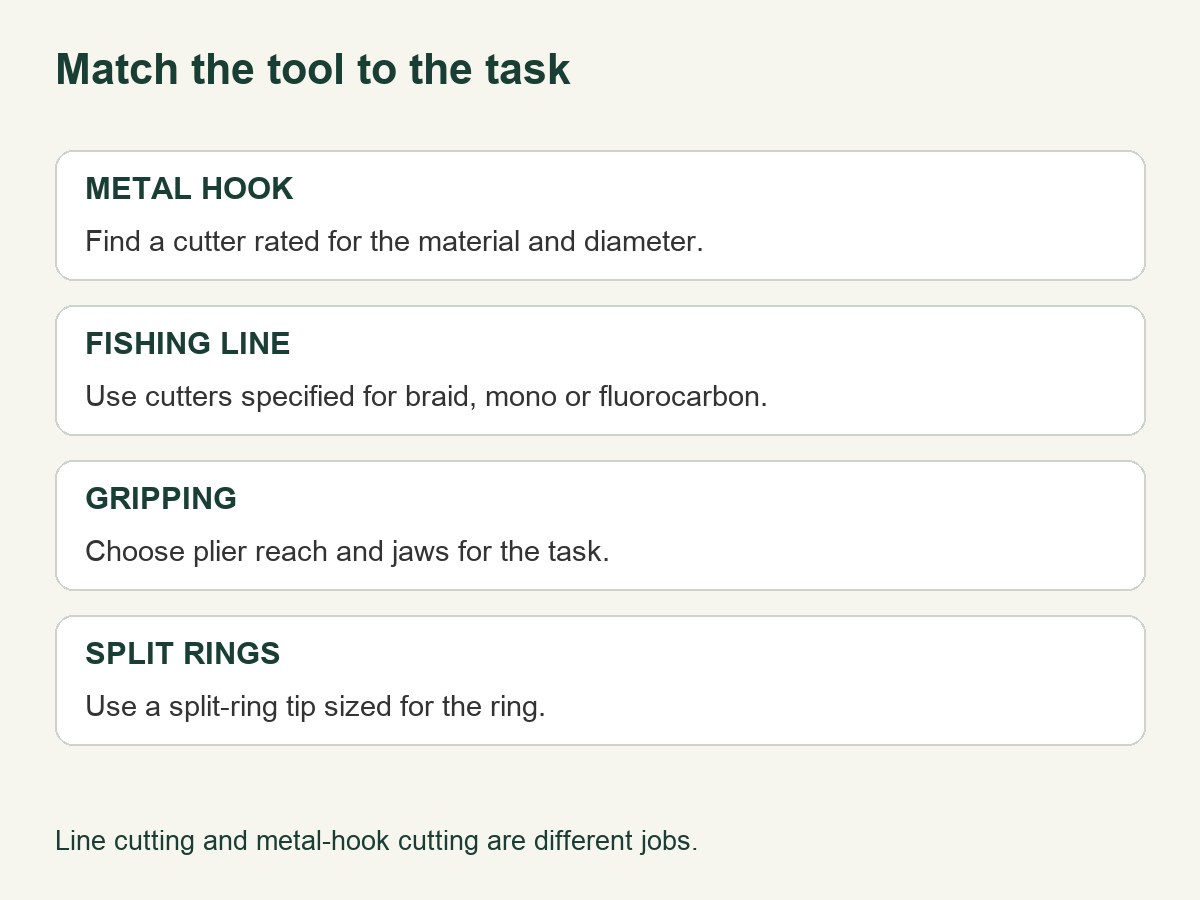
| Your job | Tool to look for | What to verify |
|---|---|---|
| Cut a metal hook shank | Rated compact bolt cutter or metal cutter | Material class, maximum diameter and jaw access |
| Trim braid, mono or fluorocarbon | Line scissors or suitable fishing-plier cutter | The exact line types specified |
| Grip and turn a hook | Long-nose pliers or suitable dehooker | Reach, jaw shape and control |
| Change a lure's split ring | Split-ring pliers | Tip size suited to the ring |
Start with the hardest cutting task you actually need to perform. If you carry heavy treble hooks, do not choose a cutter solely because its description says it handles strong fishing line. Line breaking strength and metal cutting capacity describe different things.
What a documented hook-cutting specification looks like
Knipex CoBolt compact bolt cutters are worth investigating when you need a dedicated metal cutter. The manufacturer's CoBolt range information distinguishes cutting capacities by wire type. Check the exact model's current data sheet rather than transferring a specification from another size or jaw design.
A useful specification identifies both diameter and material hardness. A soft-wire capacity does not mean the cutter can sever equally thick hardened steel. Hook size labels such as 2/0 or 6/0 also do not tell you the shank diameter or steel hardness; patterns and wire gauges differ.
We have not tested a CoBolt against your hooks or added a new Amazon destination for it. Use the manufacturer's specifications to shortlist an appropriate tool, and ask the manufacturer about compatibility if the hook material is unclear. Keep your existing fishing pliers for gripping and line work.
The original eight entries, checked and corrected
Seven original Amazon listings could be checked through Amazon's Creators API. The Booms entry had a broken widget with no usable product destination. The following notes preserve the original linked products while explaining what their specifications do and do not establish.
Rapala 6½-inch Fisherman's Pliers: general tackle work

Product details
Rapala 6½-inch Fisherman’s Pliers
A new offer was available on November 4, 2026. Confirm the exact model, included components and current availability.
This listing returned a new in-stock offer. Its documented construction is carbon steel with a nickel-plated finish and co-molded grips. The old description incorrectly called it stainless steel and claimed a specific line-strength limit without supporting evidence.
Rapala describes the Fisherman's Pliers as having light-duty side cutters. That makes the limitation important: do not treat this listing as proof of heavy-hook cutting capacity. Consider it for ordinary plier duties after checking the exact size and functions you need.
Booms Fishing X1: original listing could not be checked
The original product box displayed an error instead of an affiliate link. Booms lists the X1 in its aluminum fishing pliers collection, so the earlier claim that the entire tool was stainless steel was not reliable. No exact Amazon offer or variant was verified for this entry.
Do not count the X1 as a confirmed current hook-cutter purchase on the strength of the old article. Check the current manufacturer's specifications for the exact model before deciding whether its cutter suits your task.
Piscifun blue aluminum pliers: line cutting and split rings

Product details
Piscifun blue aluminum fishing pliers
A new offer was available on November 4, 2026. Confirm the exact model, included components and current availability.
This blue variant returned a new in-stock offer. It is an aluminum-bodied fishing plier with a split-ring tip, spring-loaded jaws, tungsten-carbide line cutters, a sheath and a lanyard. It is not the pair of braid scissors described in the previous article.
The listing describes cutters for braid and other fishing lines. It does not supply a rated hardened-hook diameter. This is the more relevant of the original entries to investigate if you want split-ring and line-cutting functions together, but that is a different purchase from a dedicated metal hook cutter.
KastKing Cutthroat: pliers, not an automatic knot tier

Product details
KastKing Cutthroat red 7-inch split-ring pliers — unavailable
Unavailable on November 4, 2026. Retained for reference; not a confirmed current purchase option.
The original red, 7-inch split-ring-nose variant was unavailable at the check. Its listing specifies 420 stainless steel, a protective coating and tungsten-carbide line cutters. The earlier claim that it automatically ties complicated fishing knots was incorrect.
KastKing's product description explains that holes in the jaws help cinch a knot; the angler still ties it. The stated cutters handle mono, fluorocarbon and braid. Hook gripping and knot cinching do not establish metal-hook-cutting capacity.
Ismosm red plier and lip-gripper kit: unavailable

Product details
Ismosm red plier and gripper kit — unavailable
Unavailable on November 4, 2026. Retained for reference; not a confirmed current purchase option.
This red kit was unavailable. Its listing describes fishing pliers, a fish lip gripper, sheath and lanyard, with line cutting, split-ring and crimping functions. It does not provide a verified heavy-hook cutting specification.
The extra gripper does not change the plier cutter's rating. Keep the bundle's handling functions separate from the question of whether a tool can cut your hook. The previous blanket claim that it was rust-proof has been removed.
FNODGOING yellow-and-orange two-piece set: unavailable

Product details
FNODGOING yellow-and-orange two-piece set — unavailable
Unavailable on November 4, 2026. Retained for reference; not a confirmed current purchase option.
The exact two-piece set was unavailable. The listing describes a larger and smaller fishing plier with stainless-steel and ABS components, rather than simply two pairs of curved-nose scissors. It includes broad wire-cutting language but no verified material-and-diameter rating for hardened hooks.
A general “emergency use” claim is not enough to qualify a cutter for the strongest hook in your tackle box. Obtain a clear specification before relying on this kind of multitool for metal cutting.
Crazy Shark gray aluminum fishing pliers: unavailable

Product details
Crazy Shark gray aluminum pliers — unavailable
Unavailable on November 4, 2026. Retained for reference; not a confirmed current purchase option.
The gray variant was unavailable. Its listed tungsten cutting blades are described for braid and mono; the stainless-steel jaws serve gripping, split-ring and crimping functions. Those are useful distinctions, since the previous prose blurred the jaws and cutting blades together.
No confirmed hardened-hook capacity was found in the returned details. Do not interpret aluminum construction or tungsten blade material alone as a hook-cutting rating.
Sawkit curved-nose pliers: unavailable

Product details
Sawkit curved-nose pliers — unavailable
Unavailable on November 4, 2026. Retained for reference; not a confirmed current purchase option.
This listing was unavailable. It describes a portable fishing plier with line-cutting and hook-removal functions, stainless-steel and ABS components, and a sheath. It does not document a metal-hook diameter rating.
Curved jaws can affect access and visibility, but jaw shape does not establish cutting strength. Treat this as an older general-purpose fishing-tool listing, not a verified alternative to a rated compact bolt cutter.
Check capacity, access and control before buying
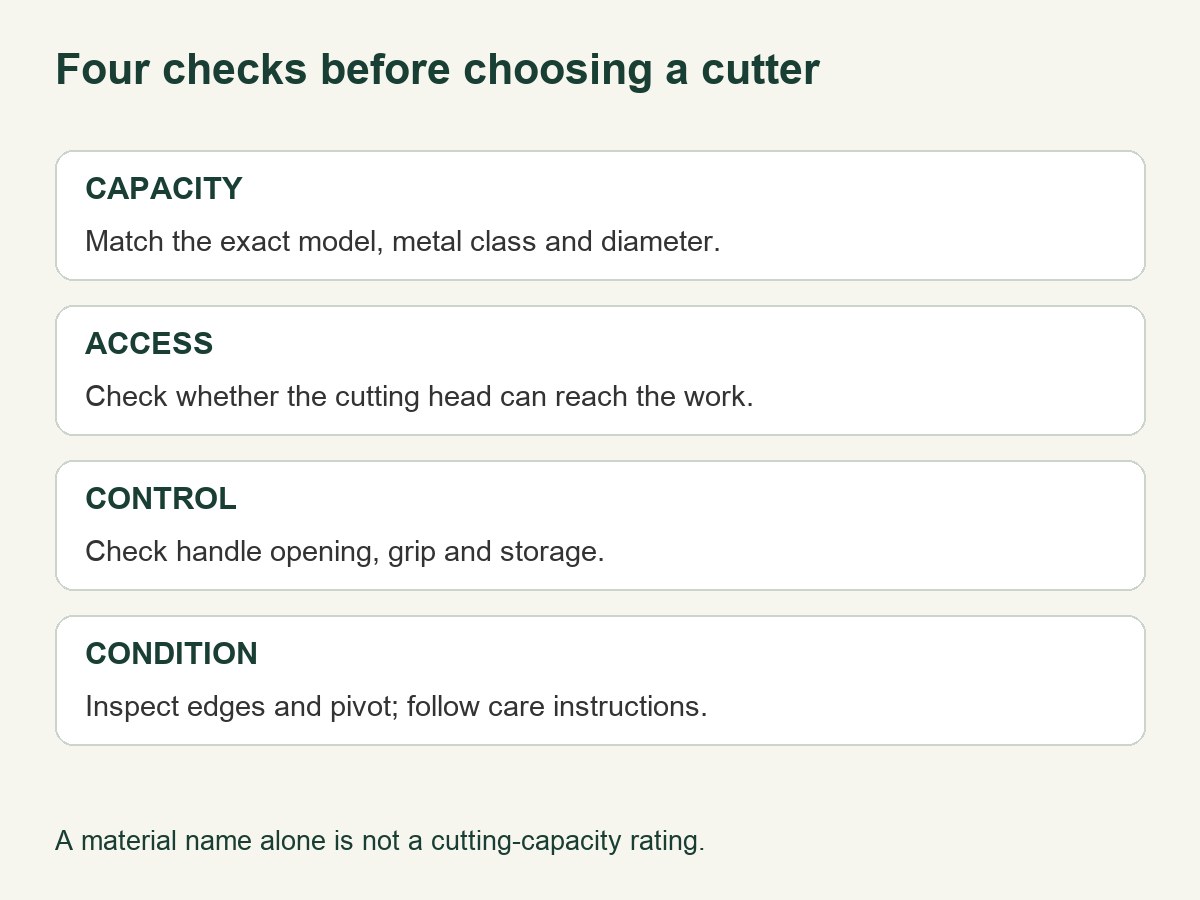
Capacity: find the exact model number and its cutting chart. Match the material class as well as the diameter. If the seller supplies only adjectives such as “heavy duty,” ask for the actual specification.
Access: look at the cutter head and where its cutting edge sits. A powerful tool can still be awkward around a small lure or tightly spaced treble points. A long plier nose and a compact bolt-cutter head solve different access problems.
Control: check that you can open and close the handles comfortably with your intended gloves. Think about where the tool will be stored and whether it is accessible when the boat is loaded. A sheath or secure storage location should protect both the tool and nearby gear.
Maintenance: follow the manufacturer's cleaning and lubrication directions. Inspect the cutting edges and pivot before a trip. Corrosion-resistant materials do not eliminate maintenance, and a damaged cutter should not be treated as having its original performance.
Keep line scissors available as well. Using a rated metal cutter for hooks does not guarantee it will trim thin braid neatly, just as a sharp braid cutter does not guarantee it can cut steel.
Frequently asked questions
What changes for saltwater fishing?
Compare corrosion protection and the manufacturer's care instructions as well as cutting capacity. Saltwater-resistant fishing pliers still need appropriate maintenance. For freshwater fishing, the same material-and-diameter checks apply; the water type does not tell you how hard or thick a hook is.
Can fishing pliers cut hooks?
Some tools may be designed for specified metal cutting, but “fishing pliers” alone is not a rating. Check the exact cutter's documentation. None of the seven original linked listings established a dependable heavy-hook capacity in the information reviewed here.
Does tungsten carbide mean a cutter can cut any hook?
No. Blade material is only one part of the design. The listed purpose, edge geometry, tool mechanism and rated material diameter still matter. Several products above explicitly describe their tungsten cutters as line cutters.
Are bigger cutters always better?
No. You need enough rated capacity, but you also need access and a usable grip. Compare model specifications and head dimensions rather than assuming that the longest tool is the best fit.
Should I buy a split-ring tip or a straight nose?
Choose a split-ring tip if changing lure hardware is a priority and the tip fits your rings. Choose your gripping tool around the reach and jaw shape you need. Neither choice answers the separate metal-cutting question.
Why are unavailable products still listed?
They were part of the original guide. We retain their destinations and identify their current limitations so readers can recognize the exact older products. They are not presented as confirmed in-stock recommendations.
Build a small, purposeful fishing tool kit
For many anglers, a useful division is a rated metal cutter for compatible hooks, pliers for gripping and tackle adjustment, and scissors for line. Buy each for its documented job. For the rest of your kit, see our fishing pants guide and inshore rod comparison.