
Cold-Weather Bow Hunting Gloves: Mittens, Liners and Fit
We may earn commission for items you purchase. As an Amazon Associate we earn from qualifying purchases.
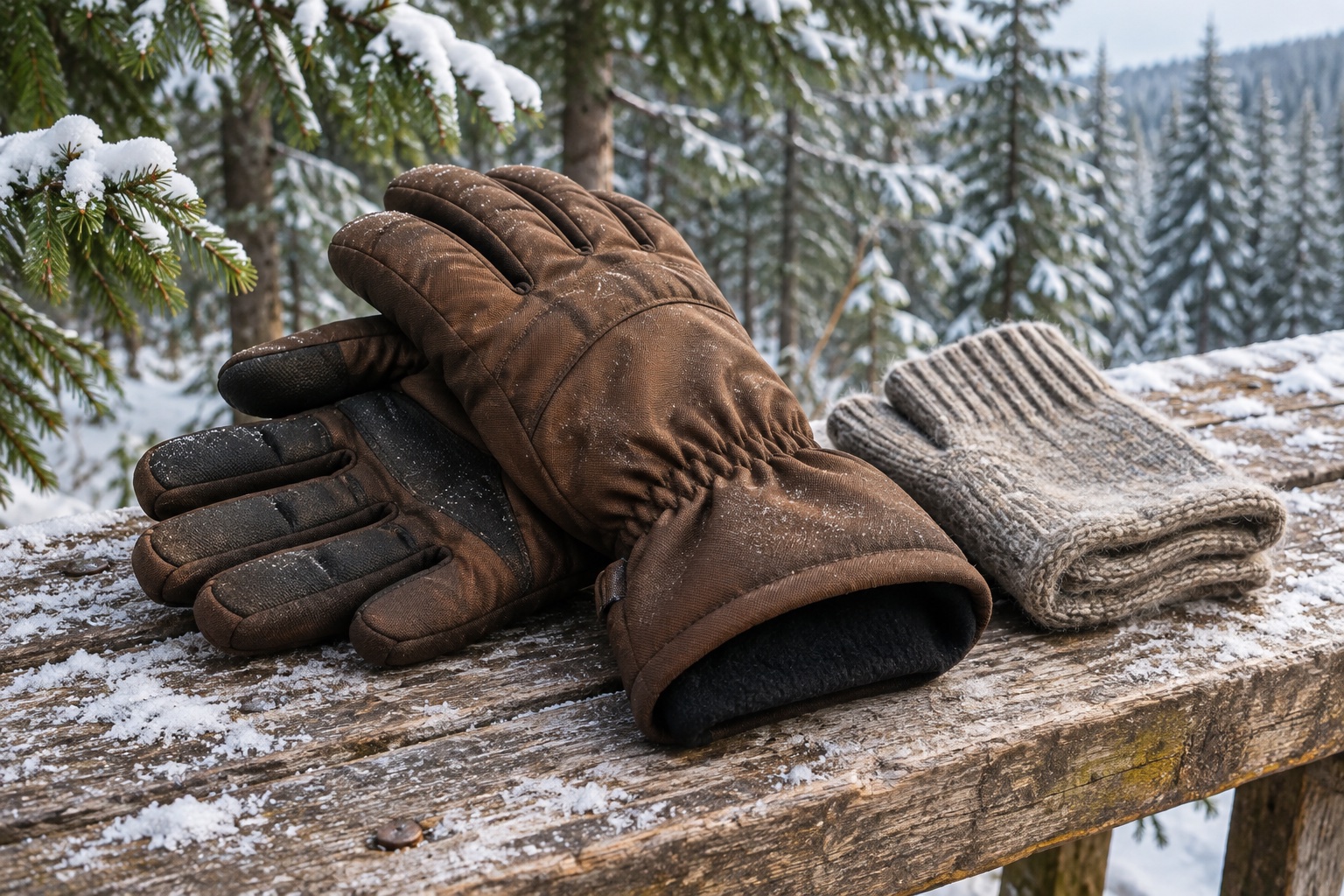
Cold-weather bow hunting gloves must balance hand protection with the ability to handle your equipment comfortably. Thick insulation can help on a stationary sit, while a slim liner may be easier to move in but offers less protection on its own. A flip mitten or hand muff can add coverage between tasks, provided the whole setup fits and you protect exposed fingers from cold.
We compared the manufacturer and Amazon listing details below; we have not independently field-tested these products for this article. Availability varies by size and color.
Gloves, mittens and liners: what changes?
- Full-finger gloves: cover each finger and can make small tasks easier than bulky mittens, but insulation and palm thickness vary.
- Flip mittens: cover the fingers together and can expose them for a task. Exposure increases cold risk; replace the cover promptly and use another layer when needed.
- Thin liners: add a layer with less bulk but are not adequate as the sole protection for every temperature. Check that the outer glove still fits comfortably.
- Hand muff: provides a place to shelter gloved hands between tasks, but does not protect hands when they are outside it.
The CDC recommends layered clothing and mittens during cold weather. Actual warmth also depends on wind, moisture, fit, activity and exposure time; no glove guarantees warmth in every condition.
Four glove and liner options to compare
As an Amazon Associate, Sportsman Crew earns from qualifying purchases. Check the exact size and color on the listing.
Carhartt Hunt Fleece Flip Mitten

Flip mitten
Carhartt Hunt Fleece Flip Mitten
Check the selected size, color and availability.
The checked camouflage medium listing describes a fleece shell, synthetic palm and magnetic mitten flap. The flap offers finger access when needed, but exposed fingers lose protection from the cold. It is not described here as a waterproof glove.
HANDLANDY Insulated Winter Glove

Insulated full-finger glove
HANDLANDY Insulated Winter Glove
Check the selected size, color and availability.
The checked camouflage large listing describes synthetic insulation and a waterproof insert. It covers the fingers, but bulk and fit can limit fine movements; try the exact size and check the manufacturer’s care instructions.
Mechanix Wear ColdWork Base Layer

Low-profile glove liner
Mechanix Wear ColdWork Base Layer
Check the selected size, color and availability.
The checked coyote-brown medium listing describes a softshell glove with microfleece lining and a grip pattern. Its low profile may fit under a larger outer glove or mitt, but it is not a replacement for sufficient insulation in severe cold.
Smartwool Merino Wool Glove

Wool-blend liner
Smartwool Merino Wool Glove
Check the selected size, color and availability.
The checked black small listing identifies a merino-wool and nylon blend. It can serve as a lightweight layer if it fits under your outer glove without compressing it; confirm the exact size and care requirements.
Fit, dexterity and weather protection
Try gloves with the layers and equipment you will actually carry. You should be able to move your fingers, operate closures and maintain a secure, comfortable grip without the glove pulling tight. A glove that squeezes your hand or compresses a liner can reduce comfort; a very loose one can make small tasks awkward.
Test grip and dexterity in a safe, controlled setting before going outdoors. Keep straps and mitten flaps secure and follow the equipment manufacturer’s safety instructions. Do not assume a glove is suitable merely because it is labeled for hunting.
Insulation and materials
Fleece, wool blends and synthetic insulation can provide warmth, but construction, thickness and fit matter. Leather is not automatically insulated or waterproof, and nylon alone is not proof of a waterproof glove. Look for the manufacturer’s stated membrane, construction and care guidance rather than relying on a fabric name or a vague temperature claim.
Wind, rain and wet snow
A water-resistant exterior can shed light moisture; prolonged rain may require a waterproof outer glove or shell with suitable seams and coverage. An insert protects only as well as its design and condition, and wet cuffs can let moisture in. Carry a dry spare pair for longer outings.
Keeping hands protected in the cold
Dress for the forecast and wind, keep layers dry, and change wet gloves when possible. Warmers can help when used according to their package instructions; do not put them directly against skin or use them where you cannot monitor the heat. Take breaks and get out of the cold if hands become painful, numb or difficult to use.
According to the CDC’s frostbite guidance, redness or pain can be an early warning. White or grayish-yellow skin, waxy or firm skin, and numbness may indicate frostbite. Seek medical care for suspected frostbite and follow the CDC’s instructions; avoid rubbing the affected area.
Care and common questions
Are mittens warmer than gloves?
Mittens often retain warmth well because fingers share an insulated space, but the result depends on material, fit, wind and moisture. Gloves usually offer more finger mobility. Choose enough protection for the conditions and limit exposure.
Can a thin liner work alone?
It may be comfortable in milder conditions or during activity, but it is not a substitute for appropriate insulation in severe cold. Bring a warmer outer layer and a dry spare when the forecast calls for them.
How should I dry gloves?
Follow the manufacturer’s label. Dry them thoroughly after use, and avoid excessive heat or practices the manufacturer warns against. Check waterproof membranes and leather-care instructions separately.
Explore more hunting guides for field clothing and planning.