
Are Ground Blinds Good for Bow Hunting?
We may earn commission for items you purchase. As an Amazon Associate we earn from qualifying purchases.
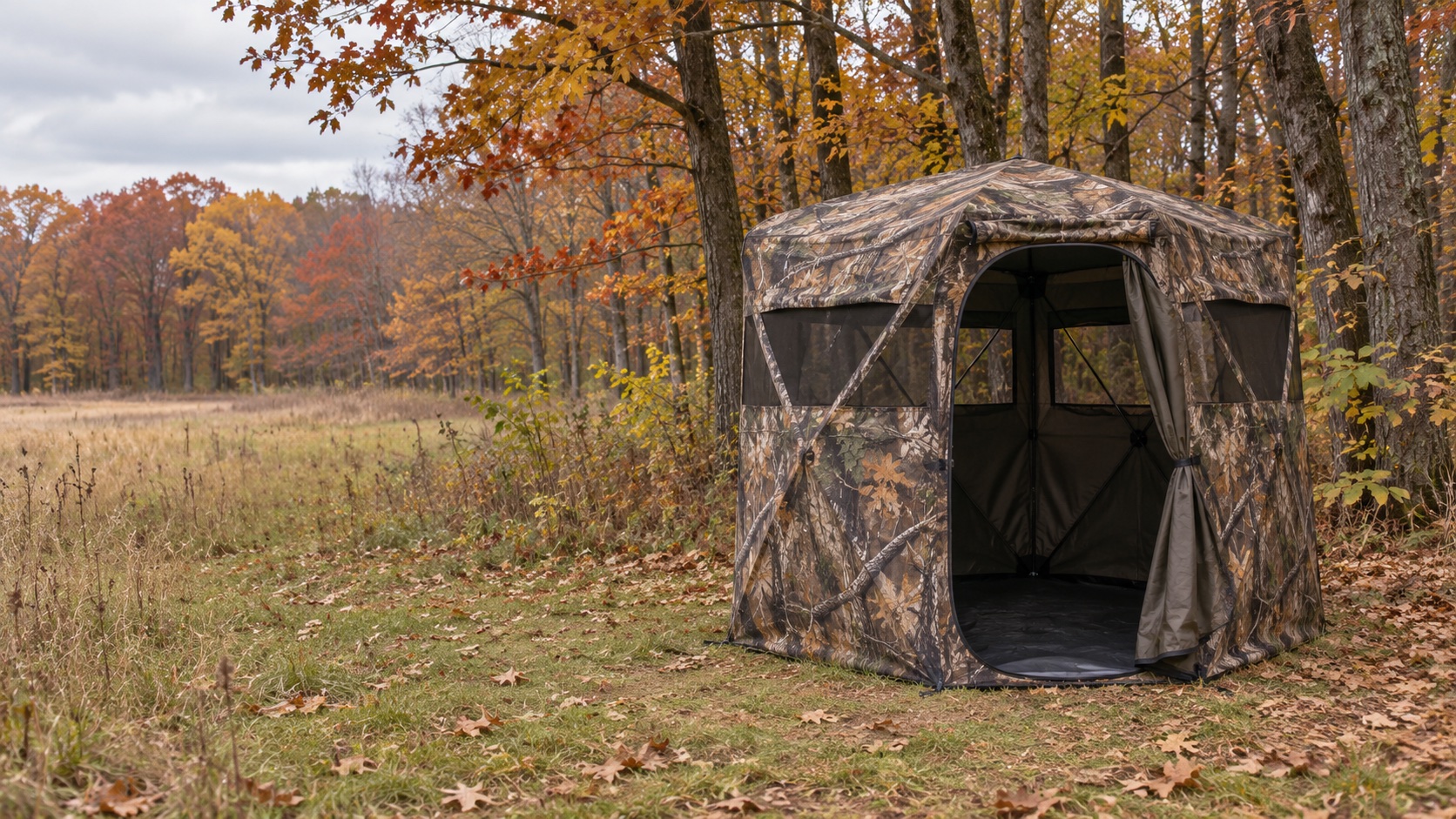
Ground blinds can be a good option for bow hunters who want a sheltered place to sit at ground level. They provide cover for movement and room for a chair, and they can be useful when hunting with a companion. Their trade-offs include limited sightlines, extra gear to carry and an interior that may feel cramped. A blind is not necessary for every location or a guarantee of success.
Before choosing one, check that everyone can sit comfortably, see their surroundings and enter or exit easily. Rules for visibility, placement and leaving equipment on public land vary, so consult the wildlife agency and land manager for your specific location and season.
Benefits and trade-offs of ground blinds
A ground blind can screen some movement and provide partial shelter from wind and light precipitation. Sitting on the ground also avoids climbing into an elevated stand. A larger model can make it easier to share the space with a mentor, new hunter or young family member, provided there is sufficient room for everyone.
Those benefits come with compromises. Fabric walls and windows can restrict the view, especially when seated. A blind adds bulk on the walk in, may move or make noise in wind, and is not a substitute for appropriate clothing or a weather plan. Durability and weather protection vary by design; follow the manufacturer's setup and weather guidance.
How to choose a ground blind that fits
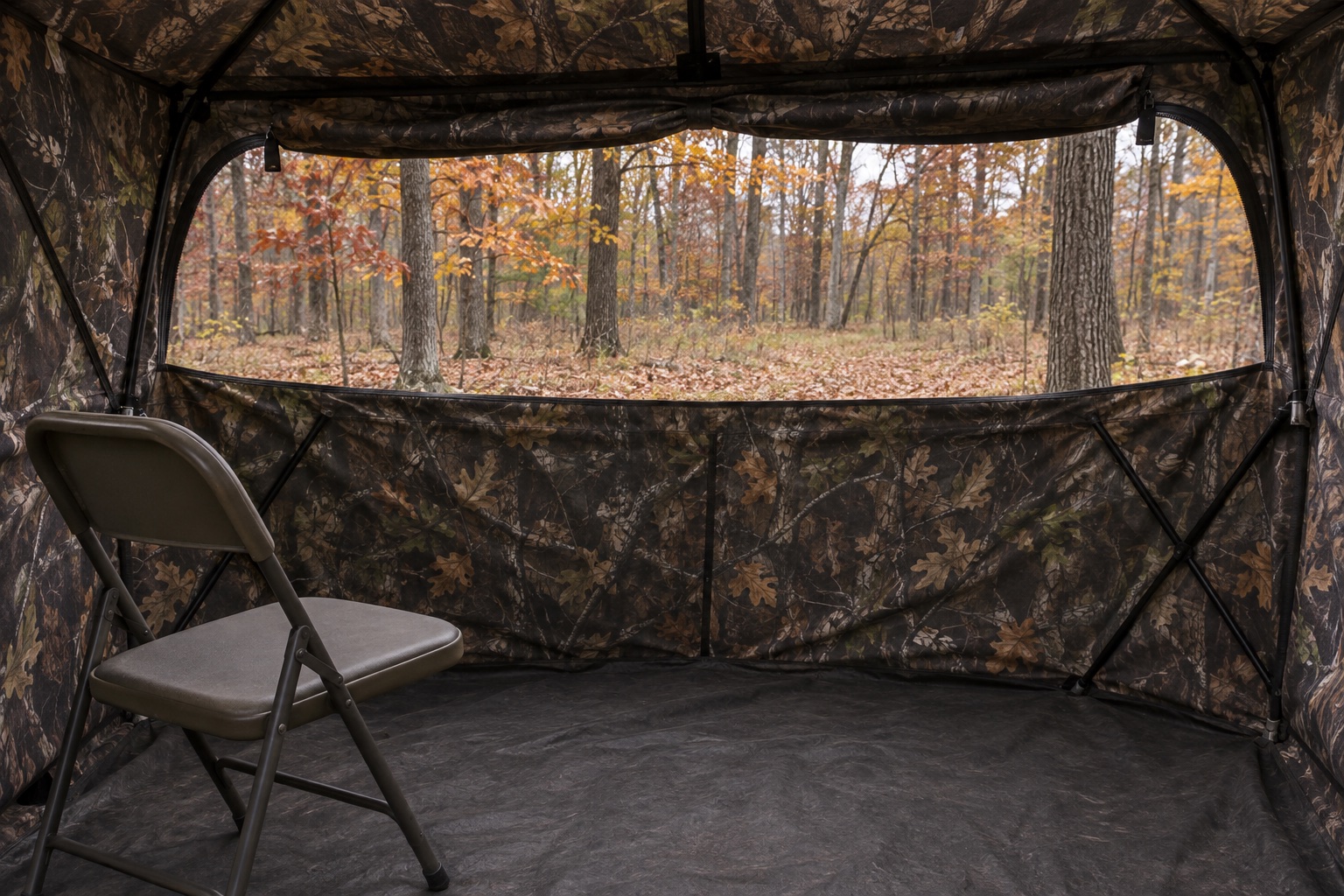
Published floor and height measurements are a starting point, not a guarantee of usable space. If possible, set up the blind and bring the chair and clothing you expect to use. Sit normally and check headroom, door access, window height and the space needed to move without contacting the walls or another person.
- Interior room: Allow for the actual number of occupants, chairs and personal gear. A stated capacity may not reflect a comfortable amount of room.
- Windows and view: Check the view while seated, not only while standing. Window size, height and closures differ; make sure you can see the surrounding area.
- Portability: Compare packed dimensions and weight with how far you need to carry it. Try opening, securing and packing the blind before the trip.
- Materials and conditions: Review the maker's care, anchoring and weather instructions. Check zippers, seams and supports before use.
- Accessibility: Consider doorway height, floor conditions and whether the chair offers appropriate support for the people using it.
For a broader discussion of designs and features, see our ground blind buying guide. Choose based on fit and intended conditions rather than an assumed universal best size.
Visibility, placement and local rules
Camouflage can make a blind difficult for other people to see. Follow the current requirements for blaze orange or fluorescent pink clothing and blind markings wherever you hunt, including when firearm seasons overlap. Wisconsin's high-visibility guidance describes its clothing rules; requirements elsewhere can differ. Make sure you know what is in front of, near and beyond your intended target, as Minnesota DNR's hunter-safety guidance advises.
Obtain permission where required. Check land-manager rules before placing a blind, attaching anything to vegetation or leaving equipment overnight. Inspect the surroundings for unstable limbs, standing water and uneven ground, and avoid blocking trails or access. Penn State Extension's woodland safety advice highlights overhead and ground hazards; its examples of stand and blind requirements are specific to the land it discusses.
A blind is not a storm shelter. Follow the manufacturer's instructions for securing it and leave the area when conditions become unsafe. Let someone know your plans and carry suitable clothing, water and a reliable way to communicate.
Ground blind or elevated stand?
A ground blind may suit someone who wants a chair, partial shelter or a place to sit with a companion without climbing. An elevated stand offers a different viewpoint but requires suitable trees or a compatible freestanding design, plus careful attention to fall protection and the manufacturer's instructions. The right choice depends on the location, access rules, physical comfort and weather. Sitting against existing cover without a blind is another option when permitted.
Common questions
Can two people use a ground blind?
Some blinds are designed for multiple occupants. Check the actual dimensions with both people and their chairs inside; do not rely on the stated capacity alone.
Will a ground blind keep me dry?
It may offer some protection from light rain, but weather resistance varies. Consult the manufacturer's instructions and bring appropriate clothing; do not assume the shelter is waterproof or safe in severe weather.
Can I leave a blind on public land?
Rules depend on the property and season. Some places restrict how long a blind may remain or require identification. Check the current rules for the specific property before setting it up.
Does a blind replace hunter-orange requirements?
No. Follow the applicable requirements for both clothing and blind markings. The rules can change by jurisdiction, property and season.